
Laminated film and display device including same
a technology of laminated film and display device, which is applied in the direction of instruments, other domestic objects, synthetic resin layered products, etc., can solve the problems of glass being easily broken, suitable for a flexible display device, fragile glass, etc., and achieve excellent appearance quality and improve optical characteristics and visibility.
- Summary
- Abstract
- Description
- Claims
- Application Information
AI Technical Summary
Benefits of technology
Problems solved by technology
Method used
Image

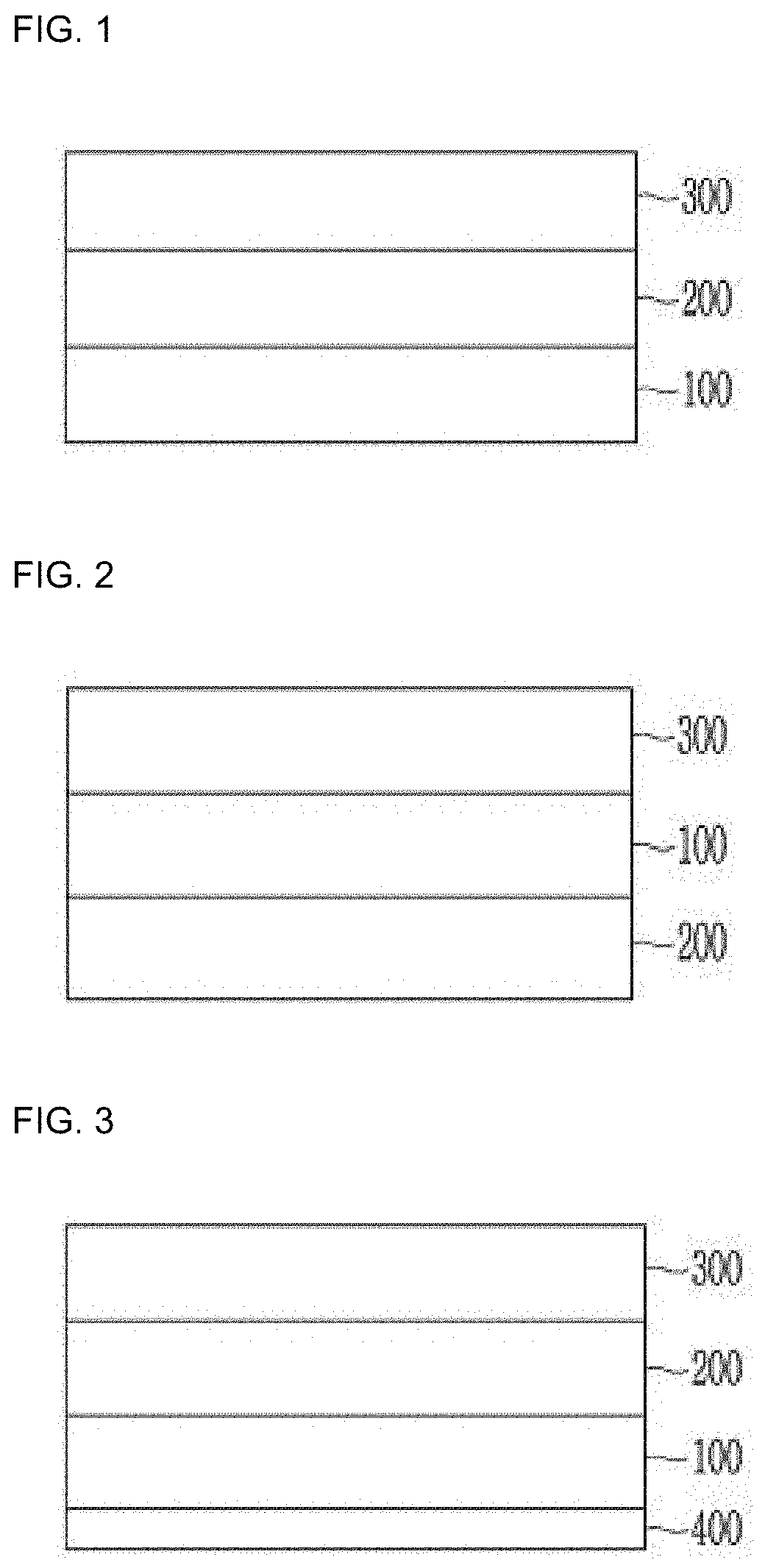
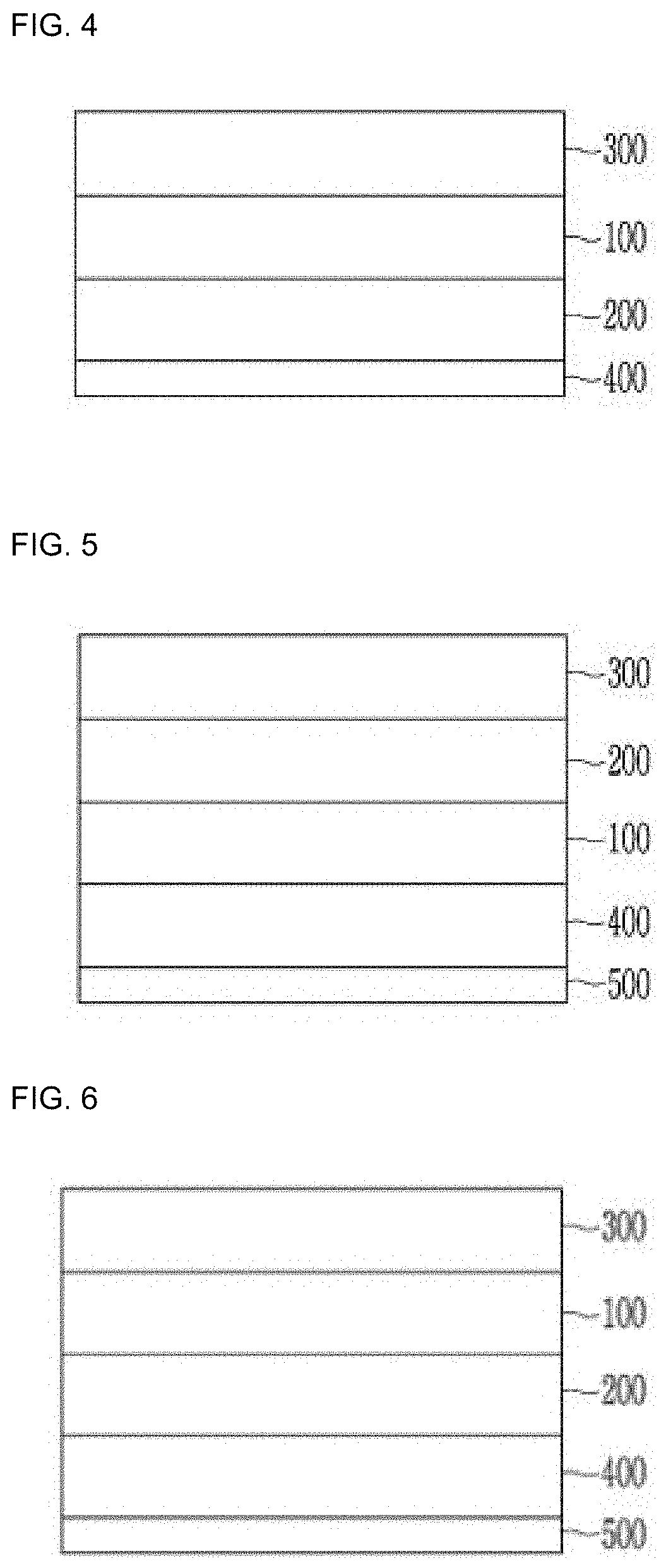
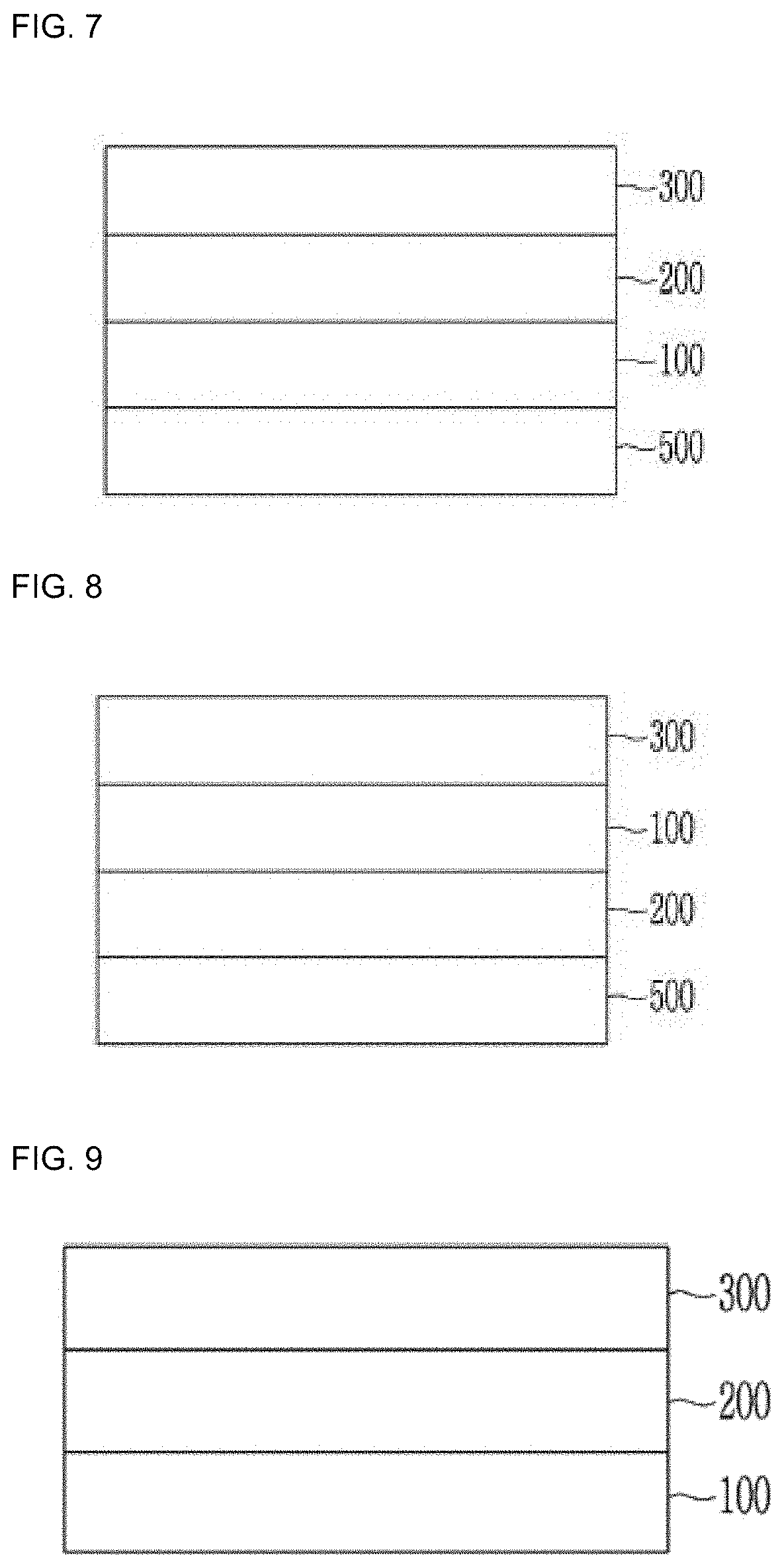
Examples
synthesis example 1
Preparation of Amide Structural Unit-Containing Oligomer
[0225]According to Reaction Scheme 1, an amide structural unit-containing oligomer which forms an aramid structure having amino groups at both ends by polymerizing TFDB (2,2′-bis(trifluoromethyl)benzidine) and TPCL (terephthaloyl chloride) is prepared.
[0226]Particularly, 1 molar equivalent (0.122 mol, 39.2 g) of 2,2′-bis(trifluoromethyl)benzidine (TFDB) and 2.8 molar equivalent (0.343 mol, 27.11 g) of pyridine were dissolved in 700 g of N,N-dimethylacetamide (DMAC) in a round-bottom flask, and then the residual TFDB was completely dissolved by further adding 50 ml of dimethyl acetamide. 0.7 molar equivalent (0.086 mol, 17.4 g) of terephthaloyl chloride (TPCl) was added in four portions and vigorously stirred for 15 minutes.
[0227]The resultant solution is stirred under the nitrogen atmosphere for 2 hours, and then added into 7 L of a NaCl solution containing 350 g of NaCl and stirred for 10 minutes. The solid is filtered and re-...
preparation examples 1 to 4
Preparation of Polyimide-Based Copolymer Solution for Optical Enhancement Layer
preparation example 1
Preparation of Poly(imide-urethane) Copolymer Solution
[0228]2.52 g (0.0279 mol) of butanediol (BD) and 12.4 g (0.0559 mol) of isophorone diisocyanate (IPDI), and DBTDL (dibutyltin dilaurate) are added into 250 ml of 4-neck double wall reactor equipped with a mechanical agitator and a nitrogen inlet, the temperature is slowly increased to 70° C., and the reaction mixture is stirred at 70° C. for 4 hours to be reacted. After completing the reaction, the reactor is cooled to 25° C., and 94 g of dimethyl acetamide (DMAc), 8.95 g (0.0279 mol) of 2,2′-bis(trifluoromethyl)benzidine (TFDB), 2.46 g (0.0084 mol) of 3,3′,4,4′-biphenyltetracarboxylic dianhydride (BPDA), and 8.70 g (0.0196 mol) of 2,2-bis-(3,4-dicarboxyphenyl hexafluoropropane dianhydride) (6FDA) are added and stirred for 24 hours. Then, 2.3 g of pyridine and 7.9 g of acetic anhydride are added and stirred for 24 hours to provide a poly(imide-urethane) copolymer solution having a solid content of 25 wt %.
PUM
| Property | Measurement | Unit |
|---|---|---|
| refractive index | aaaaa | aaaaa |
| thickness | aaaaa | aaaaa |
| thickness | aaaaa | aaaaa |
Abstract
Description
Claims
Application Information
 Login to View More