
Synchronized write data on a high speed memory bus
a write data and high-speed memory technology, applied in the direction of memory adressing/allocation/relocation, instruments, generating/distributing signals, etc., can solve the problem that the synchronous semiconductor memory device cannot accurately determine the proper cycle of the write clock wclk, and the command and write clocks may not be synchronized
- Summary
- Abstract
- Description
- Claims
- Application Information
AI Technical Summary
Problems solved by technology
Method used
Image

Examples
Embodiment Construction
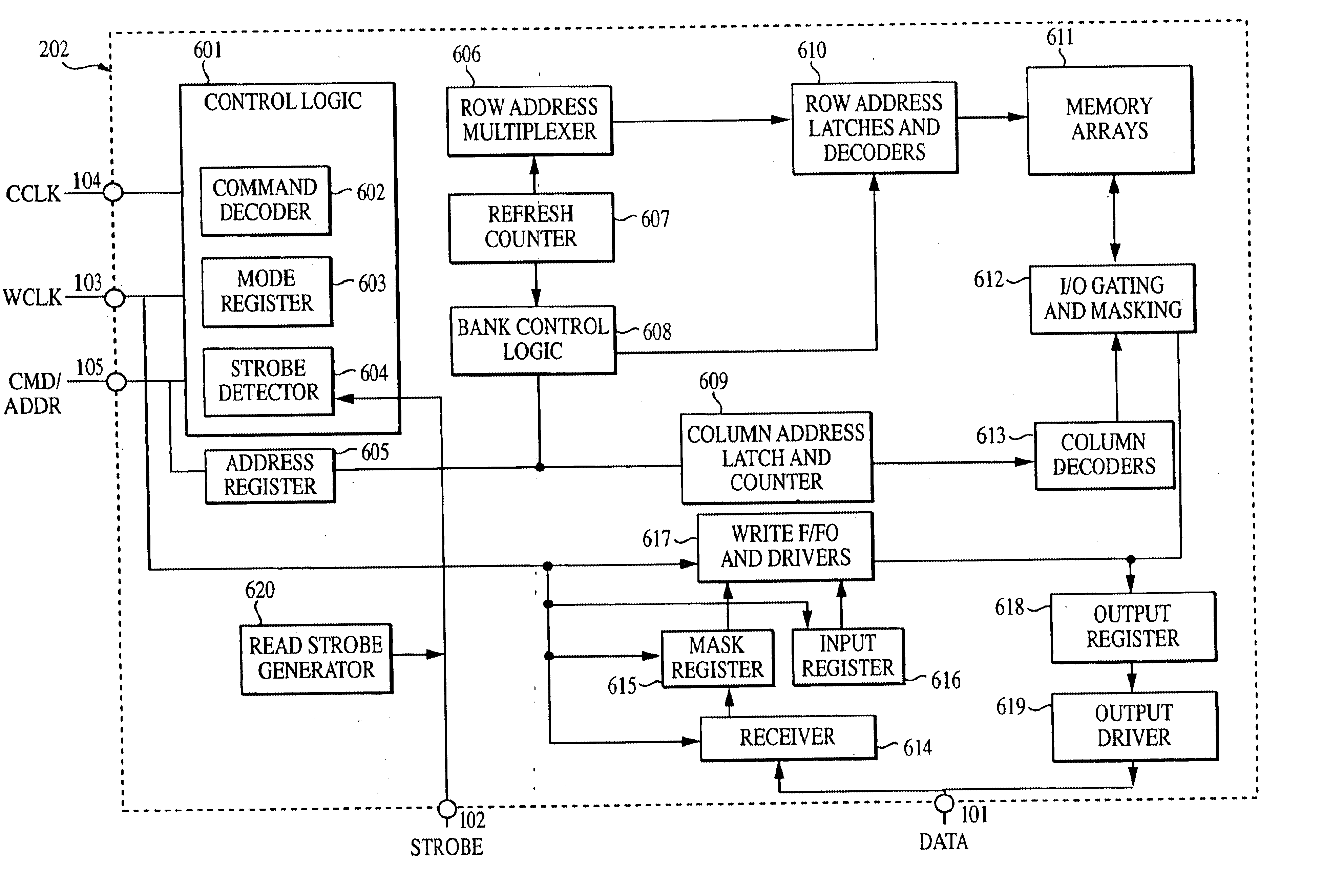
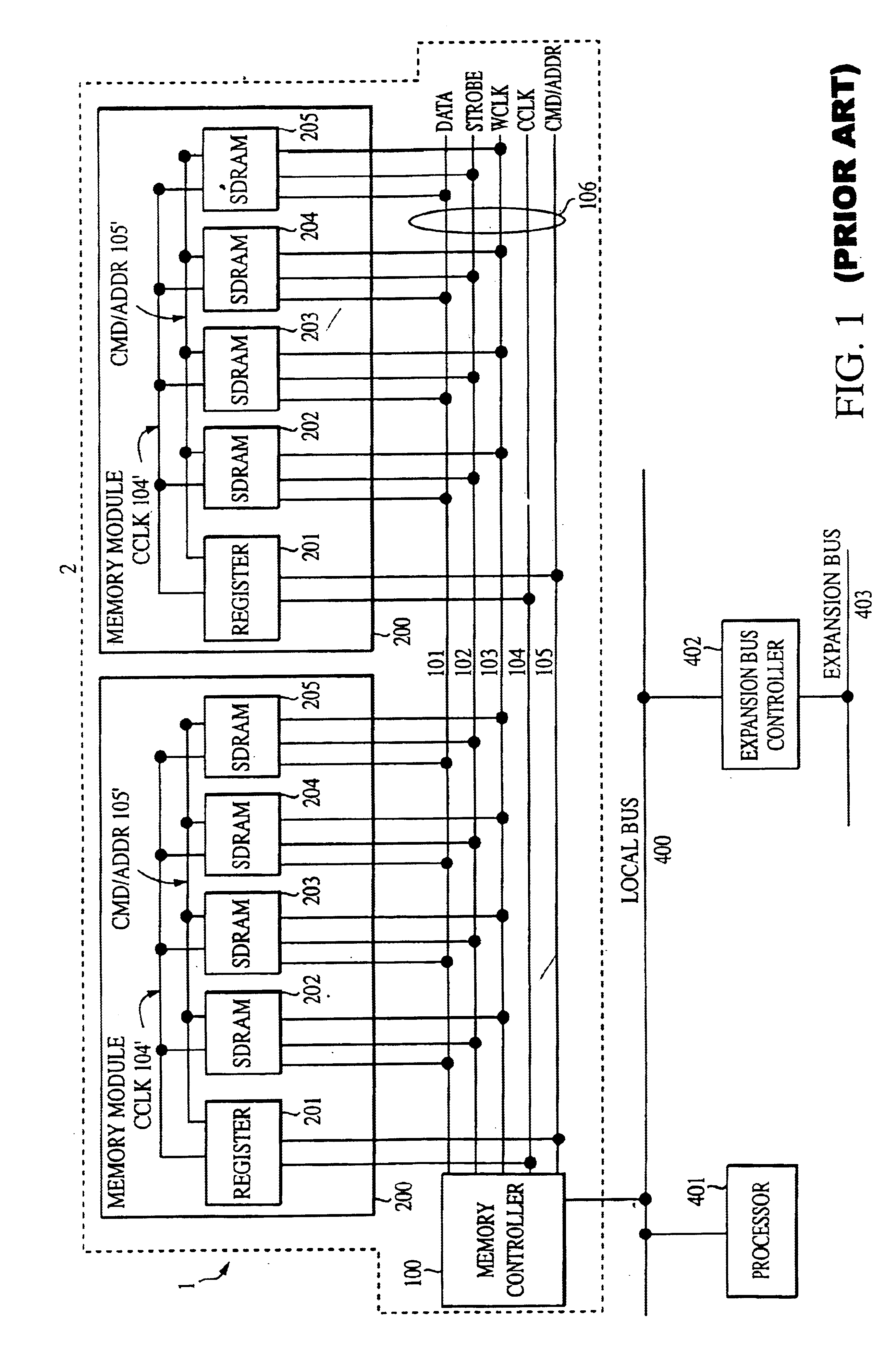
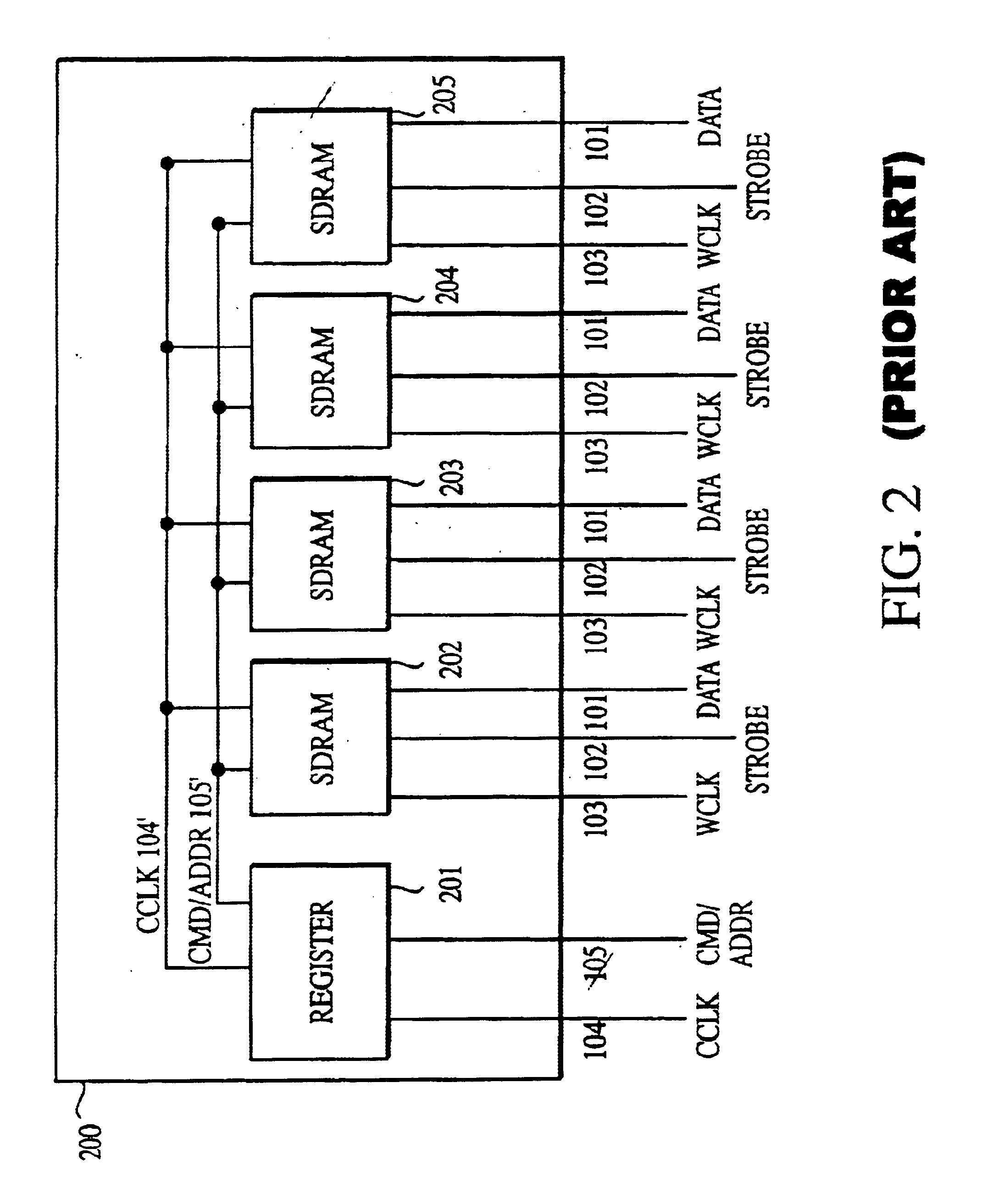
Now referring to the drawings, where like reference numerals designate like elements, there is shown in FIG. 3 a more detailed diagram of one synchronous semiconductor memory device, e.g., device 202 of FIG. 2. In the exemplary embodiment, the synchronous semiconductor memory device is a double data rate SDRAM with independent command and write clocks. A double data rate SDRAM is an SDRAM which accepts write data on both the rising and falling transitions of the write clock. Each rising or falling transition of the write clock cycle is known as a tick. The synchronous semiconductor memory device includes a variety of circuits used to control, address, and input / output data. For example, the synchronous semiconductor memory device includes a control logic 601 which accepts a command clock CCLK on signal line 104, a write clock WCLK on signal line 103, and commands and addresses CMD / ADDR on a plurality of signal lines 105. The control logic 601 includes a command decoder 602 for decod...
PUM
 Login to View More
 Abstract
Description
Claims
Application Information
 Login to View More