However, the feeding tubes and the associated devices and methods also
pose some discomfort, and even some potential risks, to patients.
Unfortunately, all presently available
feeding tube devices and methods for feeding through the tubes suffer from a variety of deficiencies.
One common problem is that a
feeding tube may deliver the fluids (which include liquid
nutrition, hydrating fluids, and
medicine to the patient) at a rate exceeding the ability of the gastro-intestinal tract to absorb such fluids.
This results in an accumulation of fluid within the intestine.
In particularly bad cases, accumulation of fluid causes
distension of the intestine that leads to the temporary loss of all residual intestinal function.
In rare cases, this intestinal distention may induce fatal vagal
reflex circulatory changes.
Approximately 1 in 1000 patients that are fed through ajejunal tube die of bowel
necrosis, a complication that may be related to the lack of safety of the devices and methods of feeding directly into the gastro-intestinal tract.
Severely ill, malnourished patients are most at risk for developing complications associated with overfeeding.
In any case, when a patient's intestine is not operating fully, then the amount of
nutrition the patient can receive is limited.
Devices and methods of the past are deficient in providing this maximum feeding in a safe, prompt, and effective way to patients in need.
It is not desirable to simply deliver a maximum amount of nutrition into a patient's intestine.
The reason for this is that overfeeding, which is delivering feedings at a rate exceeding the ability of the patient's gastro-intestinal tract to absorb its own secretions plus the added nutrition, itself presents serious hazards to a patient.
Overfeeding a patient leads to an accumulation of fluid, which distends the intestine.
This intestinal
distension can lead to fatal circulatory changes, as set forth above.
More commonly, complications from overfeeding include the temporary further impairment of intestinal function, with
nausea and
vomiting, which at a minimum causes discomfort and delays
recovery.
A common and more severe related complication is impaired ability to breathe deeply and cough because of abdominal distention, resulting in atelectasis and pneumonia.
A patient's impaired digestive
system may also produce too many digestive secretions for the patient to reabsorb immediately.
Unfortunately, during
recovery from
surgery the level of secretions remains relatively constant or decreases, while the intestine's ability to absorb secretions is typically impaired, sometimes severely.
The result can be a build up of fluid in the intestine, with the same detrimental side effects as found with over-feeding.
However, if a patient's gastro-intestinal function is severely impaired only a portion of the total fluid may be absorbed.
This problem may worsen as feedings continue, causing progressive intestinal distension which, in turn, further impairs intestinal function and reduces the amount of
nutrient actually being absorbed.
However, any secretions removed in this way will cause a net loss of fluids and
dehydration of the patient.
However, this method of
fluid replacement does not conserve nutrients and digestive juices that may have otherwise been used.
Another problem that has not adequately been solved is that the very presence of a nasal feeding tube stimulates
swallowing by the patient, introducing additional air into the intestine.
The presence of air within the gastro-intestinal tract interferes with the propulsion and absorption of nutrition and can be quite uncomfortable or painful to a patient.
As set forth above, aspirating introduces additional problems of increased risks of
dehydration and removal of potentially beneficial nutrients.
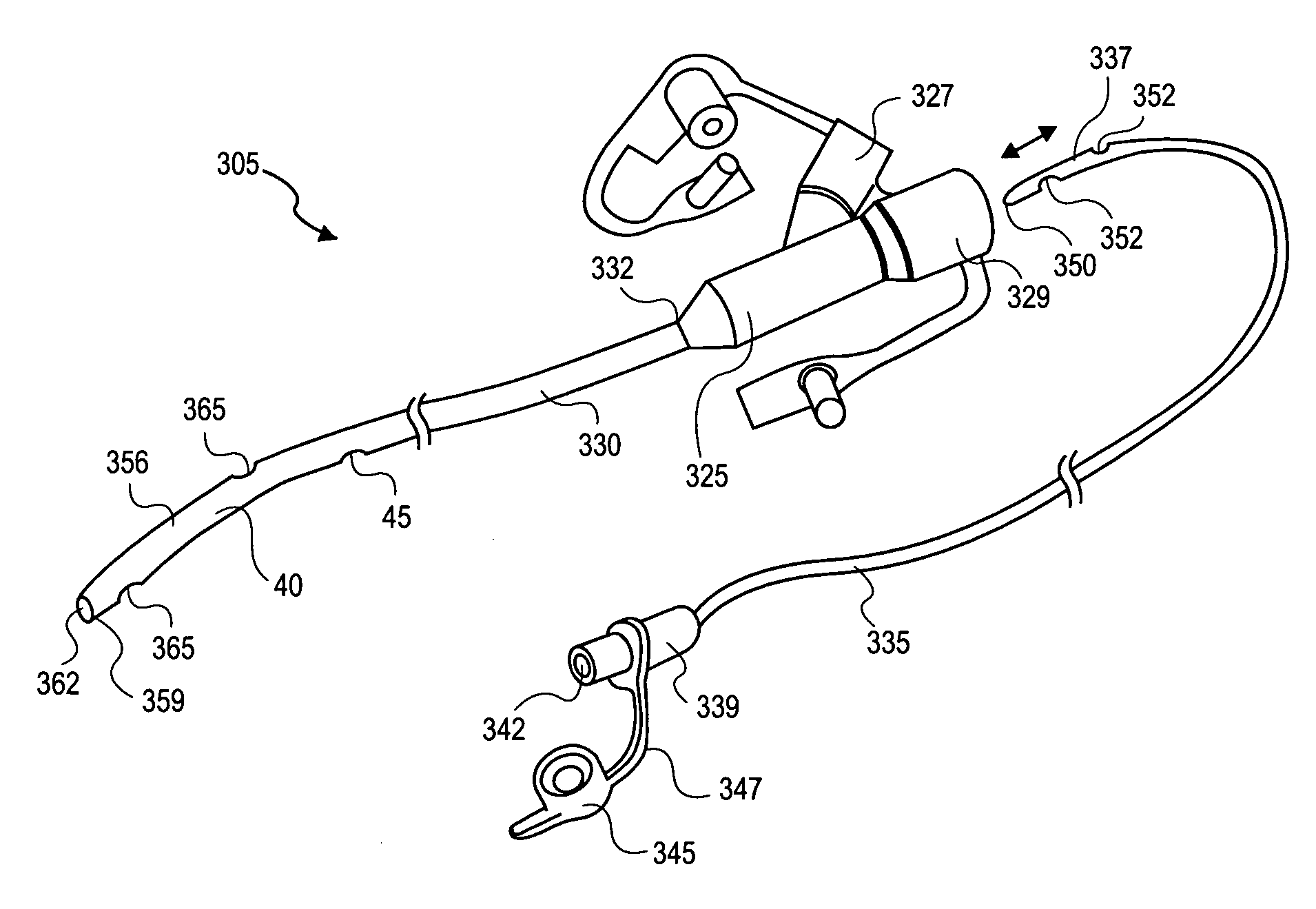
Unfortunately, the use of a second tube for aspiration presents new problems.
The introduction of a second tube only adds to the pain and discomfort experienced by a patient.
Furthermore, if a separate second tube is used, it may be difficult to effectively locate it
proximate to the feeding tube, thereby preventing it from aspirating excessive food present in the gastro-intestinal tract.
Thus, the feeding tubes of the past are deficient enabling
assembly and disassembly after the time of manufacture.
Furthermore, the manufacturing process required in order to make feeding and aspirating tubes having a plurality of permanent lumens is relatively expensive and intricate.



 Login to View More
  Login to View More