Detector for halogen toxicants and method

a technology of halogen toxicants and detectors, applied in the direction of fluorescence/phosphorescence, calibration apparatus, instruments, etc., can solve the problems of time-consuming, time-consuming collection, delivery and analytical work, and unfortunate victims may be diagnosed and treated too late, and achieves simple operation, quick and inexpensive detection, and accurate detection of certain effects

US7074365B1Inactive Publication Date: 2006-07-11SHOAF ANTONY R
14 Cites 4 Cited by

Patent Information

Authority / Receiving Office
US · United States
Patent Type
Patents(United States)
Current Assignee / Owner
Publication Date
2006-07-11
Estimated Expiration
Not applicable · inactive patent

Smart Images

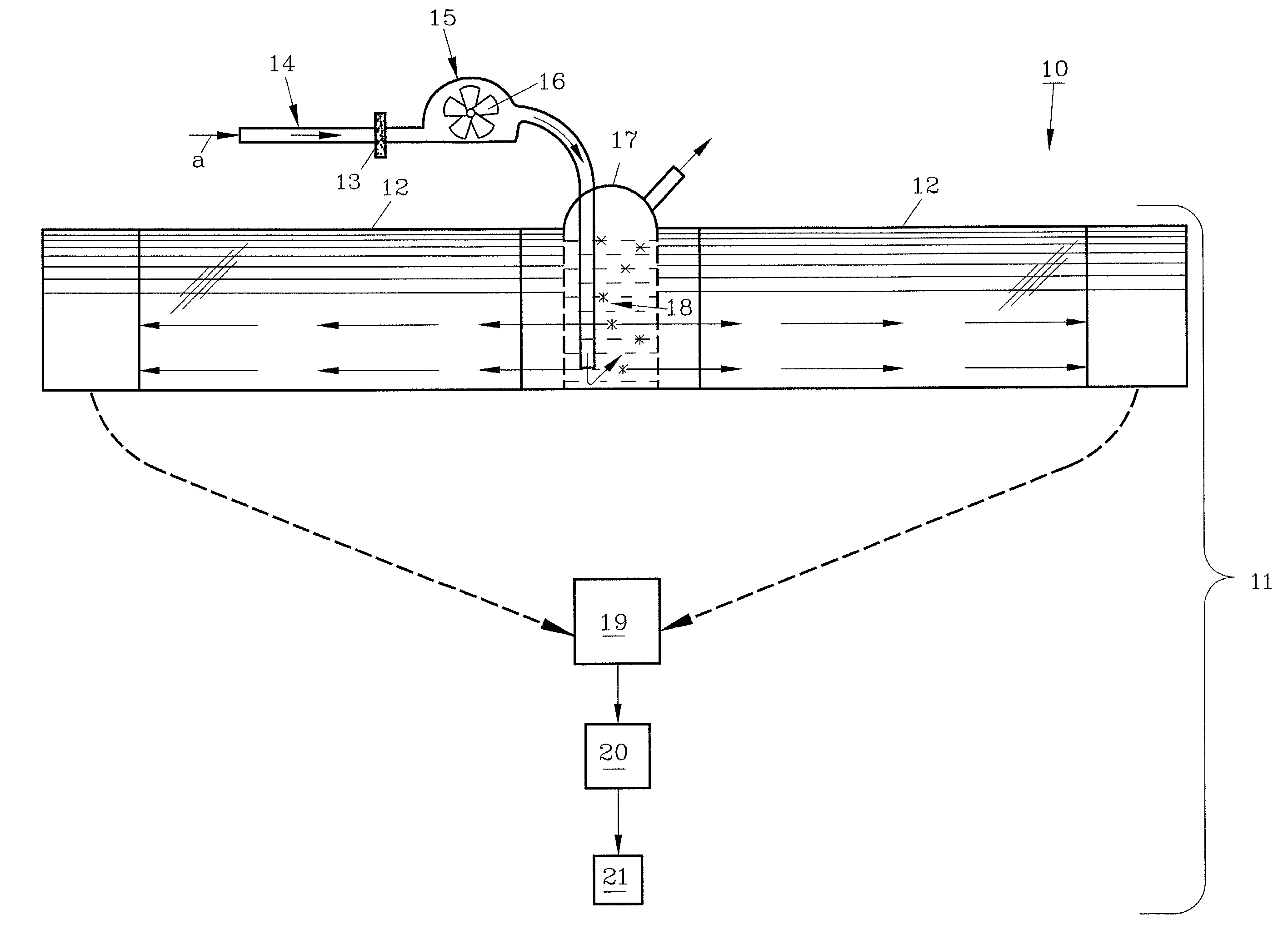
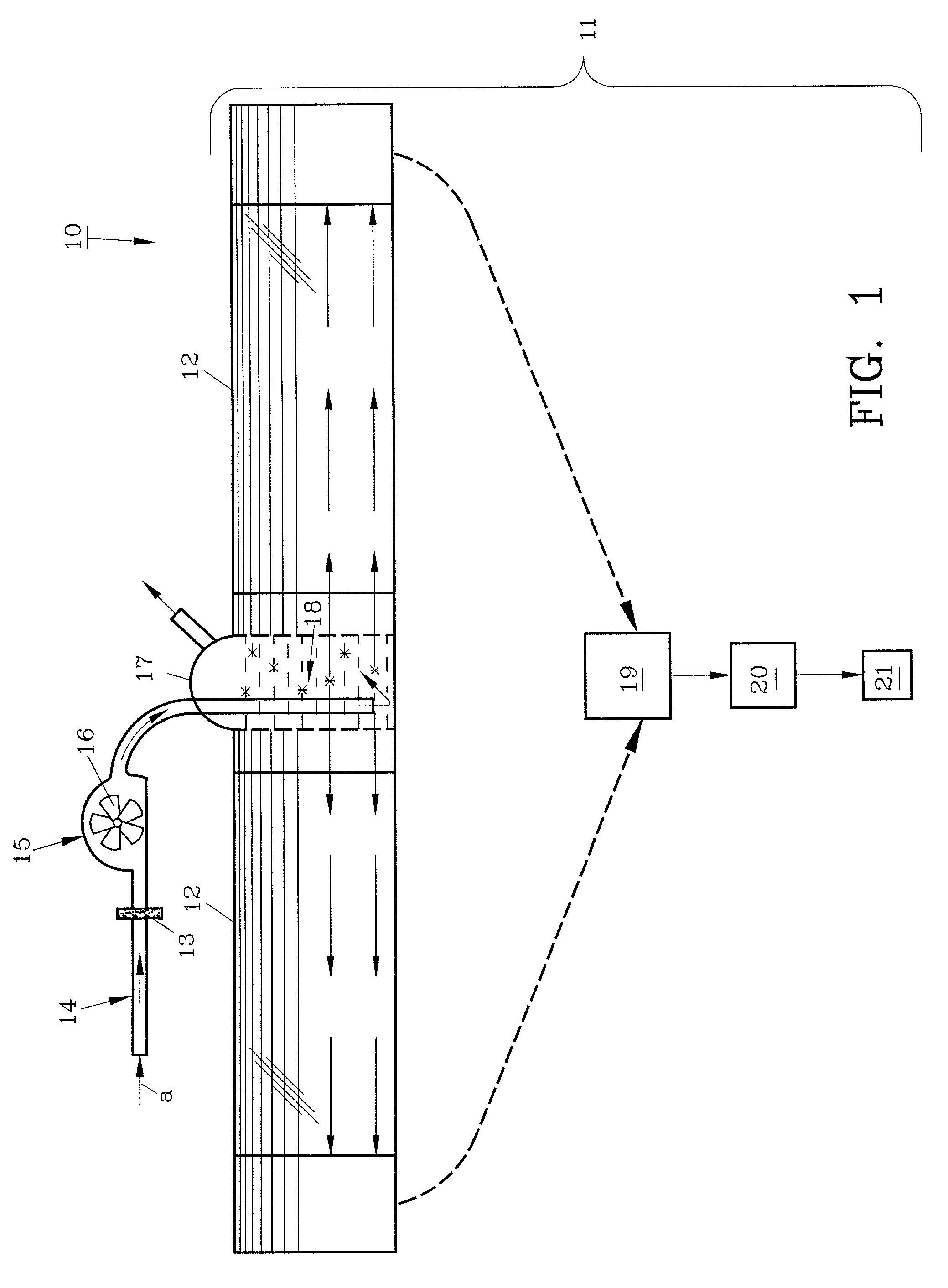
  • Figure 1
    Figure 1
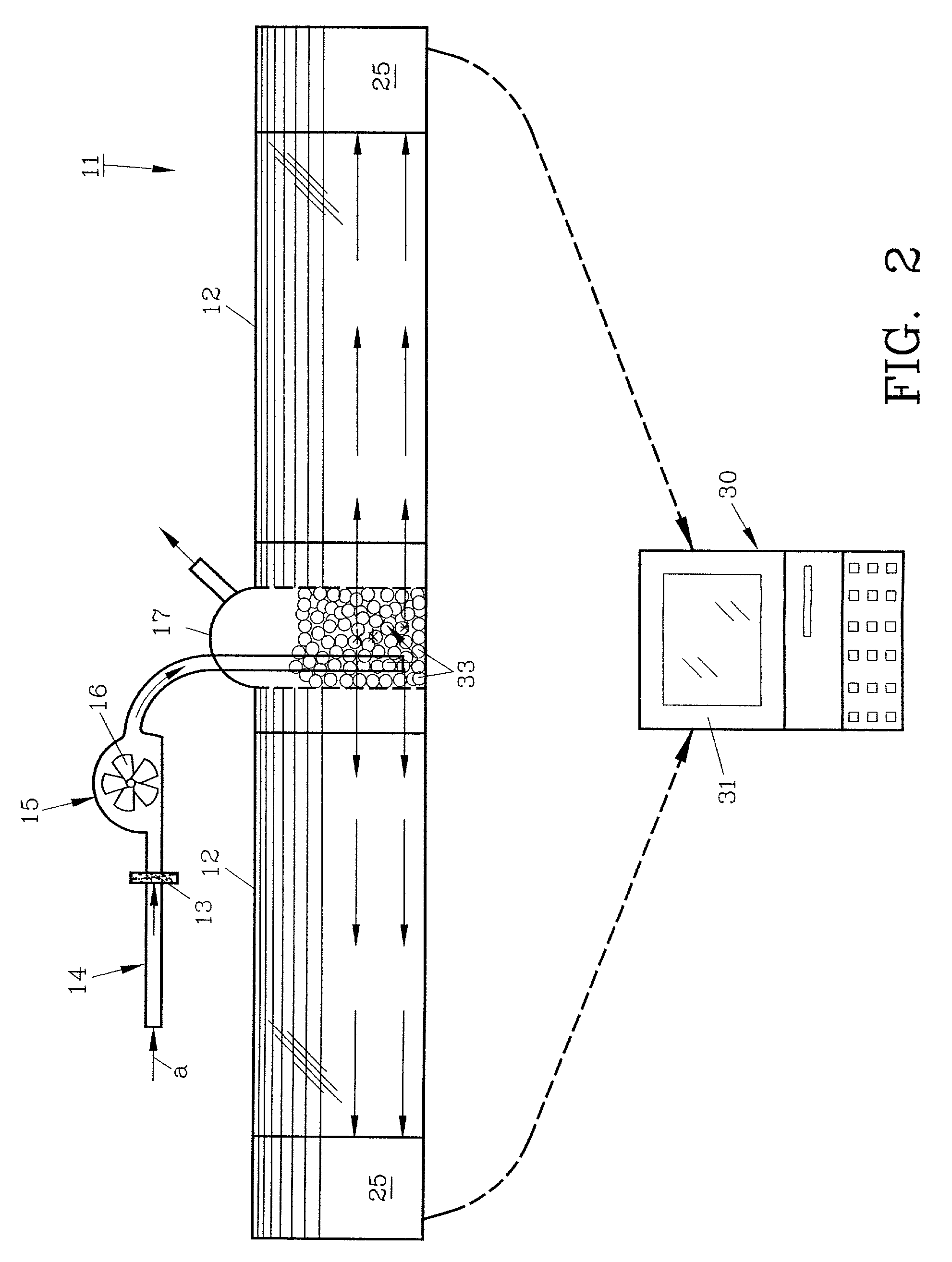
  • Figure 2
    Figure 2
  • Figure 3
    Figure 3
Patent Text Reader

Abstract

The invention herein provides for the detection of certain organic halogen-containing agents or toxicants such as sarin, chloropicrin, mustard gas, mustard chlorohydrin, phosgene, chlorine, soman, lewisite, diphosgene and others by, in one embodiment, first reacting the agents with superoxide free radical anion (.O{overscore (2)}) to produce light pulses which can be detected by a standard photon counter. The superoxide may be available from a dimethyl sulfoxide superoxide (.O{overscore (2)}) liquid solution, from lecithin coated beads charged with superoxide (.O{overscore (2)}) in a reaction vessel or from a quarternary ammonium ion exchange resin charged with superoxide anion (.O{overscore (2)}) in a reaction vessel.
Need to check novelty before this filing date? Find Prior Art

Description

[0001] This is a continuation-in-part of patent application Ser. No. 10 / 035,277, filed 19 Nov. 2001, now U.S. Pat. No. 6,815,178.FIELD OF THE INVENTION

[0002] The invention herein pertains to detection devices and methods, and particularly pertains to the detection by chemiluminescence of halogen-containing gaseous toxicants as used in chemical warfare agents or as found in environmental pollutants.DESCRIPTION OF THE PRIOR ART AND OBJECTIVES OF THE INVENTION

[0003] Certain halogen-containing organic compounds will cause luminescence when reacted with superoxide free radical anion (.O{overscore (2)}). The luminescence is caused by the photon emission of excited singlet molecular oxygen which is generated in the reaction. The luminescence is detected by a photon counter, as described below.RX+.O{overscore (2)}→1O2*+R+X−1O2*→3O2+h✓Cl

[0004] Where:

[0005] RX=halogen-containing organic compounds

[0006] h✓Cl=photon emission (chemiluminescence)

[0007] halogens (X)=fluorine, chlorine, bromine, iodine[0...

Examples

Embodiment Construction

[0034]For detection of halogen-containing warfare toxicants such as sarin (methylphosphonofluroidic acid 1-methylethyl ester);

[0035]

chloropicrin (trichloronitromethane);

[0036]

mustard gas (1,1′-thiobis[2-chloroethane]);

[0037]

mustard chlorohydrin (2-(2-chlorcethylthio)ethanol);

[0038]

phosgene (carbonic dichloride);

[0039]

chlorine (chlorine gas);

Cl—Cl

soman (methylphosphonofluoridic acid 1,2,2-trimethylpropyl ester);

[0040]

lewisite ((2-chloroethenyl)arsonous dichloride);

[0041]

and diphosgene (carbonochloridic acid trichloromethyl ester);

[0042]

the preferred method is demonstrated in FIG. 1 whereby air having halogen-containing warfare agents or toxicants is represented by arrow ‘a’. Preferred device 10 for detecting such agents is shown in schematic fashion utilizing a model 3320 Packard Liquid Scintillation spectrometer 11 as sold by Packard Instrument Company of Downers Grove, Ill. operated in an out-of-coincidence mode at the preferred ambient temperature of 22° C. Device 10 is used for c...