[0013]This
system combines a number of techniques that in whole, or in part, serve to protect such content from unauthorized modification, reconstructive
engineering, or monitoring by third parties. This is accomplished by means of methods which protect against subversion by specific tools operating on specific platforms as well as general tools operating on general platforms.
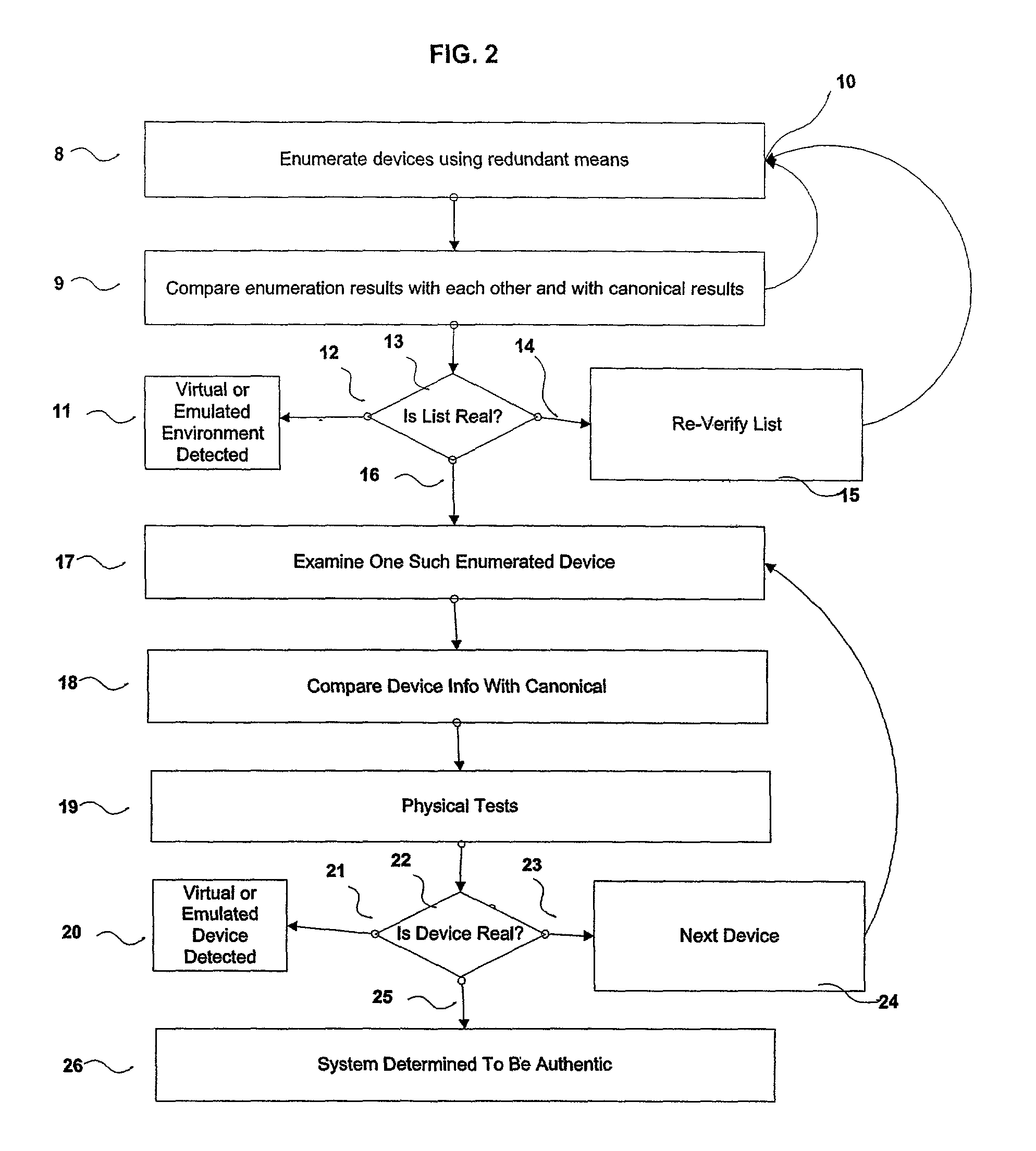
Specific time domain attacks are identified, code modification can be identified and reversed, and virtual and emulated systems are identified. In addition, identification of in-circuit emulator tools (both
software and hardware), debuggers, and security threats to running programs can be achieved.
[0014]As described above, subversive
In Circuit Emulator and
debugger tools allow an intruder to interactively observe a
system, in some cases by emulating the system and observing the execution from the perspective of a hardware system the code is executing on, and also provide the power to penetrate the operation of the system and modify it during operation. These are significant threats to security programs because they can allow an intruder to render the
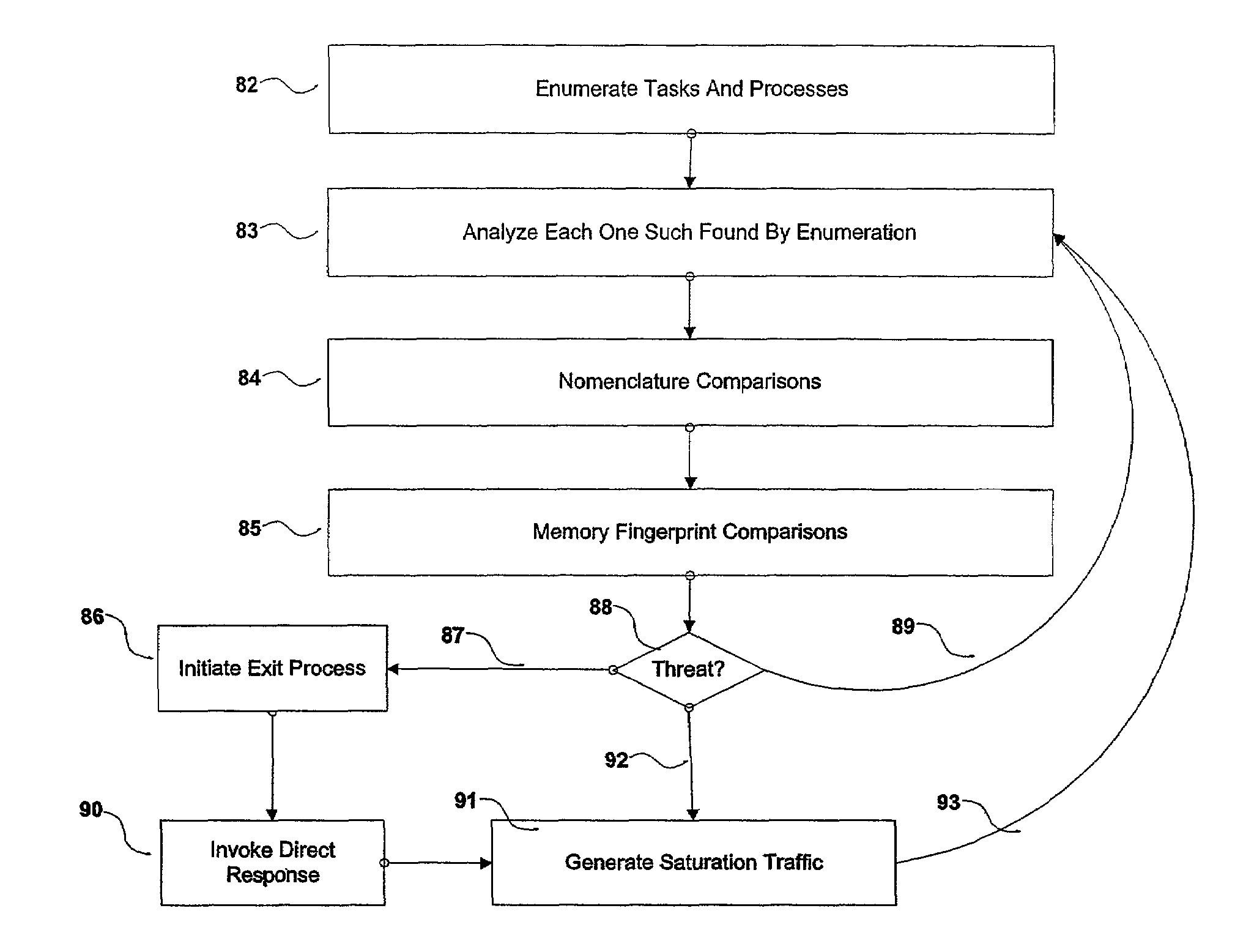
security system ineffective. The protection systems and methods of the present invention respond to intruders or threats by taking action in any of a number of ways. The preferred action in many cases is to respond by exiting from operation in an irrevocable immediate, or non-deterministic deferred, fashion, at any time. This is based on the principal that an exit may leave the intruder confused and unsure of the cause of the exit, which may cause an intruder to give up over time. An overtly aggressive response, such as killing the intruder's tools, can also be deployed.
[0019]In another aspect of the present invention, a system and method are provided to reverse modification of any such protected content. Reversal of modification can be done repeatedly, with a frequency and redundancy that greatly increases the difficulty of imparting effective modification to the content. In an alternative embodiment, intentionally corrupted content can be reverse-modified just in time for execution, on a non-page basis, then re-corrupted following execution. In this manner, this approach can defeat memory lifting by having any amount of memory content, up to entire pages or sections of memory, in some cases pre-processed and corrupted in advance of execution, and then upon execution, each such memory location or group of locations may be corrected just-in-time for the executing process to use them, but when accessed by any other process in the system they are left uncorrected, so that in the event of a memory-lift or other unauthorized access, the pages are simply not corrected. Through this passive approach (i.e., doing nothing in the event of unauthorized access) the memory lift is rendered ineffective.
[0021]In another aspect of the present invention, access to input devices such as the mouse and keyboard is controlled. Such access is locked out at will, on multiple levels, including at the
operating system level, at the device level, or at the application level. For example the mouse and keyboard can be permitted to interact only with desired secure windows on the desktop, and, even then, certain
keying or mouse activity can be prevented.
[0025]In another aspect of the present invention, large amounts of obfuscating saturation traffic are generated, which can be used to overwhelm the usefulness of
debugger, or
logging, monitor and journaling tools. This service is adjustable to the needs of the system and can vary the intensity of such traffic across desired interfaces
on demand.
[0030]In another aspect of the present invention, there is provided a cooperative function between at least two interoperating systems, for example a secure installer that binds or marries the content to an authorized
machine or machines, the protective features of which include, but are not limited to, the protective features described elsewhere in this specification. This aspect of the invention also includes a cooperating
network service entity that tracks the number of authorized installations, for example on a per-product and / or per-user and / or per-
machine basis. In this manner, this aspect of the present invention allows for the binding of an instance of a product to an instance of a
machine, securely, and also allows for the tracking of a total number of such instances, so that in a corporate setting for example, a vendor could track the installations of their product and account for licensing fees based on the number of installed instances.


 Login to View More
  Login to View More