
Sequential selective epitaxial growth
a selective epitaxial growth and selective technology, applied in the direction of semiconductor devices, basic electric elements, electrical equipment, etc., can solve the problems of reducing the performance of the transistor, the depth of the source and drain junction, and the design of the conventional metal-oxide-semiconductor field effect transistor (mosfet) faces significant challenges, so as to reduce static power consumption, improve cost and/or performance, and minimize the current from the source to the drain
- Summary
- Abstract
- Description
- Claims
- Application Information
AI Technical Summary
Benefits of technology
Problems solved by technology
Method used
Image

Examples
Embodiment Construction
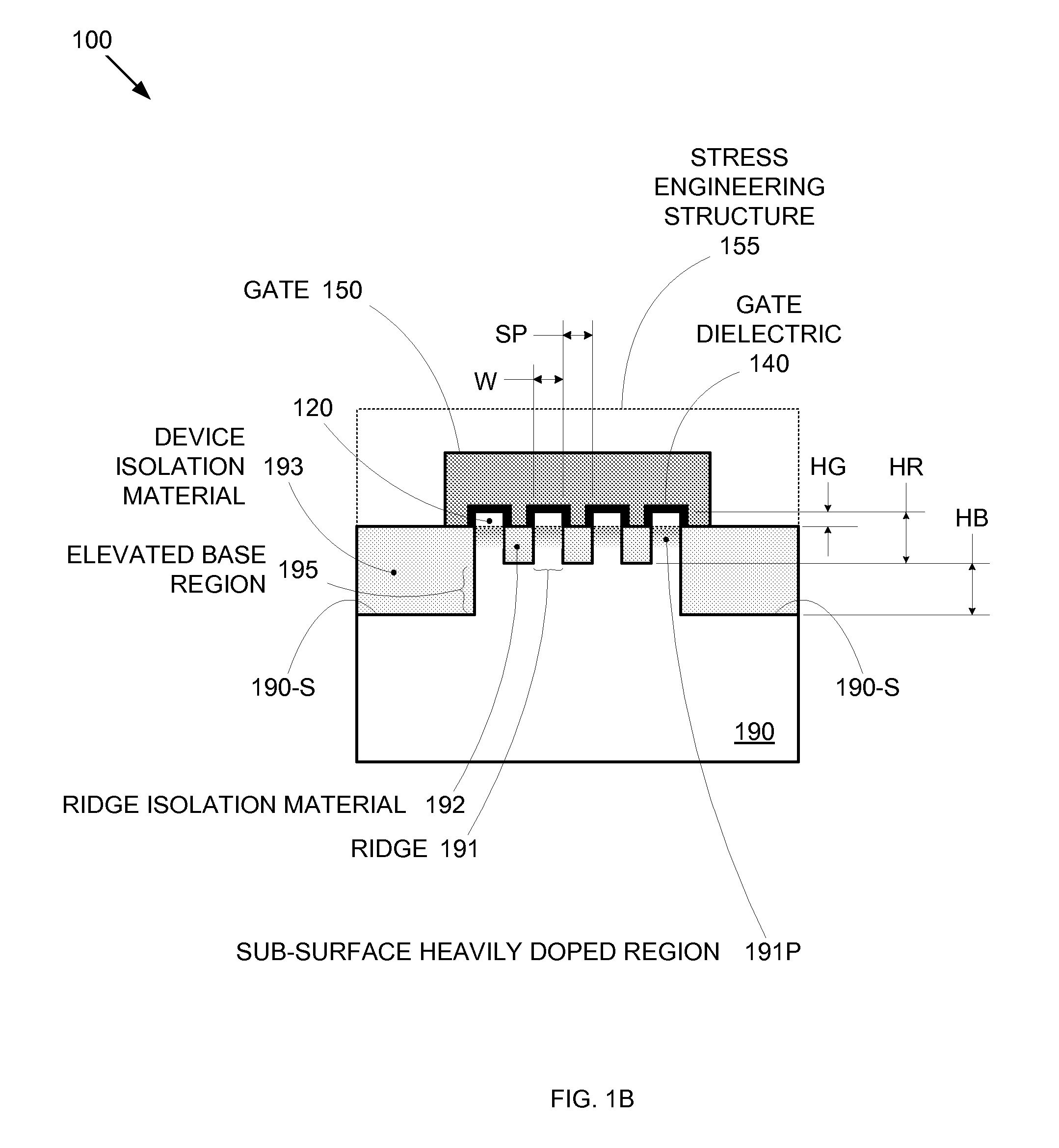
[0025]Conventional metal-oxide-semiconductor field effect transistor (MOSFET) designs face significant problems as those designs are scaled down to improve the cost and performance of integrated circuits (ICs). In particular, the techniques used to reduce static power consumption by minimizing source-to-drain leakage current (e.g., increased channel doping, decreased gate-dielectric thickness, decreased source and drain junction depths) tend to also decrease transistor performance by decreasing on-current. By forming MOSFETs over a substrate having precisely-formed stripes (ridges of semiconductor material(s)), both high performance (i.e., high on-current) and low static power consumption (i.e., low source-to-drain leakage current) can be achieved with good uniformity. The stripes enable the formation of segmented channel regions that accommodate a wide range of gate-electrode configuration options and also provide greater performance consistency between devices.
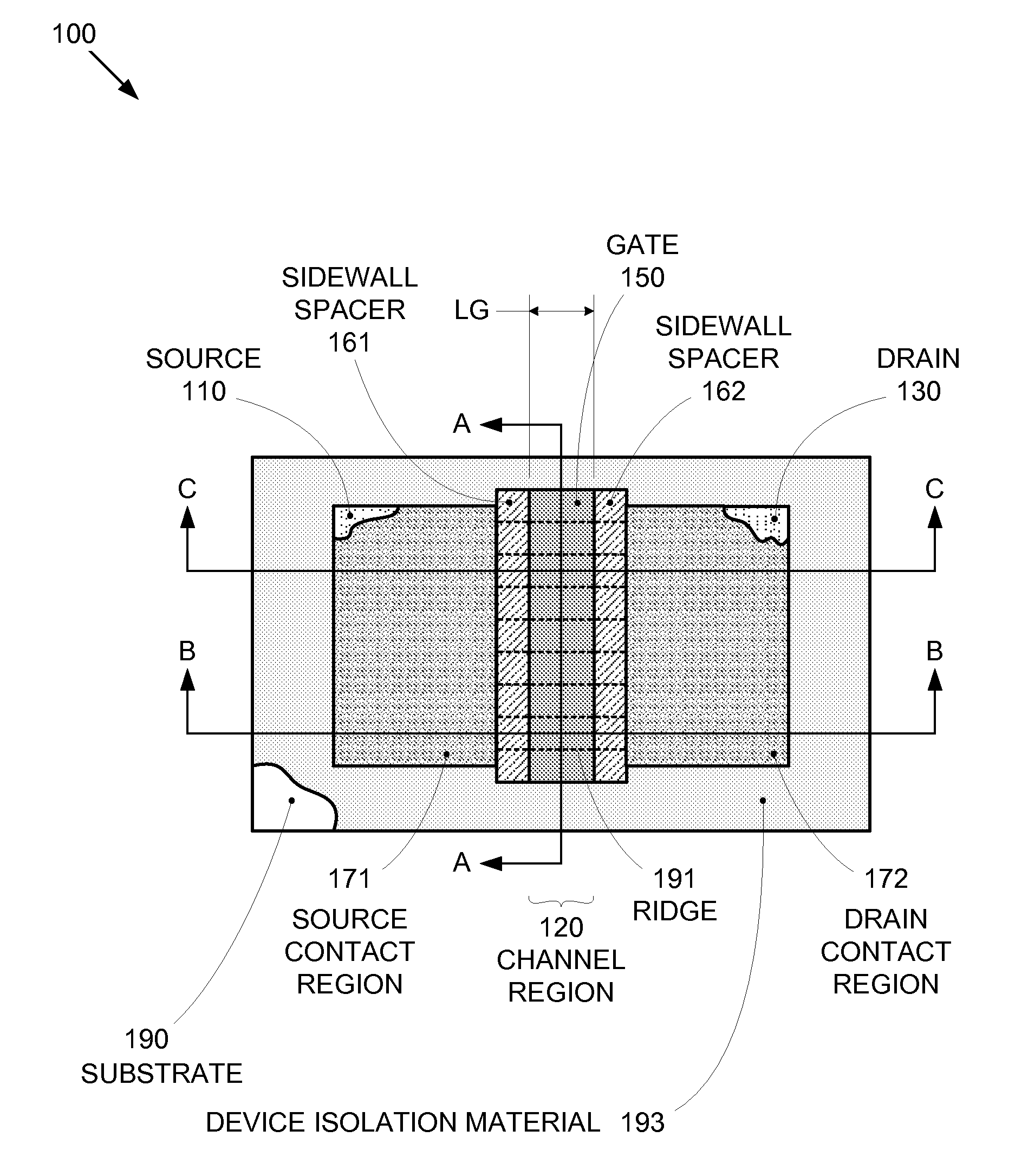
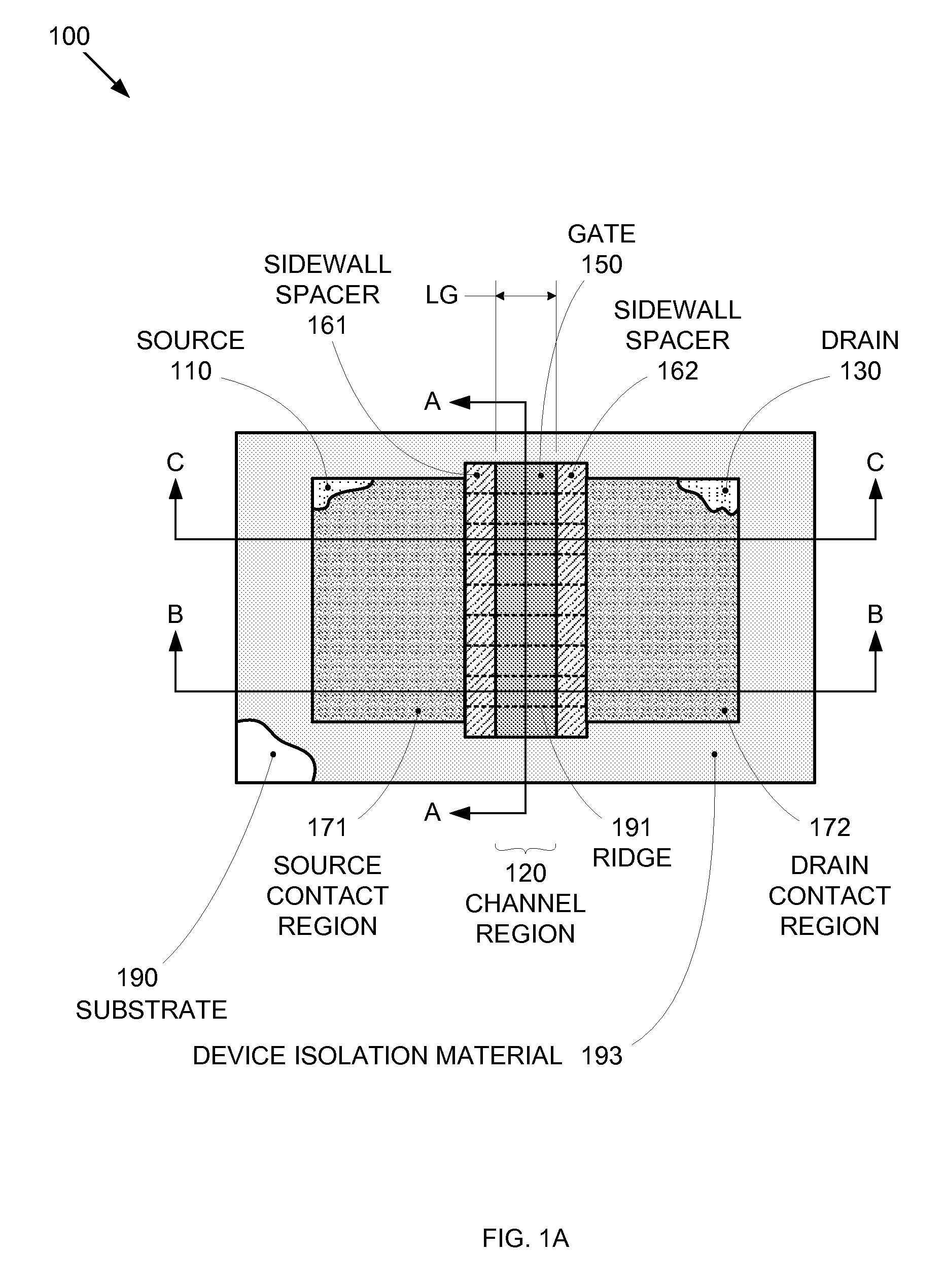
[0026]FIG. 1A shows ...
PUM
 Login to View More
 Abstract
Description
Claims
Application Information
 Login to View More