
Acousto-optic deflector with large scanning angle
An acousto-optic deflector and scanning angle technology, applied in the directions of instruments, optics, nonlinear optics, etc., can solve the problems of the acousto-optic deflector being unable to withstand high power, the scanning angle range limitation, etc., to reduce the bandwidth and increase the scanning angle. angle, the effect of improving diffraction efficiency
- Summary
- Abstract
- Description
- Claims
- Application Information
AI Technical Summary
Problems solved by technology
Method used
Image

Examples
Embodiment Construction
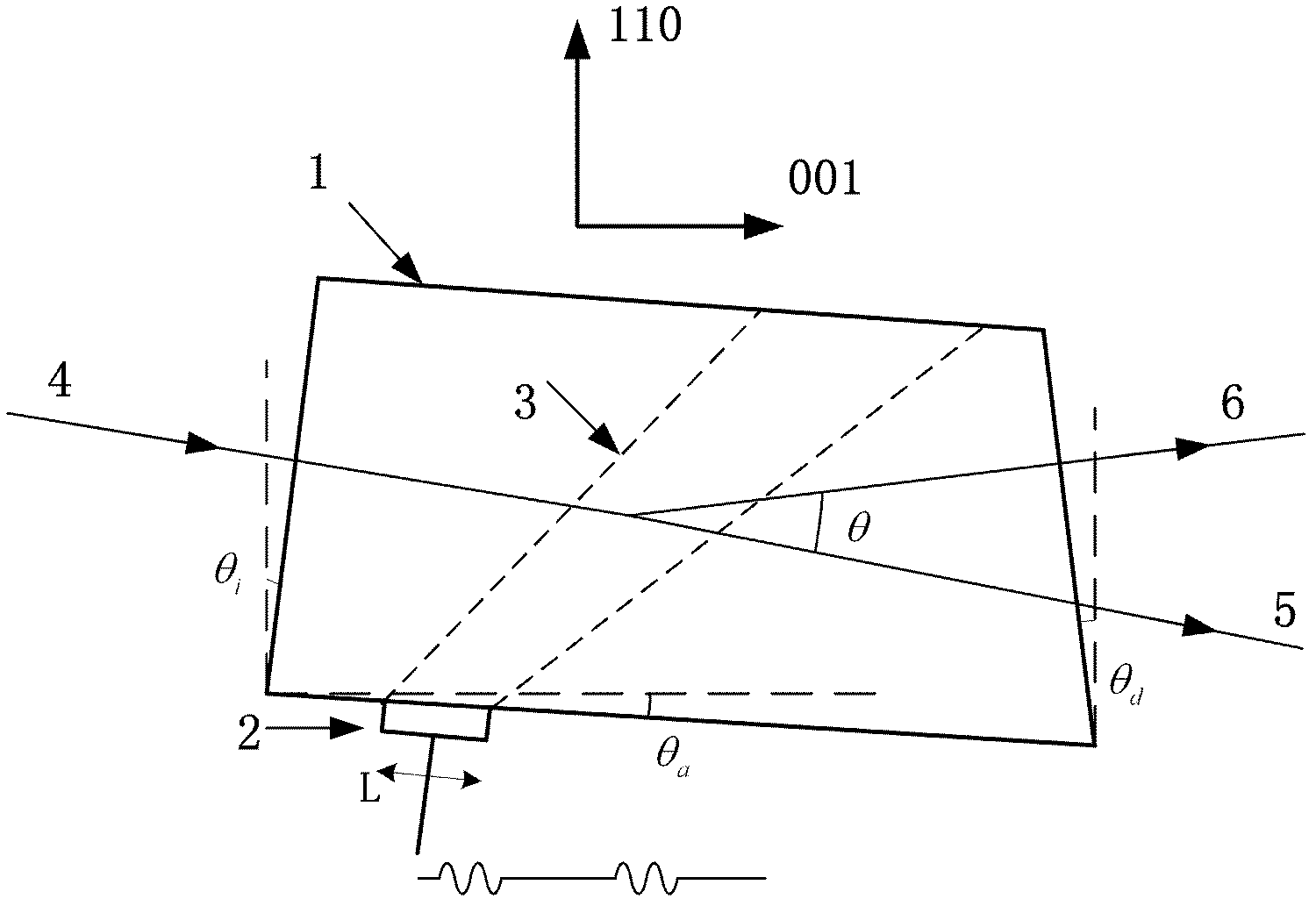
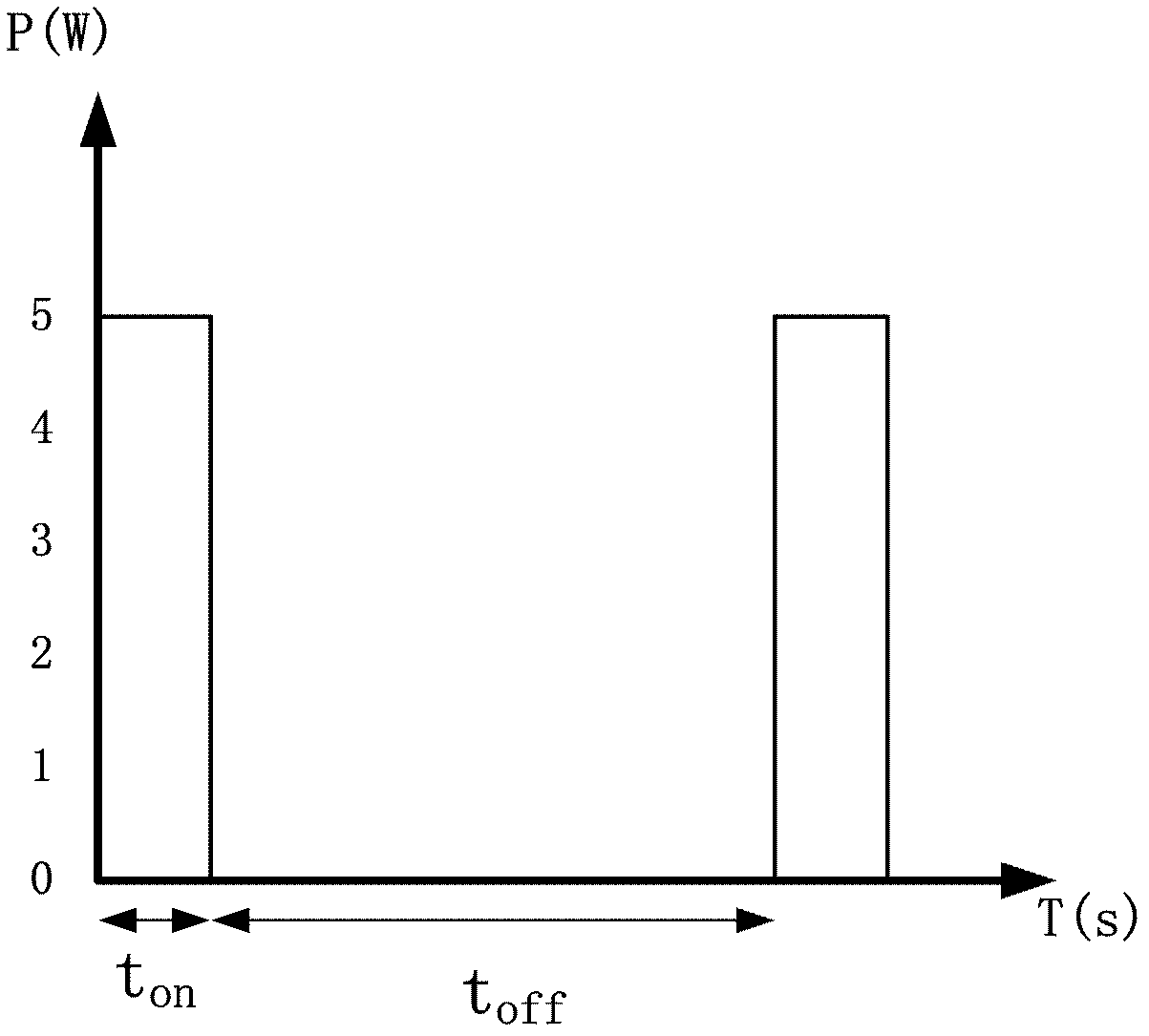
[0017] like figure 1 As shown, the acousto-optic deflector designed in the present invention includes an acousto-optic crystal 1 and a piezoelectric transducer 2. The piezoelectric transducer 2 generates ultrasonic waves 3 that propagate in the acousto-optic crystal 1. After the incident light 4 interacts with the ultrasonic waves 3 Zero-order light 5 and first-order diffracted light 6 are generated. The input signal of the piezoelectric transducer 2 is a sinusoidal signal of pulse power.
[0018] exist figure 1 In the example shown, tellurium dioxide is used as the material of the acousto-optic deflector, the working mode adopts the slow shear ultrasonic wave along the [110] axis of the tellurium dioxide crystal, and the light propagates along the [001] axis of the tellurium dioxide crystal. In this working mode, the speed of sound is very small, which is beneficial to improve the scanning angle.
[0019] exist figure 1 In the example shown, the transducer off-axis angle ...
PUM
| Property | Measurement | Unit |
|---|---|---|
| length | aaaaa | aaaaa |
| power | aaaaa | aaaaa |
Abstract
Description
Claims
Application Information
 Login to View More