

An amber aluminosilicate glass
A kind of aluminosilicate glass, amber technology, applied in the direction of glass furnace equipment, glass manufacturing equipment, manufacturing tools, etc., can solve the problems of quality and durability aging, color fading, brittleness, etc.
- Summary
- Abstract
- Description
- Claims
- Application Information
AI Technical Summary
Problems solved by technology
Method used
Image

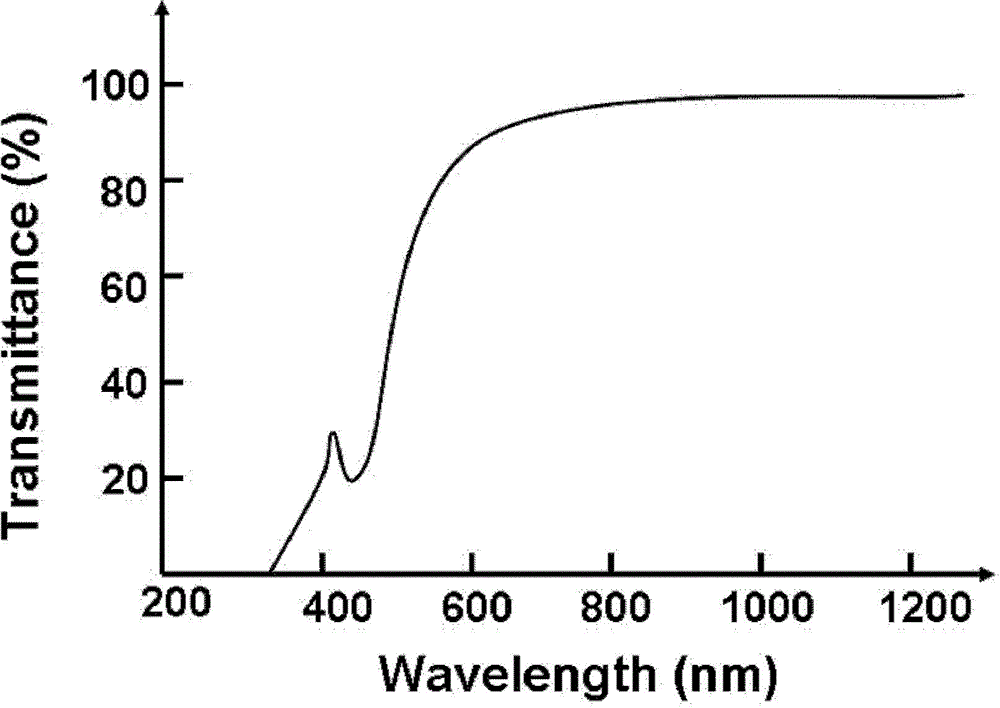
Examples
Embodiment Construction
[0017] The present invention is described below in conjunction with embodiment.
[0018] According to the mass percentage of the following oxides in amber aluminosilicate glass: SiO 2 65%;Al 2 o 3 13.5%; Na 2 O 13.5%; K 2 O 1.5%; MgO 3.5%; CaO 2.5%; WO 3 0.08%; SO 3 0.3%.
[0019] The following raw materials were weighed, prepared and mixed uniformly to form an amber aluminosilicate glass batch:
[0020] Feldspar 312g, silica sand 52g, dolomite 36.8g, limestone 1.9g, soda ash 90.8g, iron oxide 0.16g, tungsten disulfide 0.05g, calcium sulfide 2g, carbon powder 0.4g, mix well and put into corundum crucible for melting system, the melting temperature is 1660°C, and the melting atmosphere is controlled to be reducing, according to the Fe content in the molten glass 2+ / Fe 3+ Ratio to control the amount of carbon added, when Fe 2+ / Fe 3+ When £0.6, increase the amount of carbon powder, when Fe 2+ / Fe 3+ When 30.6, stop increasing the content of carbon powder; and t...
PUM
| Property | Measurement | Unit |
|---|---|---|
| annealing point | aaaaa | aaaaa |
Abstract
Description
Claims
Application Information
 Login to View More