
Carboxyl-containing high refractive index hyperbranched polyester amide, its preparation method and its application in plastic modification
A polyester amide, high refractive index technology, applied in the field of hyperbranched polymers, can solve the problems of low refractive index, unsuitable high refractive index plastic system, inconsistent transparency, environmental pollution, etc., to simplify production processes, reaction devices and Simple operation and the effect of shortening the reaction cycle
- Summary
- Abstract
- Description
- Claims
- Application Information
AI Technical Summary
Problems solved by technology
Method used
Image

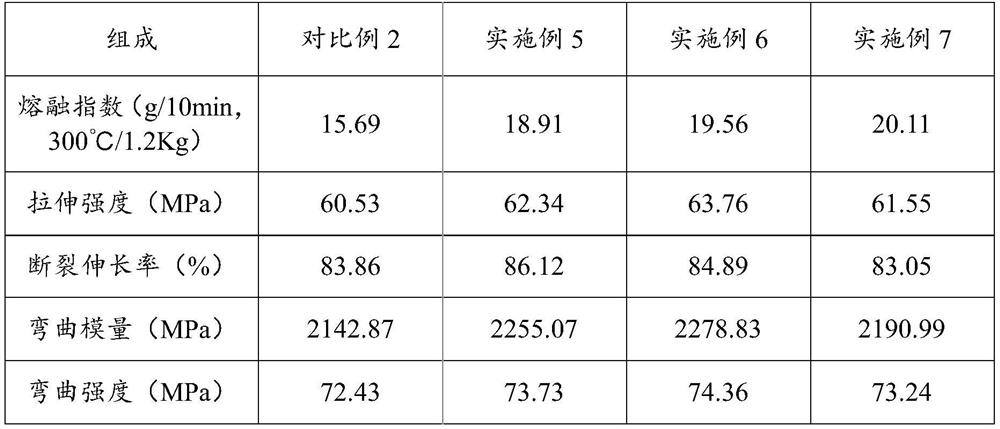
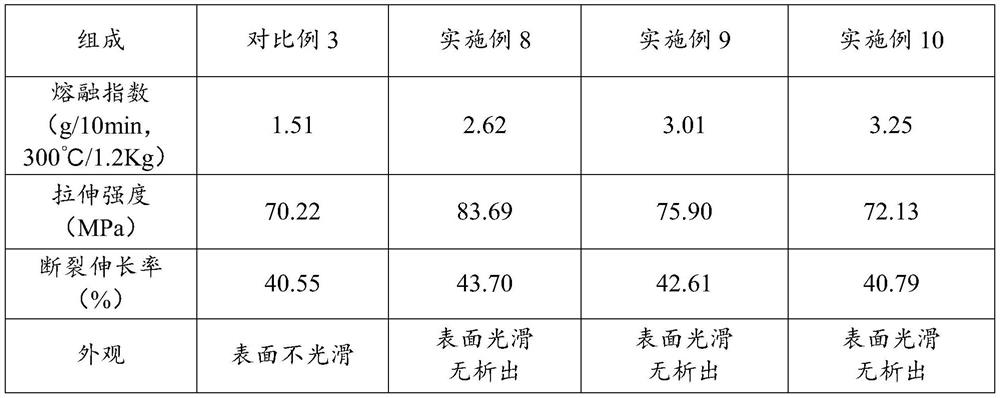
Examples
preparation example Construction
[0019] The embodiment of one aspect of the present invention provides a kind of preparation method containing carboxyl hyperbranched polyester amide, comprises the steps:
[0020] S1: Add aromatic polycarboxylic acid / polyanhydride monomer and monoamino monohydroxyl monomer into the reactor, and add catalyst to it, under the protection of inert gas, prepolymerize at 80°C-180°C for 0.5- 48 hours to form polymerized monomers;
[0021] S2: Then raise the temperature to 120°C-250°C and react for 0.5-120 hours to obtain carboxyl group-containing hyperbranched polyester amide.
[0022] In this example, the hyperbranched polymer was obtained by direct melt reaction of commercially available polycarboxylate / polyanhydride monomers and monoaminomonohydroxyl monomers through one-pot polymerization. Concretely, the above-mentioned raw materials are pre-polymerized under reaction conditions to form polymerized monomers (AB 2 ), and then further react to generate hyperbranched polyester am...
Embodiment 1
[0033] Under the protection of nitrogen, add 0.2 mol of metaphthalic anhydride and 0.2 mol of ethanolamine into a three-necked flask, and add p-toluenesulfonic acid with a mass fraction of 0.2% as a catalyst; raise the temperature to 80°C for 8 hours, and then heat up to Stir and react at 120° C. for 10 hours; stop the reaction, discharge and condense directly to obtain a light yellow transparent solid, and obtain carboxyl-containing hyperbranched polyester amide 1 with a yield of 90%. The 5% thermal decomposition temperature of the product is 390°C, and the refractive index is 1.572.
Embodiment 2
[0035] Under the protection of nitrogen, add 0.2 mol of metaphthalic anhydride and 0.2 mol of butanolamine into a three-necked flask, and add tetraisopropyl titanate with a mass fraction of 0.5% as a catalyst; raise the temperature to 180°C for 4 hours, Then the temperature was raised to 250° C. and the reaction was stirred for 1 hour; the reaction was stopped, and the material was directly discharged and condensed to obtain a light yellow transparent solid, and a carboxyl group-containing hyperbranched polyester amide 2 was obtained, and the yield was 91%. The 5% thermal decomposition temperature of the product is 387°C, and the refractive index is 1.575.
PUM
| Property | Measurement | Unit |
|---|---|---|
| thermal decomposition temperature | aaaaa | aaaaa |
| thermal decomposition temperature | aaaaa | aaaaa |
| thermal decomposition temperature | aaaaa | aaaaa |
Abstract
Description
Claims
Application Information
 Login to View More