

Nano silver loaded graphene silver kettle and preparation method thereof
A graphene and nano-silver technology, applied in botanical equipment and methods, utensils for boiling water, chemicals for biological control, etc. Excellent physical and chemical properties, improving service life and saving business costs
Patent Information
- Authority / Receiving Office
- CN · China
- Patent Type
- Applications(China)
- Current Assignee / Owner
- Publication Date
- 2018-03-06
Smart Images
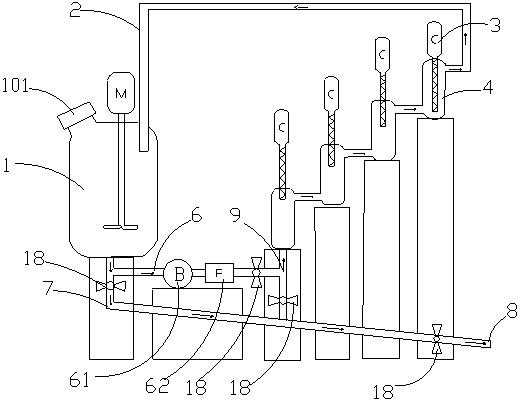
Figure 1 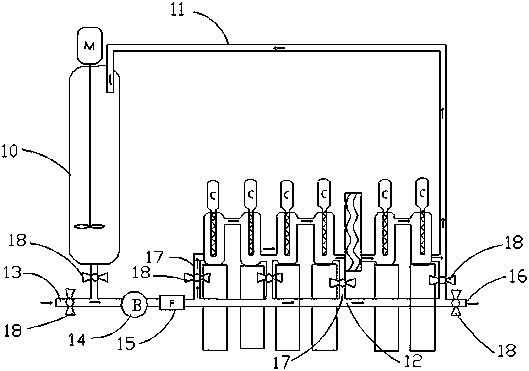
Figure 2
Abstract
Description
technical field
[0001] The invention relates to the field of graphene composite materials, more specifically, to a graphene silver pot loaded with nano-silver and a preparation method thereof. Background technique
[0002] In the prior art, there have been some reports on the application of graphene in antibacterial aspects. Germany "Micro" (Small, 20, 20, 2253 pages) has reported a method for synthesizing silver / graphene composites, the method utilizes oxidized graphene oxide to reduce silver nitrate under the alkaline condition of potassium hydroxide to prepare For the silver-graphene composite, potassium hydroxide is required in this method, which not only increases the complexity of the process, but also the product prepared under alkaline conditions will also affect the safety of the product in biological applications. China's "Nano Research" (Nano Research, 2010, Volume 3, page 339) reported a preparation method of a silver / graphene mixture, which used sodium borohydr...
Examples
Embodiment 1
[0040] The present embodiment provides a method for preparing a graphene antibacterial composite material loaded with nano-silver, comprising the following steps:
[0041] S1. Preparation of graphene oxide aqueous solution: graphene oxide was prepared by the improved Hummers method, and then subjected to secondary ultrasonic dispersion to obtain a 0.04g / L single-layer graphene oxide aqueous solution, and then silver nitrate was added to obtain a silver nitrate / graphene oxide mixed solution , wherein the concentration of silver nitrate is 0.08g / L;
[0042] S2. add glucose and soluble starch to step silver nitrate / graphene oxide mixed solution, glucose concentration is 0.072g / L, and soluble starch concentration is 0.08g / L, then is placed in hydrothermal reaction kettle, adopts hydrothermal method reaction, The reaction temperature is 100°C, the reaction time is 6 hours, and the water vapor pressure is 0.3-4Mpa. After the reaction, it is naturally cooled to room temperature, and ...
Embodiment 2
[0056] The present embodiment provides a method for preparing a graphene antibacterial composite material loaded with nano-silver, comprising the following steps:
[0057] S1. Preparation of graphene oxide aqueous solution: graphene oxide was prepared by the improved Hummers method, and then subjected to secondary ultrasonic dispersion to obtain a 0.09g / L single-layer graphene oxide aqueous solution, and then silver nitrate was added to obtain a silver nitrate / graphene oxide mixed solution , wherein the concentration of silver nitrate is 0.18g / L;
[0058] S2. add glucose and soluble starch to step silver nitrate / graphene oxide mixed solution, glucose concentration is 0.432g / L, and soluble starch concentration is 0.16g / L, then is placed in hydrothermal reaction kettle, adopts hydrothermal method reaction, The reaction temperature is 140°C, the reaction time is 4 hours, and the water vapor pressure is 0.3-4Mpa. After the reaction, it is naturally cooled to room temperature, and ...
Embodiment 3
[0064] This example is basically the same as Example 1, except that the hydrothermal reaction temperature in step S2 is 200°C and the reaction time is 4h, and the hydrothermal reaction temperature in step S3 is 140°C and the reaction time is 6h.
[0065] The loading capacity of nano-silver particles in the graphene / nano-silver composite material prepared in this embodiment is 42.00%. When the concentration is 0.09 μg / ml, the antibacterial rate to Escherichia coli reaches 99.7%. The loading of nano-silver particles in this embodiment The main reason is that in step S2, the graphene oxide will show a thermogravimetric behavior, and the oxygen-containing functional groups will be decomposed in large quantities, resulting in a reduction in the amount of reduced silver ions.