
A kind of degradation controllable pbat/pla composite film and preparation method thereof
A composite membrane, calcium carbonate technology, applied in the field of PBAT/PLA blending and compatibilization, can solve the problems of easy penetration of low molecular substances, decreased material performance, poor material stability, etc., to achieve good light stability and antibacterial properties, phase The effect of improved capacitance and enhanced bonding force
- Summary
- Abstract
- Description
- Claims
- Application Information
AI Technical Summary
Problems solved by technology
Method used
Image

Examples
Embodiment 1
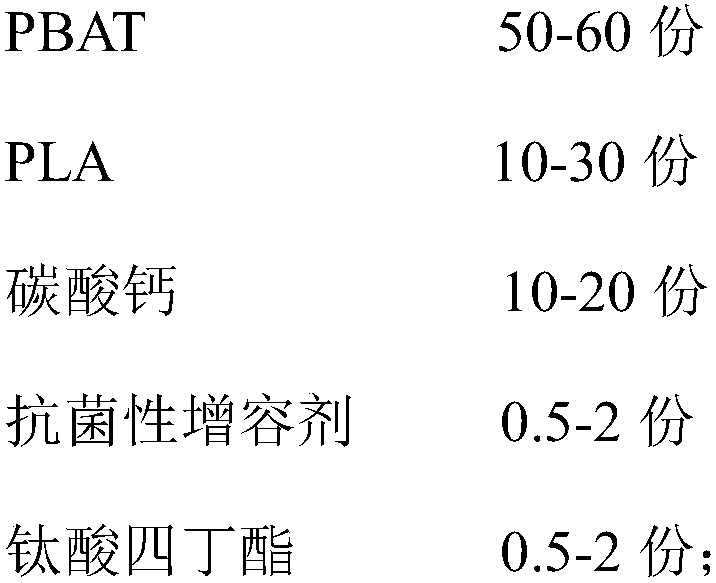
[0052] A degradation controllable PBAT / PLA composite film, including the following components and parts by weight:
[0053]
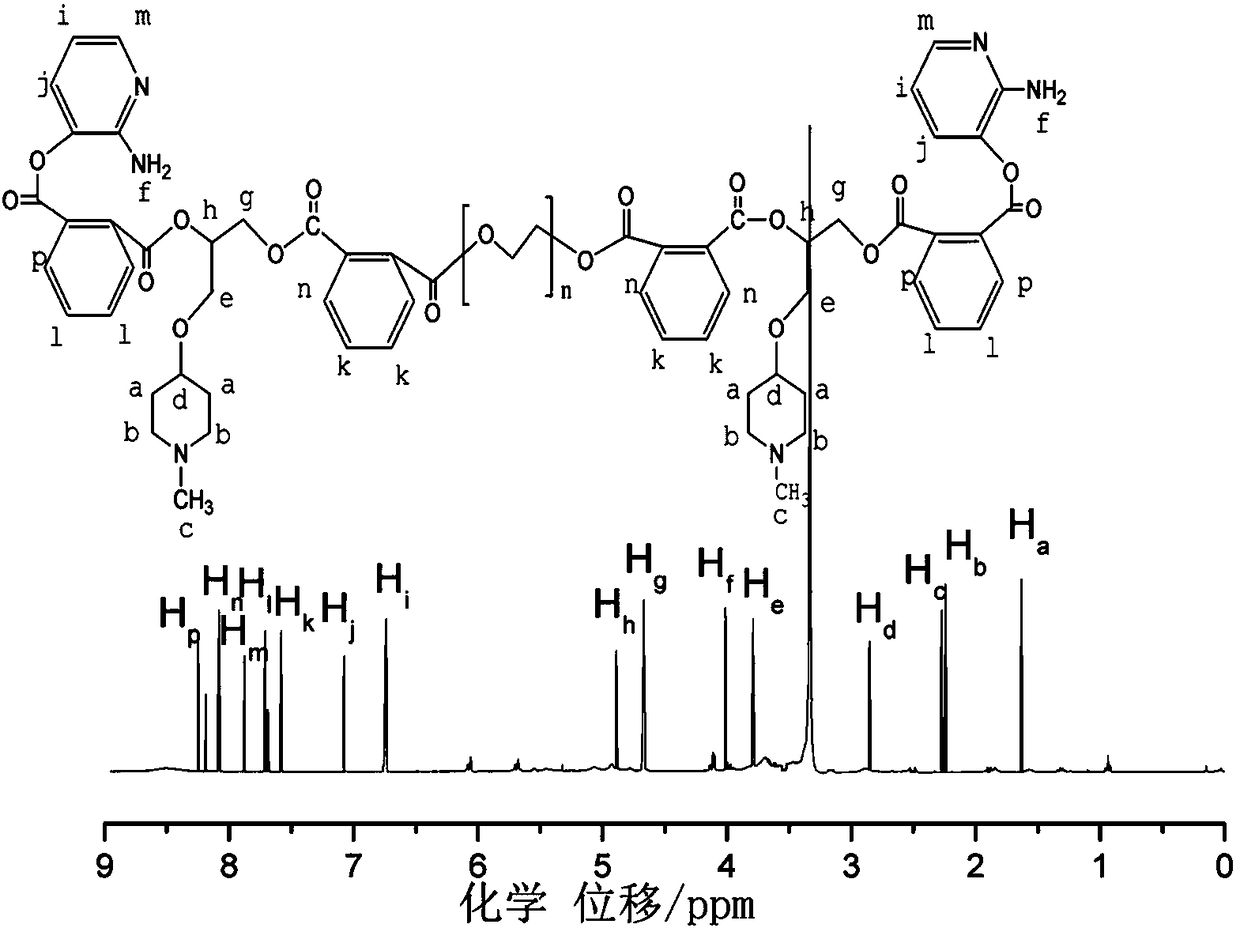
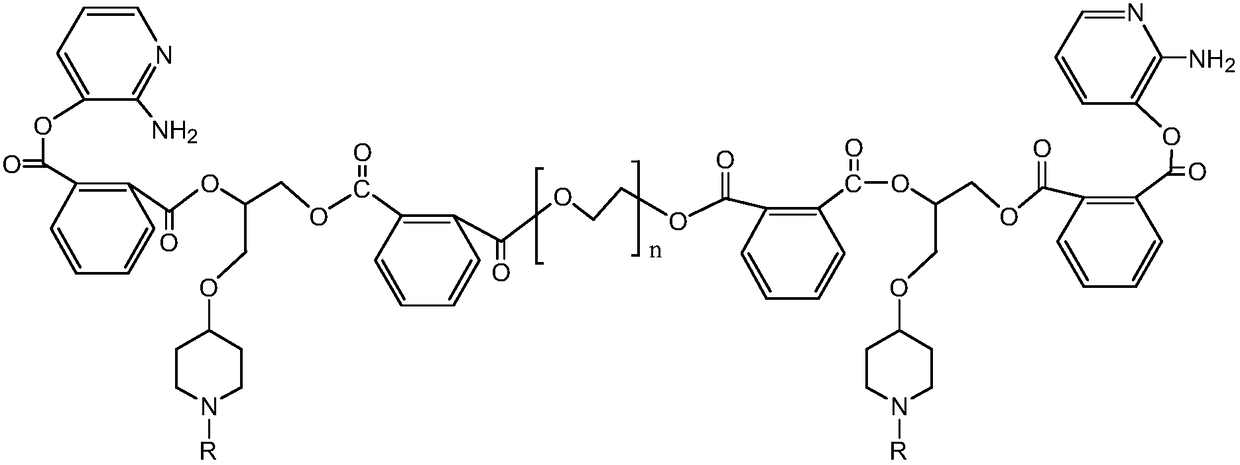
[0054] Among them, the antibacterial compatibilizer is:
[0055]
[0056] Where R is -CH 3 Or -CH 2 CH 3 .
[0057] A method for preparing a degradable and controllable PBAT / PLA composite film includes the following steps:
[0058] (1) Weigh the raw materials according to the weight parts of the above components, and dry the PLA particles and PBAT particles in a vacuum drying oven at 70°C for 3-5 hours;
[0059] (2) The dried PLA particles, PBAT particles, antibacterial compatibilizer, tetrabutyl titanate and calcium carbonate are mixed uniformly in proportions and then added to the twin-screw extruder for extrusion and granulation, and the extruder is set The temperature of each zone is between 170-185℃;
[0060] (3) The PBAT / PLA blend particles obtained in step (2) are added to the plastic film blowing machine for film blowing to prepare a PBAT / PLA composite fi...
Embodiment 2-6
[0061] Examples 2-6, Comparative Examples 1-4 are the same as Example 1, the difference lies in Table 1:
[0062] Table 1:
[0063]
PUM
| Property | Measurement | Unit |
|---|---|---|
| glass transition temperature | aaaaa | aaaaa |
| melting point | aaaaa | aaaaa |
Abstract
Description
Claims
Application Information
 Login to View More