Sensor based on affinity effect of boric acid, and preparation method and application thereof
A sensor, acid affinity technology, applied in the direction of instruments, scientific instruments, measuring devices, etc., can solve the problem of difficult removal of template molecules, and achieve the effect of low cost, stable performance and high promotion value
- Summary
- Abstract
- Description
- Claims
- Application Information
AI Technical Summary
Problems solved by technology
Method used
Image

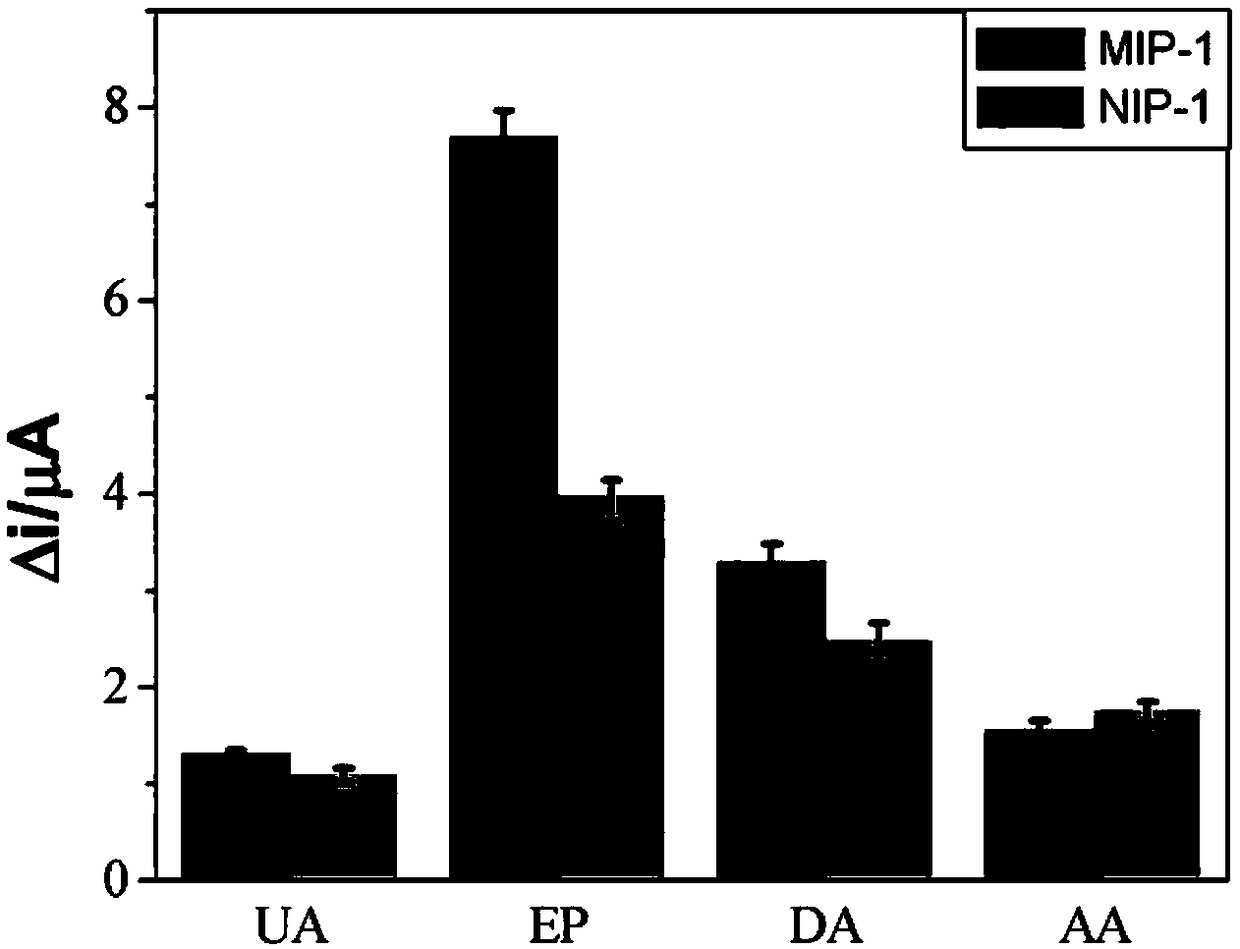
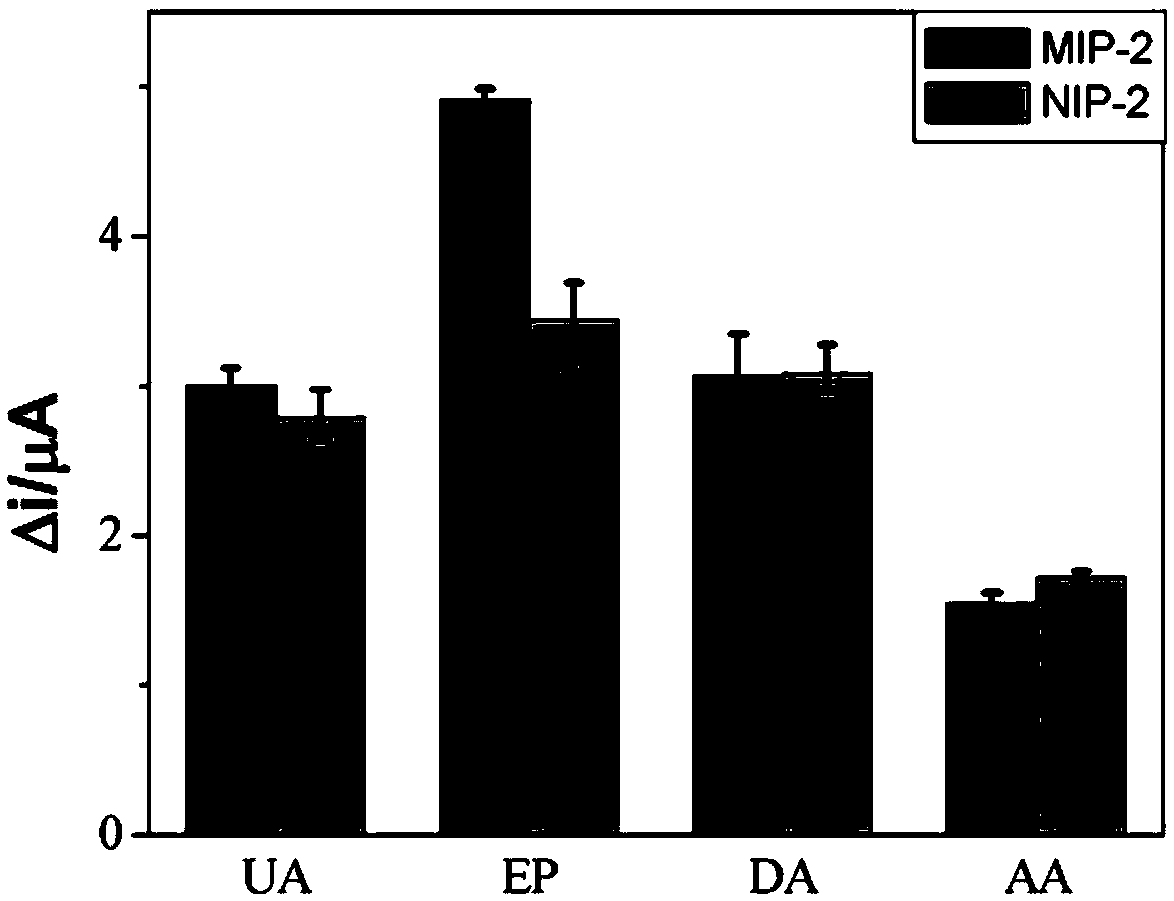
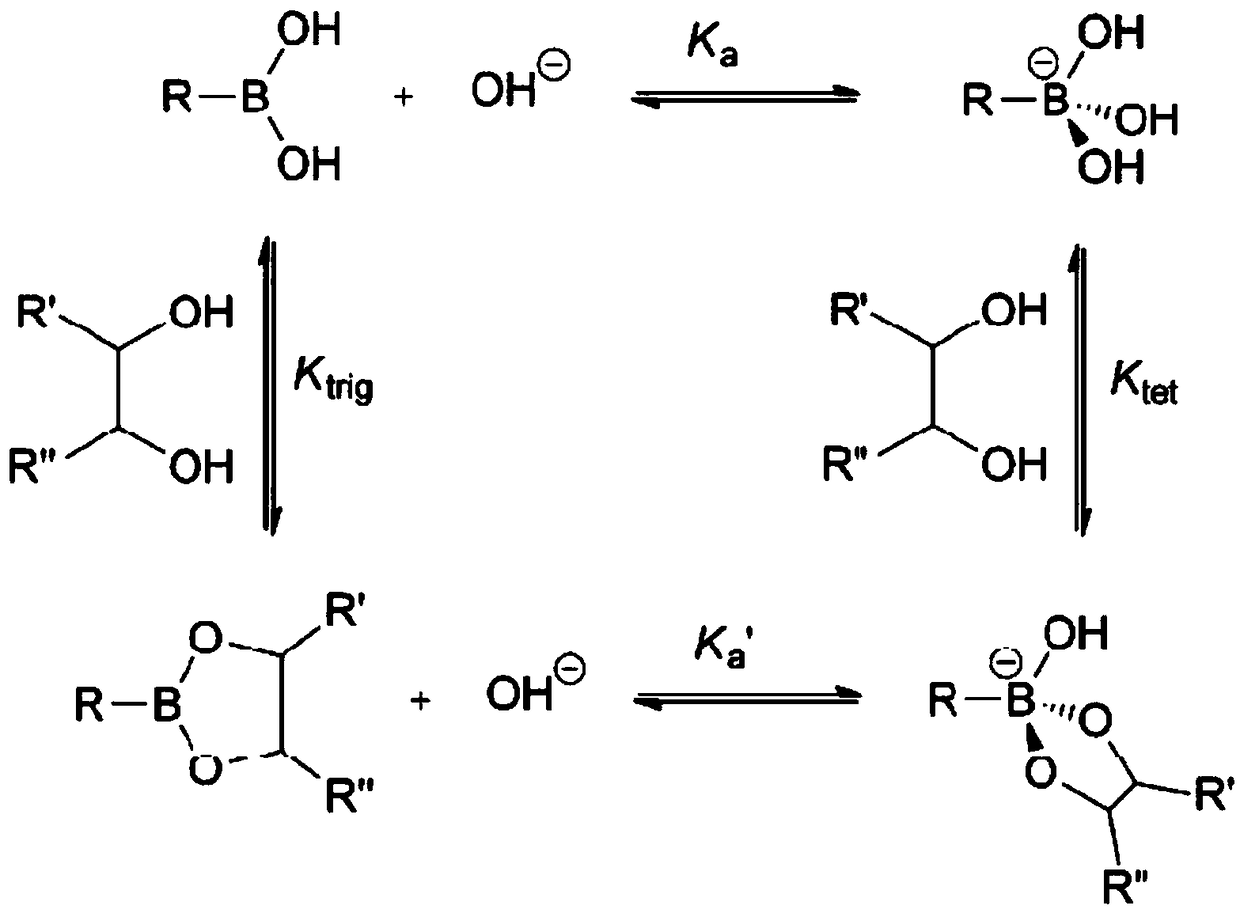
Examples
preparation example Construction
[0017] The invention provides a method for preparing a sensor based on boric acid affinity, the method comprising: (1) mixing 3-thiophene boronic acid, epinephrine and a buffer solution to form a pre-polymerization solution; (2) mixing a glassy carbon electrode Immerse in the pre-polymerization solution, and use cyclic voltammetry to electropolymerize to obtain a polymer film-modified electrode; (3) immerse the polymer film-modified electrode in acid solution, and use cyclic voltammetry to scan repeatedly to elute adrenaline.
[0018] Through the above technical solution, the present invention introduces a new functional monomer 3-thiophene boronic acid (3-TBA), which is used to prepare molecularly imprinted polymer membranes, and expands the types of functional monomers. By electropolymerizing a layer of molecularly imprinted polymer film with 3-thiophene boronic acid as a new functional monomer on the glassy carbon electrode, combined with the molecular imprint left by adrena...
Embodiment 1
[0046] Add 5mL 4.0×10 to the clean electrolytic cell -3 mol / L HAuCl 4 solution, using the i-t method to perform electrochemical deposition of gold nanoparticles (AuNPs) on the polished glassy carbon electrode at -0.2V to obtain a gold nanoparticle-modified glassy carbon electrode (AuNPs / GCE);
[0047] Take 400uL 3-TBA (concentration: 0.05mol / L) and 100uL epinephrine (concentration: 0.05mol / L) into 5mL of PBS buffer solution (pH6.0), mix and stir to form a pre-polymerization solution;
[0048] The glassy carbon electrode modified by gold nanoparticles is immersed in the pre-polymerization solution, and electropolymerized by cyclic voltammetry (CV) in the potential range of -0.2V to 1.2V to obtain a polymer film modified electrode;
[0049] Submerge the polymer membrane modified electrode in hydrochloric acid (concentration: 0.05mol / L), and use the CV method to cycle scan 20 times in the potential range of 0-1.5V to elute the template molecule adrenaline, and obtain a boronic a...
Embodiment 2
[0051] The preparation method of the sensor based on boronic acid affinity:
[0052] (1) Mix 3-thiopheneboronic acid, epinephrine and phosphate buffer solution (pH 4, concentration 0.08mol / L) to form a pre-polymerization solution, wherein the molar ratio of 3-thiopheneboronic acid and epinephrine is 3:1 , the concentration of adrenaline in the pre-polymerization liquid is 0.8mmol / L;
[0053] (2) Immerse the glassy carbon electrode in the pre-polymerization solution, and use cyclic voltammetry electropolymerization (the potential range is -0.2V to 1.2V, and the number of polymerization cycles is: 30 cycles) to obtain a polymer film modified electrode;
[0054] (3) Immerse the polymer membrane-modified electrode in hydrochloric acid (the concentration of hydrogen ions is 0.03 mol / L), and use cyclic voltammetry (potential range 0-1.5 V) to scan 25 times to elute epinephrine.
PUM
| Property | Measurement | Unit |
|---|---|---|
| Concentration | aaaaa | aaaaa |
| Electric potential | aaaaa | aaaaa |
Abstract
Description
Claims
Application Information
 Login to View More
 - R&D
- Intellectual Property
- Life Sciences
- Materials
- Tech Scout
- Unparalleled Data Quality
- Higher Quality Content
- 60% Fewer Hallucinations
Browse by: Latest US Patents, China's latest patents, Technical Efficacy Thesaurus, Application Domain, Technology Topic, Popular Technical Reports.
© 2025 PatSnap. All rights reserved.Legal|Privacy policy|Modern Slavery Act Transparency Statement|Sitemap|About US| Contact US: help@patsnap.com