
A method for constructing a catalytic hydrogen evolution electrode with fully exposed molybdenum disulfide active sites
A molybdenum disulfide and hydrogen evolution electrode technology, applied in electrodes, replication/marking methods, electrolysis components, etc., can solve the problems of easy-to-stack space structure design methods, large size of lamellae, lack of lamellae, etc., and achieve mass production. , the effect of increasing quantity and low preparation cost
- Summary
- Abstract
- Description
- Claims
- Application Information
AI Technical Summary
Problems solved by technology
Method used
Image

Examples
Embodiment 1
[0051] Mix 10mL ethanol and 10mL deionized water in a beaker, add 40mg of polyvinylpyrrolidone, then weigh 200mg of molybdenum disulfide powder raw material and 20mg of reduced graphene oxide powder raw material and disperse them in the mixed solution to prepare molybdenum disulfide suspension. Transfer the molybdenum disulfide suspension to an ultrasonic tank for liquid phase stripping, and centrifuge the molybdenum disulfide suspension after liquid phase ultrasonic treatment, and take two-thirds of the supernatant from the centrifuge tube to obtain molybdenum disulfide / Polyvinylpyrrolidone / reduced graphene oxide dispersion (ie, molybdenum disulfide nanosheet dispersion) is the active material for catalytic hydrogen evolution.
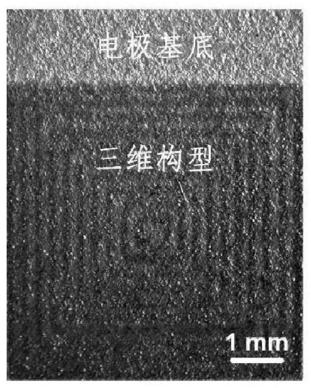
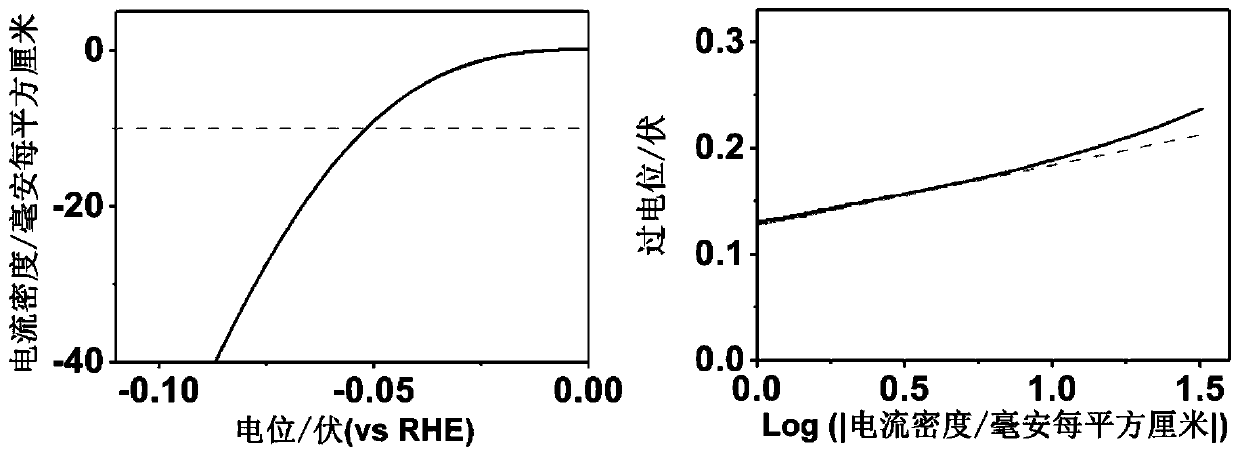
[0052] Molybdenum disulfide / polyvinylpyrrolidone / reduced graphene oxide was spray-printed on a Teslin paper base covered with a copper conductive film by inkjet printing. Its patterned configuration is as follows: First, use a plane figure (area 0.5...
Embodiment 2
[0056] Mix 10mL ethanol and 10mL deionized water in a beaker, add 40mg of polyvinylpyrrolidone, then weigh 200mg of molybdenum disulfide powder raw material and 20mg of reduced graphene oxide powder raw material and disperse them in the mixed solution to prepare molybdenum disulfide suspension. Transfer the molybdenum disulfide suspension to an ultrasonic tank for liquid phase stripping, and centrifuge the molybdenum disulfide suspension after liquid phase ultrasonic treatment, and take two-thirds of the supernatant from the centrifuge tube to obtain molybdenum disulfide / Polyvinylpyrrolidone / reduced graphene oxide dispersion (ie, molybdenum disulfide nanosheet dispersion) is the active material for catalytic hydrogen evolution.
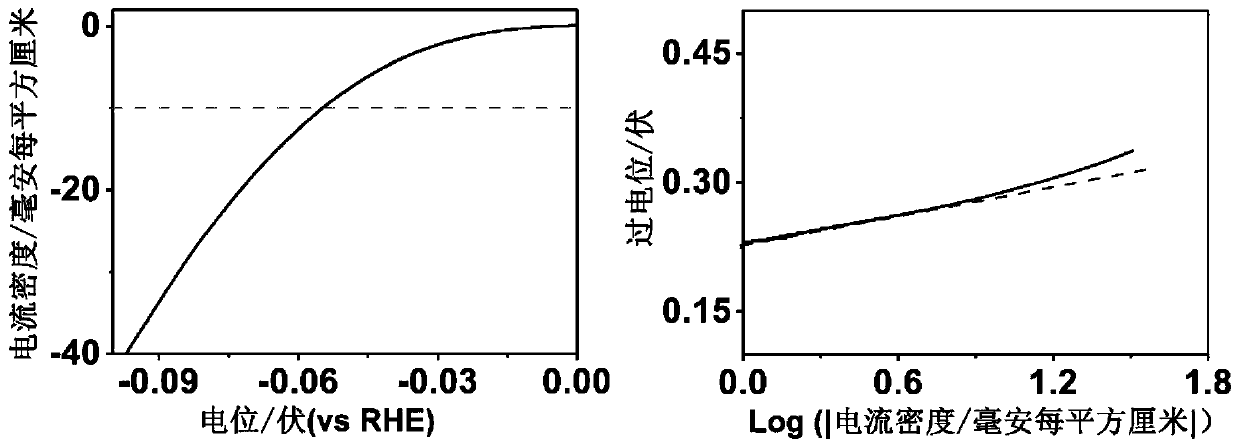
[0057] Molybdenum disulfide / polyvinylpyrrolidone / reduced graphene oxide was spray-printed on a Teslin paper base covered with a copper conductive film by inkjet printing. Its patterned configuration is as follows: First, use a plane figure (area 0.5...
PUM
 Login to View More
 Abstract
Description
Claims
Application Information
 Login to View More