
Organic compound, and organic electroluminescent device employing same
An electroluminescent device and organic compound technology, applied in the field of triphenylamine derivatives and organic electroluminescent devices, can solve the problems of low glass transition temperature of blue phosphorescent materials, low material stability, hindering wide use, etc. It is not easy to crystallize and decompose, balance the transfer of holes and electrons, and improve the effect of life.
Patent Information
- Authority / Receiving Office
- CN · China
- Patent Type
- Applications(China)
- Current Assignee / Owner
- Publication Date
- 2020-03-10
- Estimated Expiration
- Not applicable · inactive patent
Smart Images
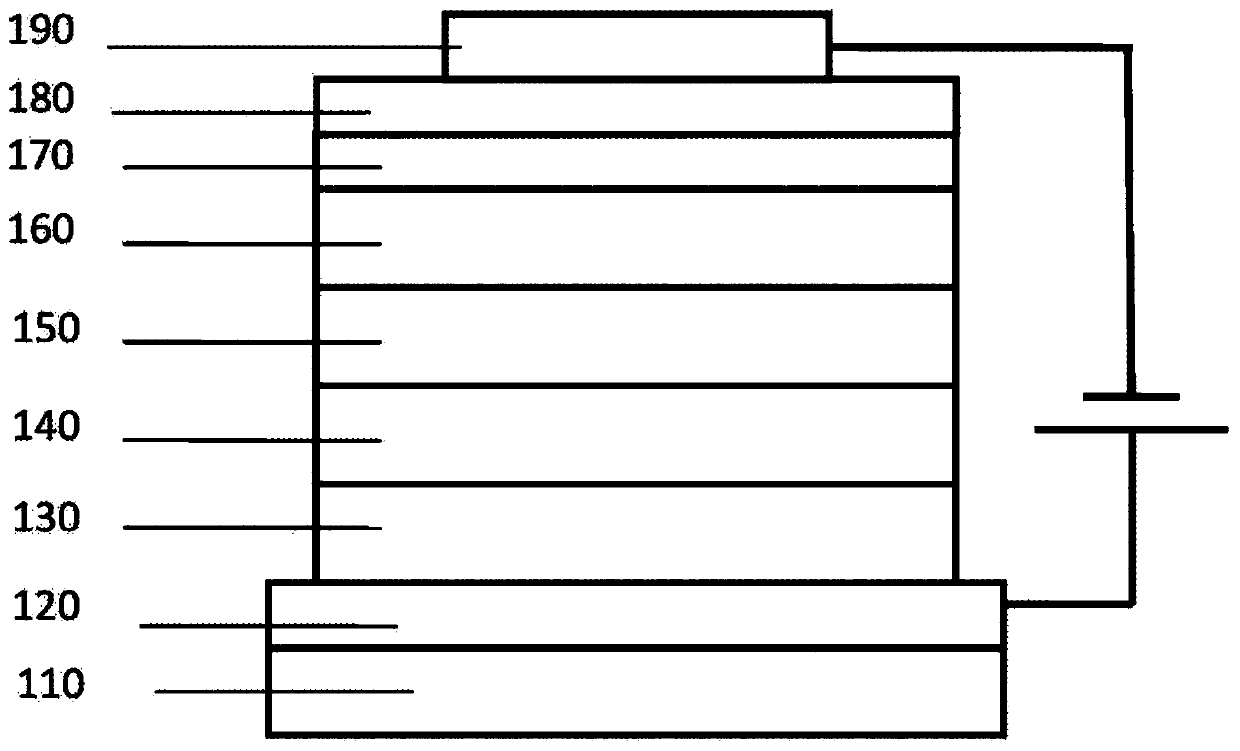
Figure 1 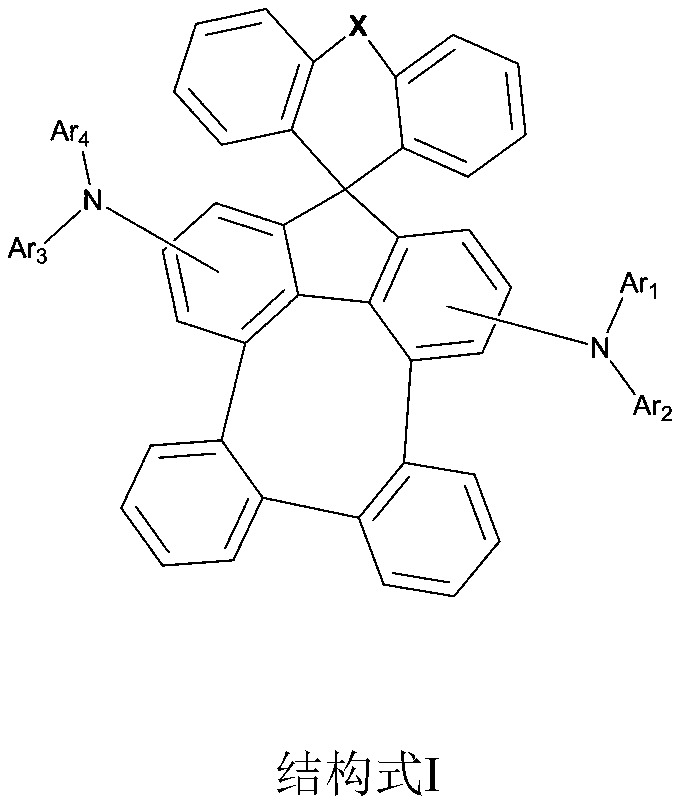
Figure 2 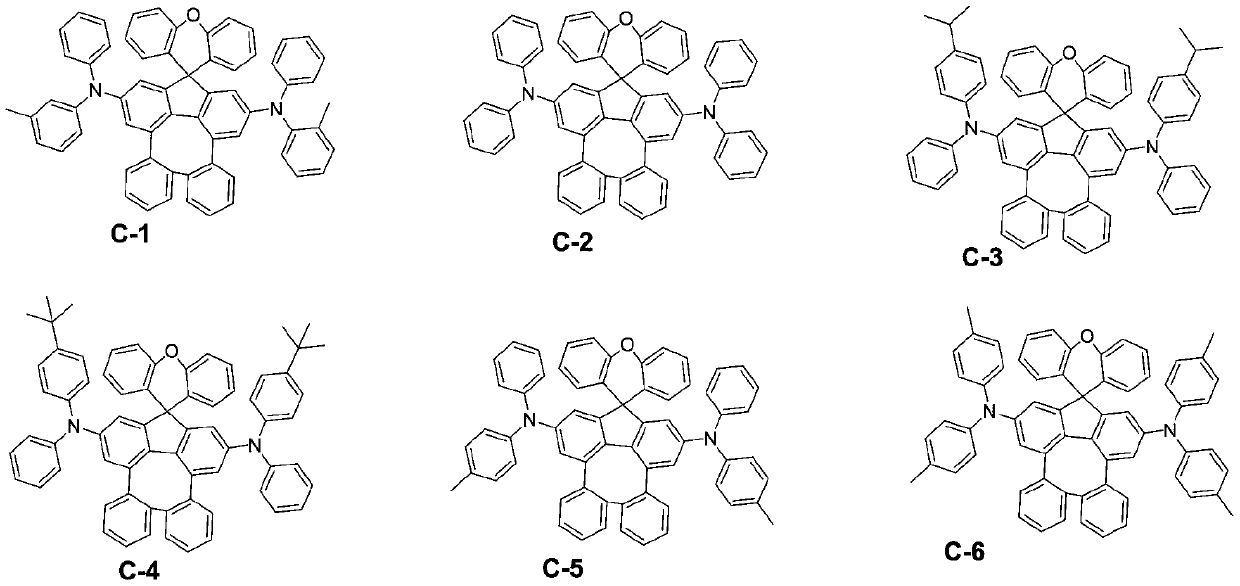
Figure 3
Abstract
Description
technical field
[0001] The invention relates to an organic compound in the field of organic electroluminescence and an organic electroluminescence device using the compound, in particular to a triphenylamine derivative and an organic electroluminescence device using the compound. Background technique
[0002] Organic electroluminescent devices (OLED: Organic Light Emission Diodes) have the advantages of wide viewing angle, fast response speed, high color quality, flexible light emission, etc., and have broad application prospects. OLED devices usually have a sandwich structure, including positive and negative electrode film layers and an organic functional material layer sandwiched between the electrode film layers. Apply voltage to the electrodes of the OLED device, positive charges are injected from the positive electrode, and negative charges are injected from the negative electrode. Under the action of the electric field, the positive and negative charges migrate in the ...
Examples
Embodiment 1
[0055] Synthesis of compound C-6
[0056]
[0057] Add (6.8g, 10.6mmol), bis(4-methylphenyl)amine (5.0g, 25.4mol), Pd 2 (dba) 3 (0.08g, 0.4mmol), sodium tert-butoxide (3.4g, 0.035mol), tri-tert-butylphosphine (0.07g, 0.4mmol), 60mL of toluene, and stirred at reflux for 2 hours. Cool at room temperature after the reaction is complete. The reaction solution was extracted with dichloromethane and water. The organic layer was separated, dried over magnesium sulfate, and concentrated under reduced pressure. The substance was separated and purified by column chromatography, and then recrystallized by dichloromethane and acetone to obtain compound C-6 (3.7 g, 40%). The resulting compound was identified by LC-MS. LC-MS: M / Z 873.3(M+H) + . Theoretical element content (%)C 65 H48N 2O : C, 89.42; H, 5.54; N, 3.21; O, 1.83. The above results confirmed that the obtained product was the target product.
Embodiment 2
[0059] Synthesis of compound C-9
[0060]
[0061] The synthesis steps of compound C-9 are as the above reaction formula, and the preparation and confirmation methods are the same as those of compound C-6, and compound C-9 (4.4 g, 38%) can be obtained. LC-MS: M / Z 1081.4 (M+H)+.
Embodiment 3
[0063] Synthesis of compound C-11
[0064]
[0065] The synthesis steps of compound C-11 are as the above reaction formula, and the preparation and confirmation methods are the same as those of compound C-6, and compound C-9 (4.7 g, 40%) can be obtained. LC-MS: M / Z 1121.4 (M+H)+.