

Hydrogen sensor based on Pd-Ag alloy nanocrystalline and preparation method of hydrogen sensor
A technology of alloy nanocrystals and sensors, applied in instruments, scientific instruments, measuring devices, etc., can solve the problems of easy poisoning and loss of activity of palladium metal
- Summary
- Abstract
- Description
- Claims
- Application Information
AI Technical Summary
Problems solved by technology
Method used
Image

Examples
Embodiment 1
[0040] Example 1: Pd 80 Ag 20Preparation of ZnO Nanowire Sensitive Material Modified by Alloy Nanocrystals and Its Hydrogen Sensitive Properties
[0041] 0.012g black Pd 80 Ag 20 The alloy nanocrystal solid was dispersed in 50 mL of n-hexane to obtain a Pd-Ag bimetallic alloy nanocrystal dispersion solution 1*.
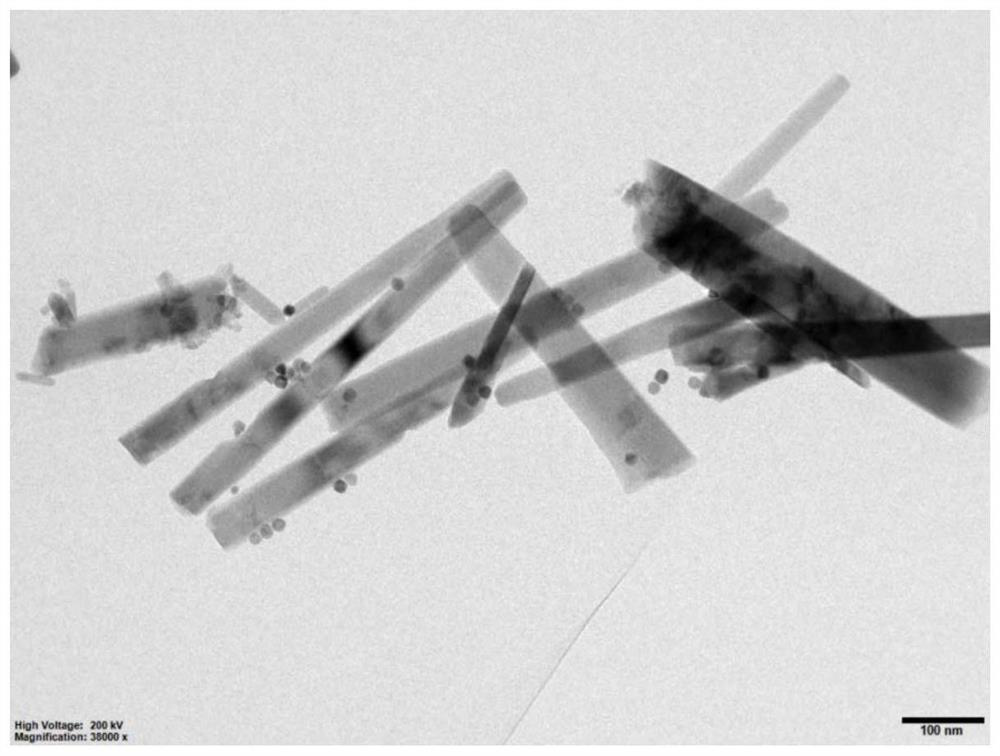
[0042] Take 2mL of Pd-Ag bimetallic alloy nanocrystal dispersion solution 1* and 0.05g of zinc oxide nanowires and stir and mix for 1min, put them into an ultrasonic tester for ultrasonic treatment for 1min, and obtain the required Pd 80 Ag 20 ZnO nanowires modified by alloy nanocrystals as hydrogen sensitive materials.
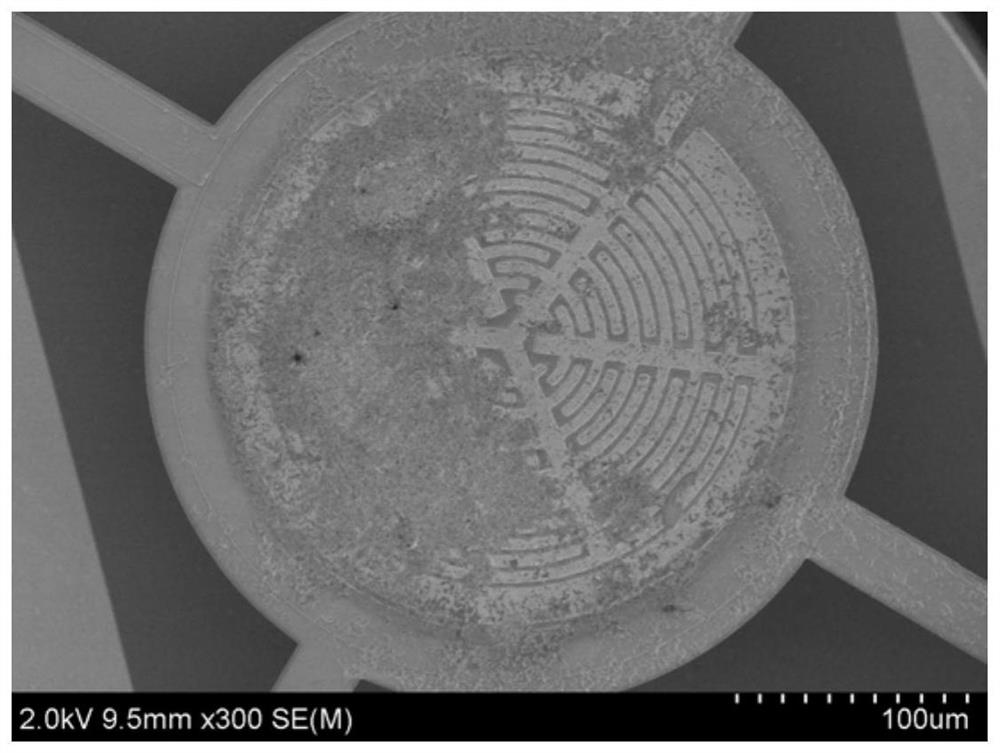
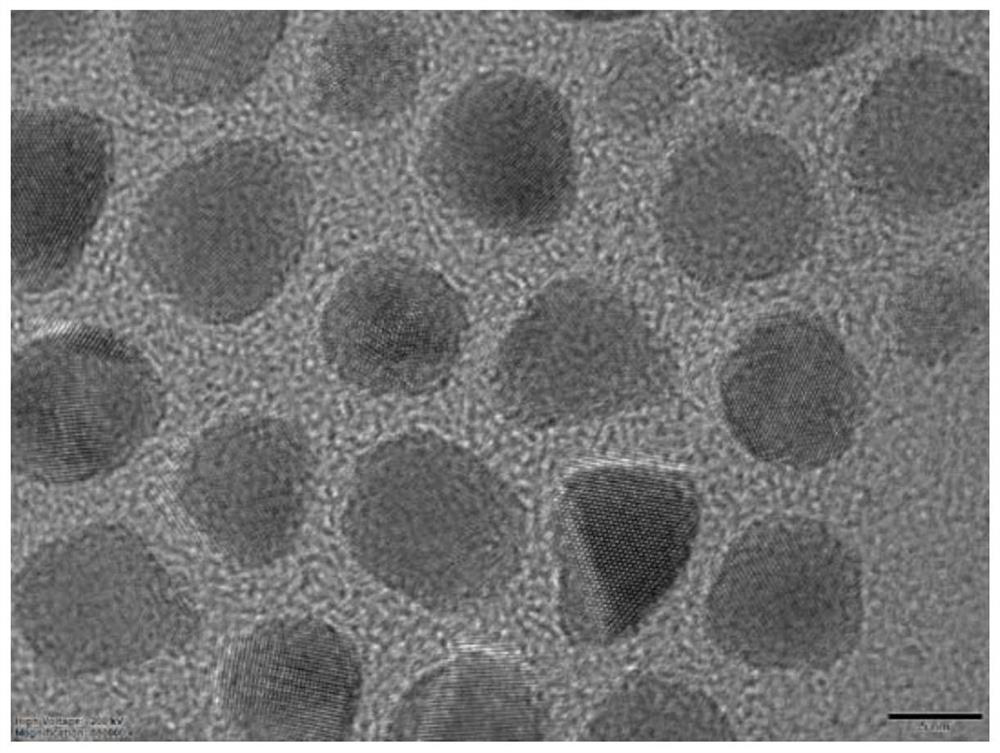
[0043] A small amount of the Pd-Ag bimetallic alloy nanocrystal dispersion solution 1* prepared above was taken for TEM observation. Scanning electron microscope photographs showed figure 1 As shown, the transmission electron micrograph results are as follows figure 2 As shown, the diameter of the nanoparticles in the Pd-Ag bimetallic alloy ...
Embodiment 2
[0049] Example 2: Pd 50 Ag 50 Preparation of ZnO Nanowire Sensitive Material Modified by Alloy Nanocrystals and Its Hydrogen Sensitive Properties
[0050] 0.013g black Pd 50 Ag 50 The alloy nanocrystal solid was dispersed in 50 mL of n-hexane to obtain a Pd-Ag bimetallic alloy nanocrystal dispersion solution 2*.
[0051] Take 2mL of Pd-Ag bimetallic alloy nanocrystal dispersion solution 2* and 0.05g of zinc oxide nanowires and stir and mix for 1min, then put it into an ultrasonic tester and ultrasonically treat it for 1min to obtain the required Pd 50 Ag 50 ZnO nanowires modified by alloy nanocrystals as hydrogen sensitive materials.
[0052] A small amount of the Pd-Ag bimetallic alloy nanocrystal dispersion solution 2* prepared above was taken for TEM observation. The diameter of the nanoparticles in the Pd-Ag bimetallic alloy nanocrystal dispersion solution 2* is 5-8nm. As shown in Table 2, the energy spectrum analysis results of the Pd-Ag bimetallic alloy nanocrysta...
Embodiment 3
[0056] Example 3: Pd 80 Ag 20 Alloy Nanocrystal Modified SnO 2 Preparation of Nanowire Sensitive Materials and Their Hydrogen Sensitive Properties
[0057] Take 2mL of the Pd-Ag bimetallic alloy nanocrystal dispersion solution 1* as shown in Example 1 and mix with 0.05g tin oxide nanowires for 1min, put them into an ultrasonic tester and ultrasonically for 1min, and obtain the required Pd-Ag bimetallic alloy nanocrystal dispersion solution 1* and 0.05g tin oxide nanowires. The metal alloy nanocrystal modified tin oxide nanowire hydrogen sensitive material, and the sensitive material is coated on the comb electrode of the microsensor chip, and the required resistive hydrogen sensor 3# is prepared. The hydrogen sensor 3# is used for hydrogen detection, the results show that Pd 80 Ag 20 Alloy nanocrystals can significantly enhance the sensitivity of the hydrogen sensor to detect hydrogen.
PUM
| Property | Measurement | Unit |
|---|---|---|
| Diameter | aaaaa | aaaaa |
Abstract
Description
Claims
Application Information
 Login to View More