
Method for modifying surface of lithium cobalt oxide positive electrode material by phosphorus-containing compound and lithium cobalt oxide positive electrode material
A cathode material and surface modification technology, applied in battery electrodes, electrochemical generators, structural parts, etc., can solve the problems of complex and difficult process control, and achieve the effect of simple and easy control of the process and obvious modification effect.
Active Publication Date: 2020-11-10
NANJING UNIV OF SCI & TECH
View PDF8 Cites 3 Cited by
- Summary
- Abstract
- Description
- Claims
- Application Information
AI Technical Summary
Problems solved by technology
[0004] However, the current process of making the cladding layer is usually very complicated, and it is difficult to control the process control
Method used
the structure of the environmentally friendly knitted fabric provided by the present invention; figure 2 Flow chart of the yarn wrapping machine for environmentally friendly knitted fabrics and storage devices; image 3 Is the parameter map of the yarn covering machine
View moreImage
Smart Image Click on the blue labels to locate them in the text.
Smart ImageViewing Examples

Examples
Experimental program
Comparison scheme
Effect test
Embodiment 1
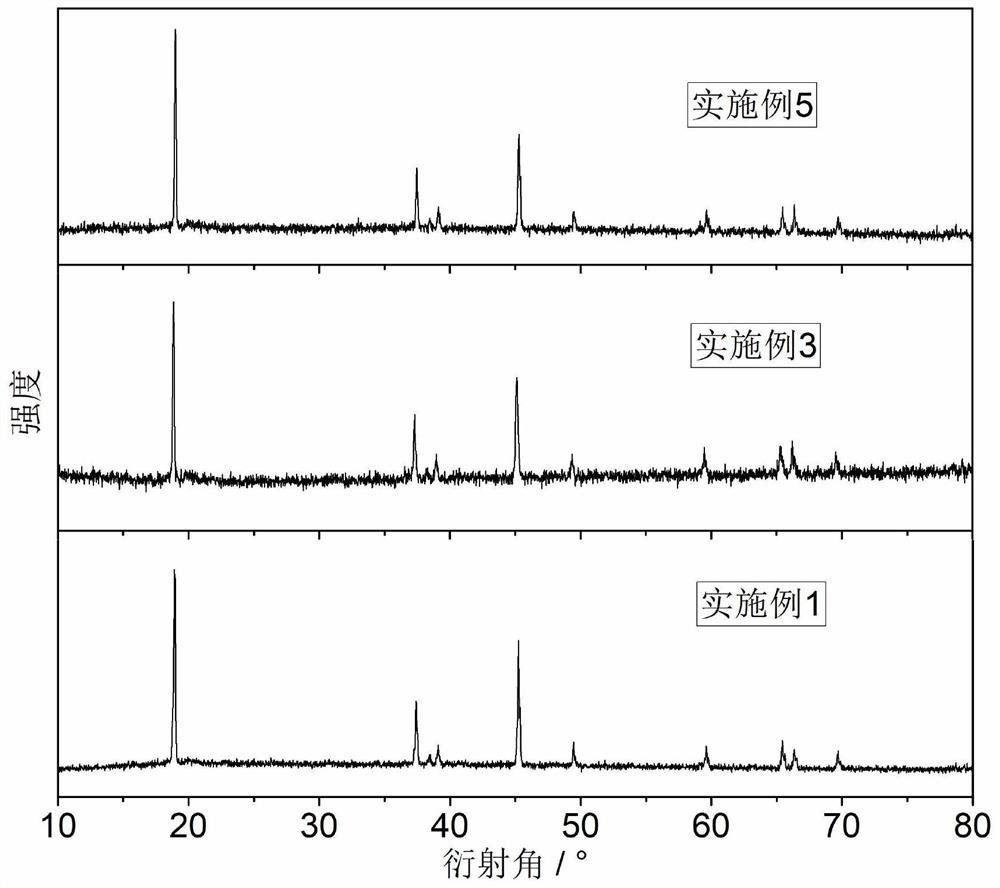
[0052] Mix 0.1g of sodium phosphate and 10g of lithium cobaltate in a ball mill, mill for 2 hours, heat at 400°C in air for 5-6 hours, and cool naturally to obtain a surface-modified lithium cobaltate material.
Embodiment 2
[0054] 0.2 g of sodium hypophosphite and 10 g of lithium cobaltate were ball-milled for 2 hours, heated at 200° C. in argon for 1 hour, and naturally cooled to obtain a surface-modified lithium cobaltate material.
Embodiment 3
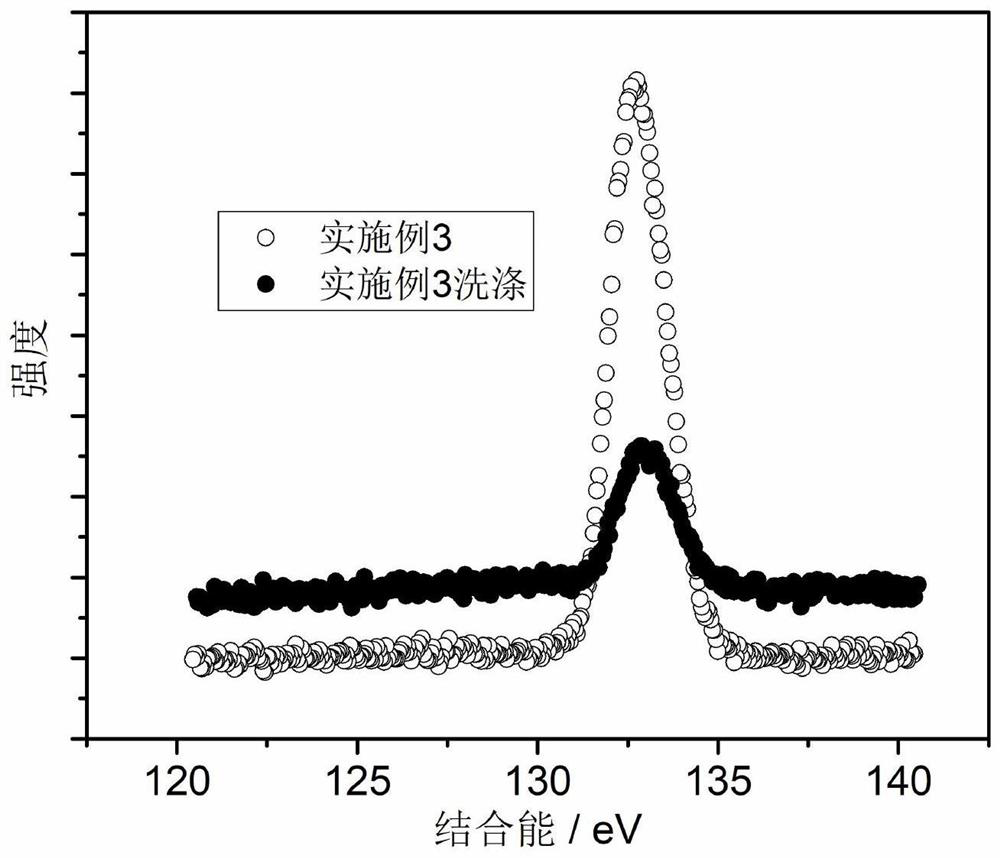
[0056] 0.5 g of sodium hypophosphite and 10 g of lithium cobaltate were mixed and ball-milled for 2 hours, heated at 500° C. in air for 2 hours, and naturally cooled to obtain a surface-modified lithium cobaltate material.
the structure of the environmentally friendly knitted fabric provided by the present invention; figure 2 Flow chart of the yarn wrapping machine for environmentally friendly knitted fabrics and storage devices; image 3 Is the parameter map of the yarn covering machine
Login to View More PUM
| Property | Measurement | Unit |
|---|---|---|
| Particle size | aaaaa | aaaaa |
Login to View More
Abstract
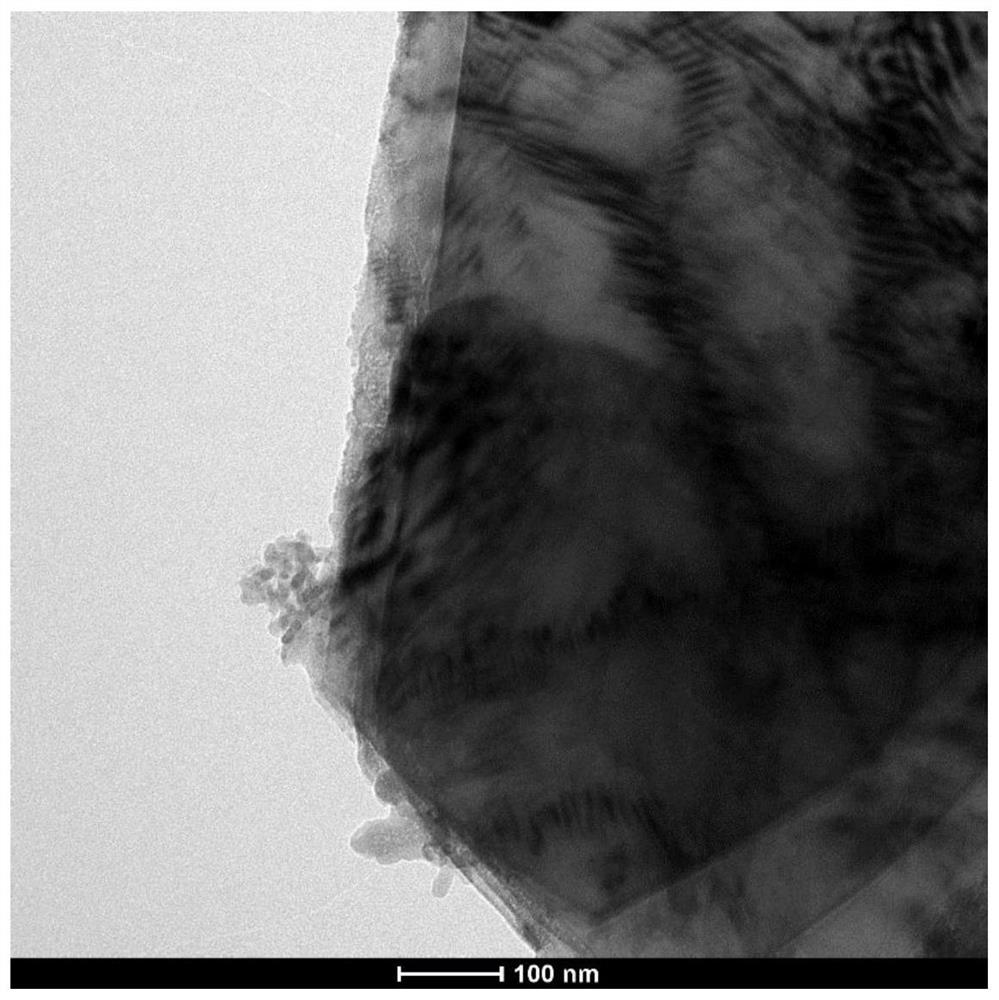
The invention provides a method for modifying the surface of a lithium cobalt oxide positive electrode material by a phosphorus-containing compound and the lithium cobalt oxide positive electrode material, and the method comprises the following steps: 1, by taking a lithium cobalt oxide powder material with a layered structure as a matrix, carrying out ball-milling mixing on the lithium cobalt oxide powder material and the phosphorus-containing compound according to a certain proportion to obtain a mixed powder material; 2, in an atmosphere protection environment, heating the mixed powder material to obtain the modified lithium cobalt oxide positive electrode material, wherein the interior of which is lithium cobalt oxide, the near surface of which comprises lithium cobalt oxide crystal lattices and phosphate radical bonds and the surface of which comprises an amorphous coating layer composed of metal ions and phosphate radical groups. According to the preparation method, a phosphorus-containing compound and lithium cobalt oxide are mixed and heated for process control and treatment, so the surfaces of lithium cobalt oxide particles are modified, and the stability of a lithium cobalt oxide structure is enhanced by doping phosphate radicals in surface crystal lattices; and the amorphous coating layer effectively protects the electrode electrolyte interface, reduces the interfaceside reaction, and improves the rate capability and the cycle performance.
Description
technical field [0001] The invention relates to the technical field of lithium cobaltate positive electrode materials, in particular to a method for modifying the surface of lithium cobaltate positive electrode materials with phosphorus compounds and the lithium cobaltate positive electrode materials. Background technique [0002] Lithium cobalt oxide cathode material is an ideal cathode material for lithium-ion batteries in the future. Increasing the working voltage of lithium cobalt oxide can provide higher specific capacity and energy density. However, when the charging voltage reaches 4.5V and above, lithium cobalt oxide faces, such as the irreversibility of the phase transition decreases, the particles undergo c-axis shrinkage greater than 3%, the release of lattice oxygen causes the destruction of the material structure, the phase transition of the interface, A series of problems such as the dissolution of transition metals lead to a decline in its cycle stability. ...
Claims
the structure of the environmentally friendly knitted fabric provided by the present invention; figure 2 Flow chart of the yarn wrapping machine for environmentally friendly knitted fabrics and storage devices; image 3 Is the parameter map of the yarn covering machine
Login to View More Application Information
Patent Timeline
 Login to View More
 IPC IPC(8): H01M4/36H01M4/48H01M4/525H01M4/58H01M10/0525
CPCH01M4/366H01M4/5805H01M4/48H01M4/525H01M10/0525Y02E60/10
Inventor夏晖刘玲郑欣段玉龙薛亮
OwnerNANJING UNIV OF SCI & TECH