
High-toughness steel plate used in extremely cold environment and manufacturing method thereof
A manufacturing method and a technology in an extremely cold environment, applied in the field of steel plate and its manufacturing, can solve the problems of low efficiency, poor effect, high production cost, etc.
- Summary
- Abstract
- Description
- Claims
- Application Information
AI Technical Summary
Problems solved by technology
Method used
Image

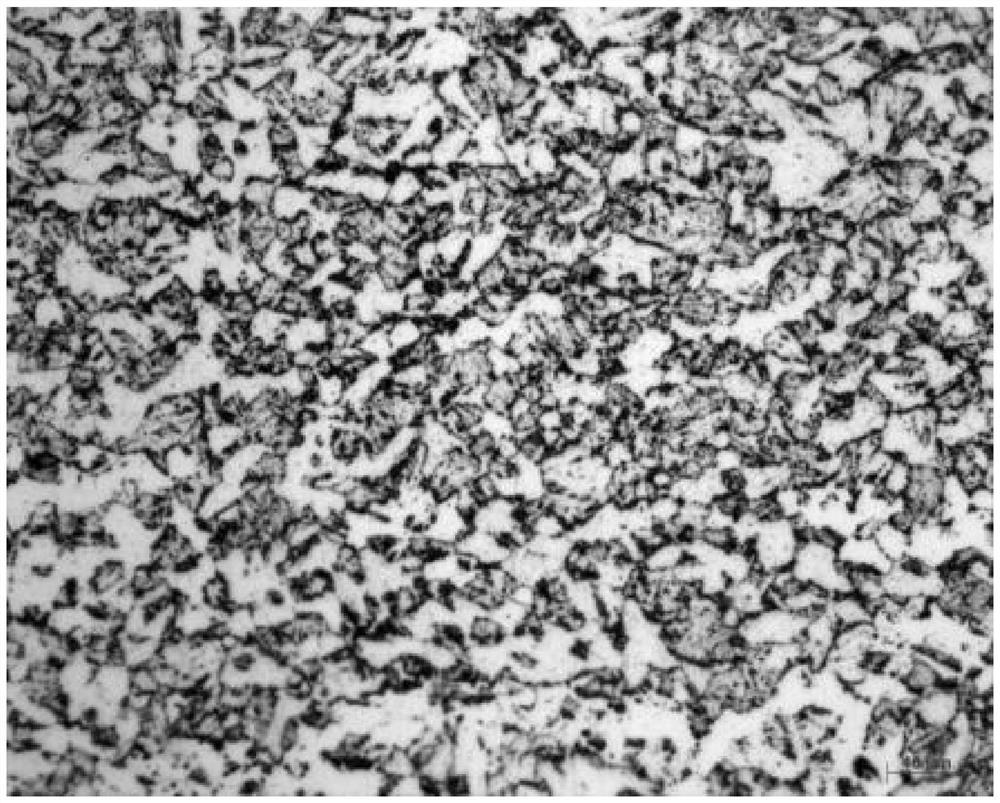

Examples
Embodiment 1-7
[0057] The high-toughness steel plate used under the extremely cold environment of the above-mentioned embodiments 1-7 is obtained by the following steps:
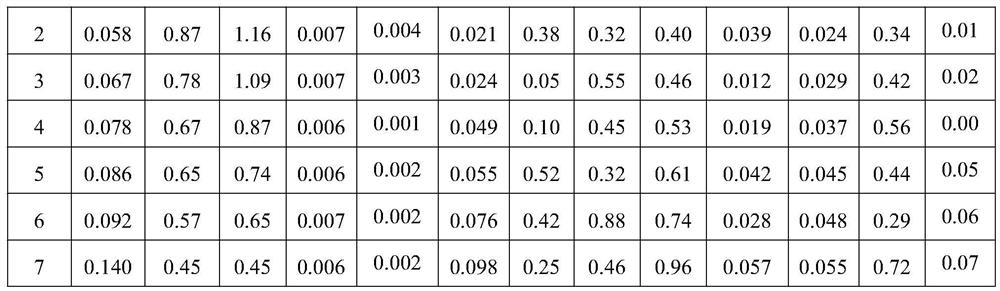
[0058] (1) Smelting and casting are carried out according to the chemical composition shown in Table 1.
[0059] (2) Heating: Heat the billet to 1000-1250°C, the billet heating and holding time is ≤1.5min / mm, the total heating and holding time is ≤450min, and the holding time at the high temperature section of 930°C-1250°C is ≤200min.
[0060] (3) Rolling: Control the final rolling temperature to ≥950°C, the reduction rate of each pass to be ≥8%, and air-cool to room temperature after rolling.
[0061] (4) Quenching + tempering: In the quenching step, heat to 830°C-930°C, the heating time is controlled at 1.2-1.5min / mm, and the heating time is not less than 30min, and water quenching is used to cool to below 300°C. Then air-cool; in the tempering step, heat to 530-690°C for a period of time, then air-cool. Among them, in...
PUM
| Property | Measurement | Unit |
|---|---|---|
| Yield strength | aaaaa | aaaaa |
| Tensile strength | aaaaa | aaaaa |
| Impact energy | aaaaa | aaaaa |
Abstract
Description
Claims
Application Information
 Login to View More