Check patentability & draft patents in minutes with Patsnap Eureka AI!

Synthesis method of PbCl2-doped CH3NH3PbBr3 micron single crystal

A synthesis method, ch3nh3pbbr3 technology, is applied in the field of synthesis of PbCl2-doped CH3NH3PbBr3 micron single crystals, which can solve the problems of unclear carrier mobility relationship and achieve the effect of improving quality

Active Publication Date: 2021-06-01
DALIAN INST OF CHEM PHYSICS CHINESE ACAD OF SCI
View PDF2 Cites 0 Cited by
  • Summary
  • Abstract
  • Description
  • Claims
  • Application Information

AI Technical Summary

Problems solved by technology

However, in many methods of measuring carrier mobility, there is no clear relationship between carrier mobility and defect density.

Method used

the structure of the environmentally friendly knitted fabric provided by the present invention; figure 2 Flow chart of the yarn wrapping machine for environmentally friendly knitted fabrics and storage devices; image 3 Is the parameter map of the yarn covering machine
View more

Image

Smart Image Click on the blue labels to locate them in the text.
Viewing Examples
Smart Image
  • Synthesis method of PbCl2-doped CH3NH3PbBr3 micron single crystal
  • Synthesis method of PbCl2-doped CH3NH3PbBr3 micron single crystal
  • Synthesis method of PbCl2-doped CH3NH3PbBr3 micron single crystal

Examples

Experimental program
Comparison scheme
Effect test

Embodiment 1

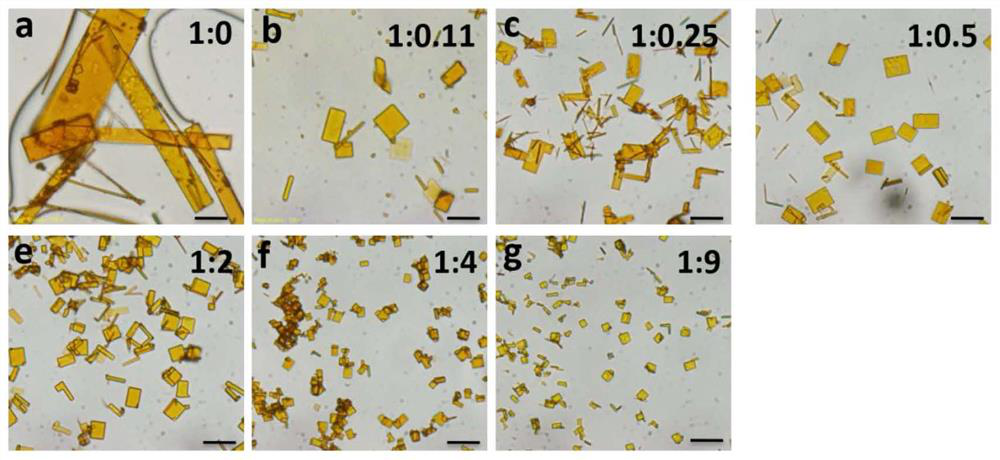
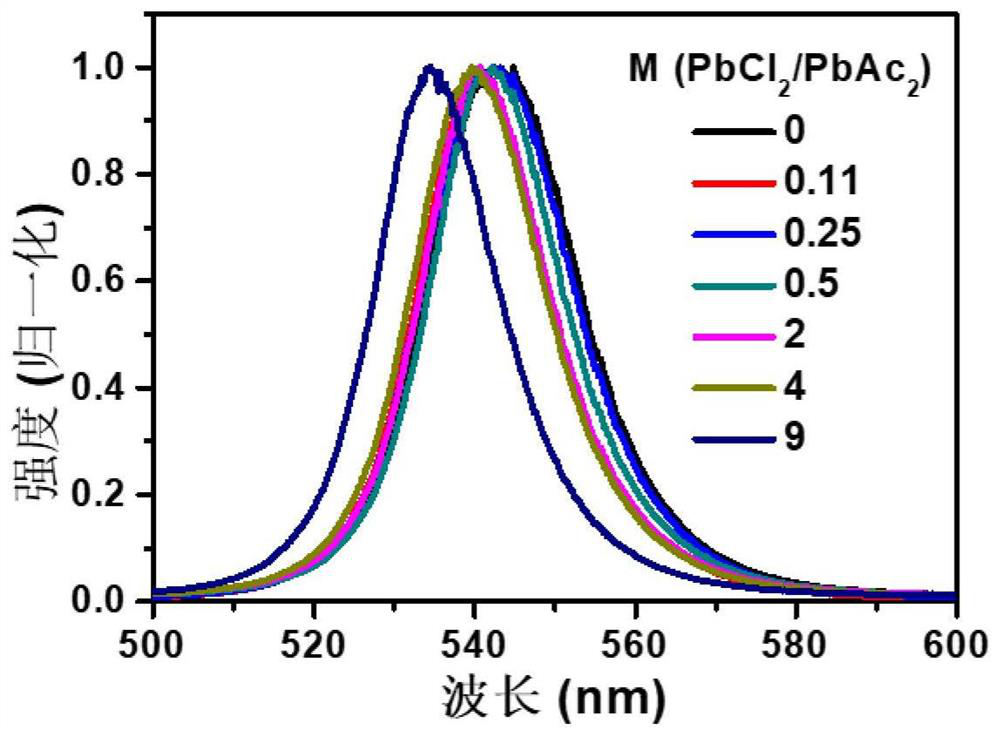
[0029] Different PbCl 2 Doping ratio CH 3 NH 3 PbBr 3 The synthetic method of micron single crystal is as follows: 1) PbCl 2 and PbAc 2 Dissolve in dimethyl sulfoxide (DMSO) at a molar ratio of 0:1, 1:9, 1:4, 1:2, 2:1, 4:1, 9:1 to ensure that the concentration of Pb+ is 200mg mL -1 , evenly spin-coat 50μL solution on a clean area of ​​1-2cm 2 glass surface. Place on a heating platform at 60°C for 30 min until the solvent evaporates completely, then cool to room temperature.

[0030] 2) CH 3 NH 3 Br was dissolved in isopropanol (IPA) at a concentration of 5 mg mL -1 ;

[0031] 3) Soak the base glass sheet prepared in step 1) into the solution in 2), and coat it with PbCl 2 and PbAc 2 with the side down, rest for 24 hours;

[0032] 4) Rinse the sample with isopropanol, then wash with N 2 Blow dry to get CH 3 NH 3 PbBr 3 Micron single crystal.

[0033] figure 1 is different from PbCl 2 Doping ratio CH 3 NH3 PbBr 3 Brightfield imaging of micron single crystal...

Embodiment 2

[0042] Process and condition are with embodiment 1, in order to examine Pb + The effect of the concentration of the sample on the growth of the guaranteed PbCl 2 Under the condition of constant doping ratio, changing Pb + Other reaction conditions are as follows: substrate side coated with lead source facing down, CH 3 NH 3 The concentration of Br is 5mg mL -1 , the growth time was 24h, then washed with isopropanol, and washed with N 2 Blow dry, same as in embodiment 1, guarantee variable only has Pb + concentration. When Pb + Concentration-1 , due to Pb + Insufficient, resulting in a small number of micron single crystals grown on the glass sheet. When Pb + Concentration>300mg mL -1 At this time, the surface of the glass sheet is a large piece of irregular sample, and there is no single crystal of regular shape. So Pb + The concentration is controlled at 100-300mg mL -1 .

Embodiment 3

[0044] Process and condition are with embodiment 1, in order to check spin coating PbCl 2 and PbAc 2 Effect of solution volume on growth of micron single crystals, except for PbCl 2 and PbAc 2 The amount of solution, other experimental conditions are as follows: PbCl 2 and PbAc 2 Soluble in dimethyl sulfoxide (DMSO) at a certain molar ratio (eg 1:2), Pb + The concentration is 200mg mL -1 , evenly spin-coat the solution on the surface of a clean glass sheet, place it on a heating platform at 60°C for 30 minutes until the solvent evaporates completely, and then cool to room temperature. The side coated with the lead source substrate was down, and the growth time was 24h. When spin-coating PbCl 2 and PbAc 2 Solution 2 ) is insufficient lead source loaded on it, resulting in insufficient raw materials for sample growth, and the number of single crystals is small and small. When spin-coating PbCl 2 and PbAc 2 Solution > 100 μL, resulting in too much loading on the glass ...

the structure of the environmentally friendly knitted fabric provided by the present invention; figure 2 Flow chart of the yarn wrapping machine for environmentally friendly knitted fabrics and storage devices; image 3 Is the parameter map of the yarn covering machine
Login to View More

PUM

PropertyMeasurementUnit
Thicknessaaaaaaaaaa
Particle sizeaaaaaaaaaa
Login to View More

Abstract

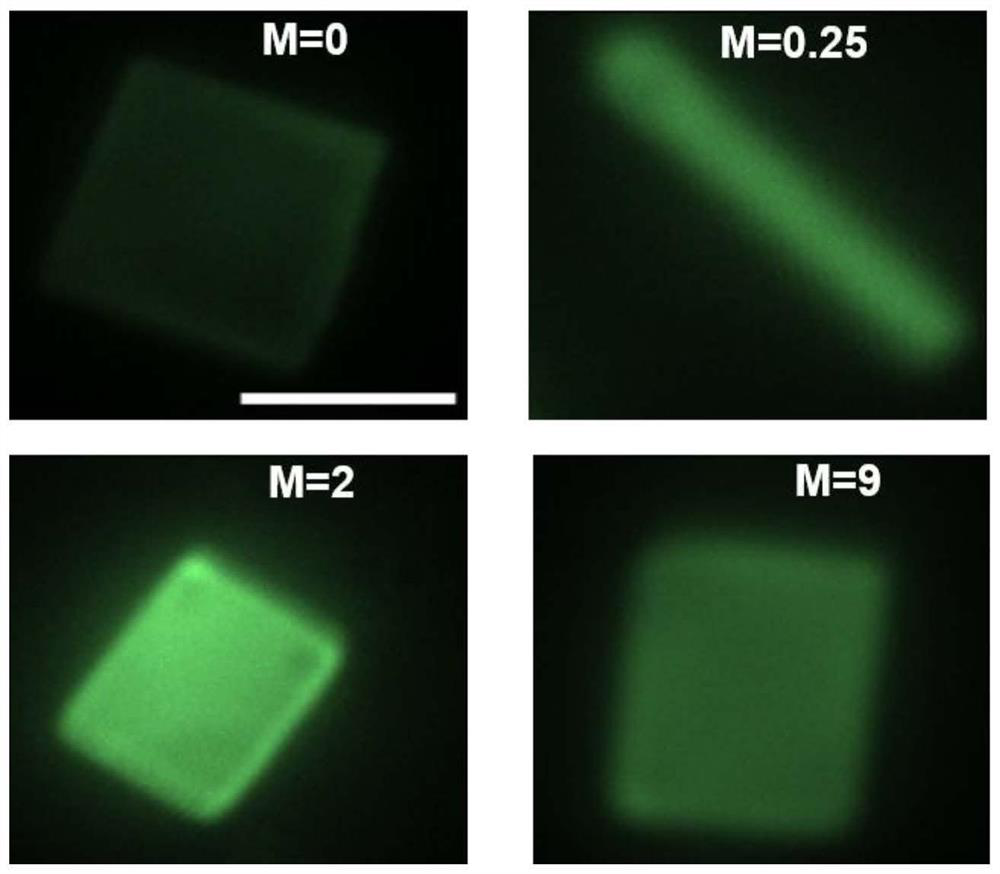
The carrier mobility, the service life and the diffusion length in the perovskite material are key restricting factors directly influencing the application of the perovskite material in the photovoltaic industry. Defects existing in perovskite materials are important factors for reducing photoelectric properties. Therefore, the definition of the relationship between the defect density and the carrier mobility, the carrier lifetime and the carrier diffusion length is crucial. According to the invention, CH3NH3PbBr3 micron wires and micron sheet single crystals are synthesized by doping different amounts of PbCl2, so that the service life of the carrier is prolonged from 17 ns to 1 mu s. Therefore, the single crystal quality of the perovskite microrods and microsheets is greatly improved through doping. Through fixed-point excitation fluorescence imaging, the carrier mobility in single crystals with different doping concentrations is almost kept unchanged, and although the defect density is different by two orders of magnitude, it is directly proved that the carrier mobility is irrelevant to the defect density. Therefore, if the performance of the device needs to be improved, the defect density needs to be reduced. The method plays an important guiding role in improving photoelectric devices based on perovskite materials.

Description

technical field [0001] In this paper, the use of ion doping to optimize the growth of CH 3 NH 3 PbBr 3 micro single crystal method [0002] technical background [0003] Organic-inorganic hybrid perovskites have attracted much attention in recent years due to their high photoelectric conversion efficiency, high fluorescence quantum efficiency and simple and cheap preparation of raw materials. Finding out the key factors restricting perovskite materials is the only way to optimize and improve optoelectronic devices based on perovskite materials. Photogenerated carrier lifetime, carrier mobility and diffusion distance are important photophysical properties of materials. Currently, it has been reported that defects are the main factor leading to the poor performance of optoelectronic devices based on perovskite materials. Therefore, determining the relationship between defect density and carrier lifetime, carrier mobility and diffusion length is of great importance to optim...

Claims

the structure of the environmentally friendly knitted fabric provided by the present invention; figure 2 Flow chart of the yarn wrapping machine for environmentally friendly knitted fabrics and storage devices; image 3 Is the parameter map of the yarn covering machine
Login to View More

Application Information

Patent Timeline
no application Login to View More
IPC IPC(8): C30B7/14C30B29/12C30B31/04
CPCC30B7/14C30B29/12C30B31/04
Inventor 金盛烨赵春一田文明
Owner DALIAN INST OF CHEM PHYSICS CHINESE ACAD OF SCI
Features
  • R&D
  • Intellectual Property
  • Life Sciences
  • Materials
  • Tech Scout
Why Patsnap Eureka
  • Unparalleled Data Quality
  • Higher Quality Content
  • 60% Fewer Hallucinations
Social media
Patsnap Eureka Blog
Learn More