Supercharge Your Innovation With Domain-Expert AI Agents!

Composite electrodes derived from metal-organic frameworks and nanofibers and their preparation methods

A metal-organic framework and nanofiber technology, which can be used in the manufacture of hybrid capacitor electrodes and hybrid/electric double-layer capacitors. Effect

Active Publication Date: 2022-06-07
SUZHOU UNIV
View PDF0 Cites 0 Cited by
  • Summary
  • Abstract
  • Description
  • Claims
  • Application Information

AI Technical Summary

Problems solved by technology

Previously, the blending method was used to directly blend MOFs into carbon nanofibers. This method made the loading of MOFs on the fiber surface less and unevenly distributed, making it difficult to form a dense MOFs coating on the fiber surface.
Directly immersing the carbon nanofiber membrane in the growth solution will lead to the deposition of MOFs, which is not conducive to its growth along the fiber surface.

Method used

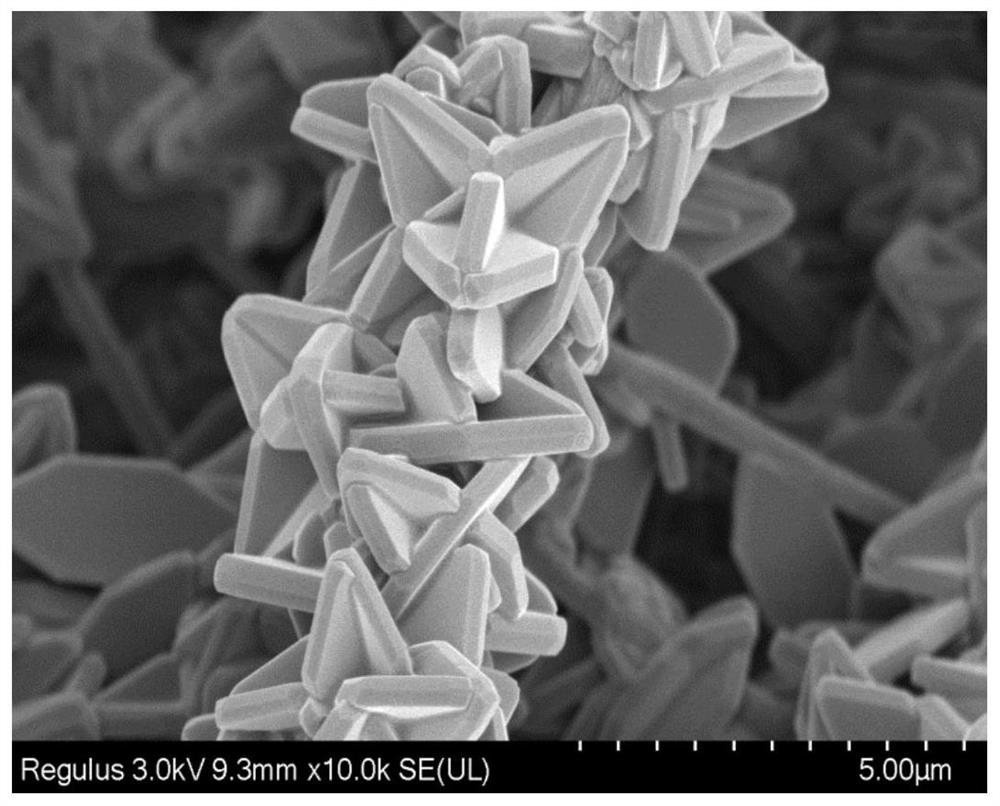
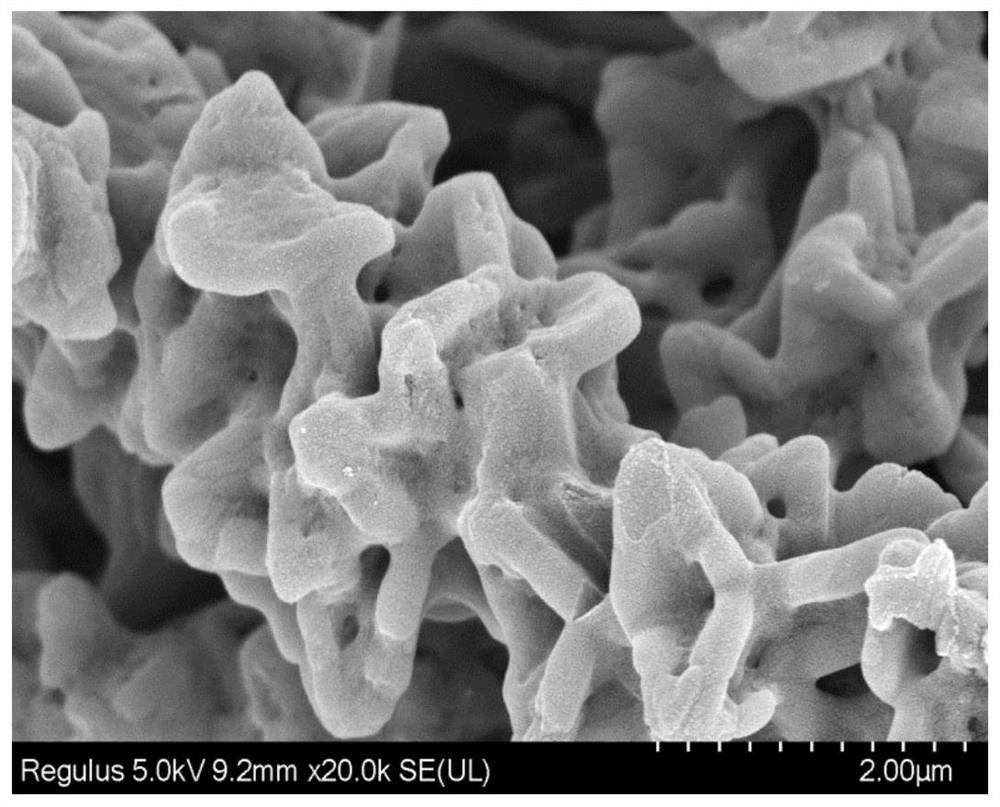
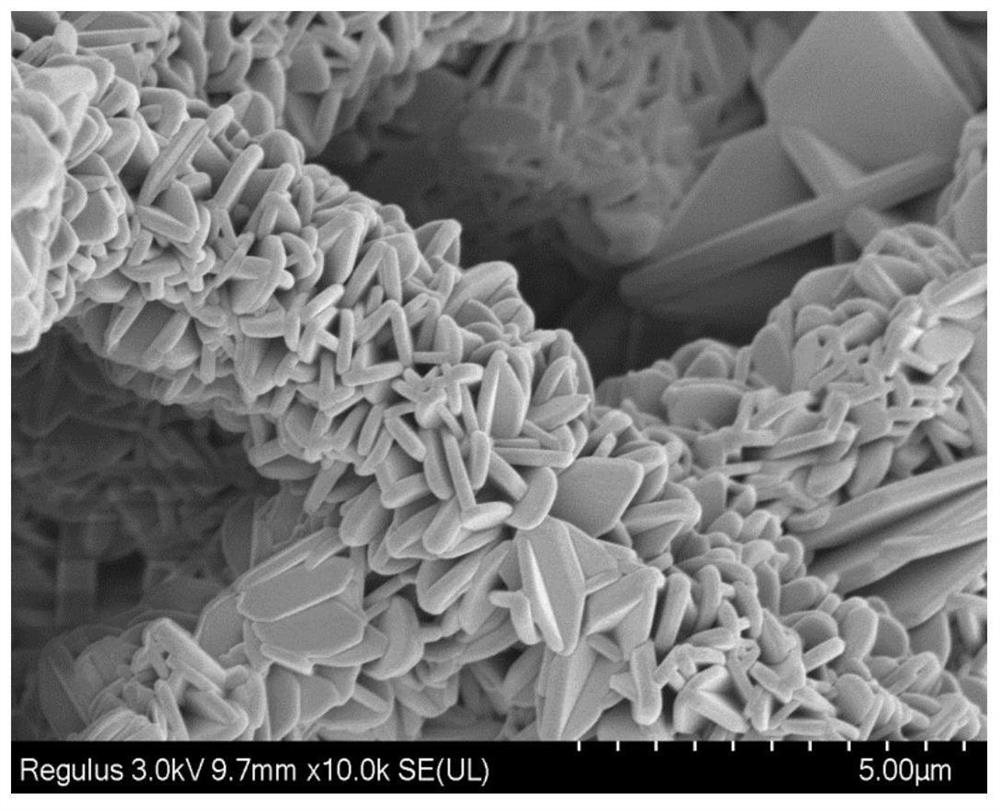
the structure of the environmentally friendly knitted fabric provided by the present invention; figure 2 Flow chart of the yarn wrapping machine for environmentally friendly knitted fabrics and storage devices; image 3 Is the parameter map of the yarn covering machine
View more

Image

Smart Image Click on the blue labels to locate them in the text.
Viewing Examples
Smart Image
  • Composite electrodes derived from metal-organic frameworks and nanofibers and their preparation methods
  • Composite electrodes derived from metal-organic frameworks and nanofibers and their preparation methods
  • Composite electrodes derived from metal-organic frameworks and nanofibers and their preparation methods

Examples

Experimental program
Comparison scheme
Effect test

preparation example Construction

[0031] See figure 1 , a preparation method of a metal-organic framework and a nanofiber-derived composite electrode shown in an embodiment of the present invention includes the following steps:

[0032] S1, adding polyacrylonitrile, polyvinylpyrrolidone and metal salt to the first solvent, stirring and dissolving to obtain a spinning solution;

[0033] S2. Electrospinning the spinning solution to obtain a nanofiber membrane, and drying the nanofiber membrane for 10-15h;

[0034] S3, dissolving the organic ligand in the second solvent to obtain an organic ligand solution of 0.05-0.2mol / L, and soaking 150-300mg of the nanofiber membrane in 50-100mL of the organic ligand solution for 1-3min;

[0035] S4, adding an equal volume of a metal salt solution containing 0.5-1.0 mol / L to the organic ligand solution, shaking for 2-10 min, and then standing for 40-80 min to generate MOFs in situ on the surface of the nanofiber membrane;

[0036] S5, drying the nanofiber membrane on which ...

Embodiment 1

[0046] 2.1 g of polyacrylonitrile (PAN), polyvinylpyrrolidone (PVP) and zinc acetate were dissolved in 10 mL of N,N dimethylformamide (DMF) in a mass ratio of 1:1:1, mixed and stirred for 24 h, and passed through Nanofiber membranes were prepared by electrospinning and dried at 60 °C for 12 h before use. Electrospinning parameters were as follows: voltage 16KV, spinning solution flow rate 1mL / h, receiving distance 16cm, temperature 25°C, humidity 50%.

[0047] Immerse 150 mg of the nanofiber membrane in 50 mL of an aqueous solution containing 0.1 mol / L 2-methylimidazole for 2 min, then add 50 mL of an aqueous solution containing 0.8 mol / L zinc nitrate, shake for 5 min, and then let stand for 1 h. The MOFs were generated in situ, taken out, washed with deionized water three times, and dried at 60 °C for 12 h. Then put into a tube furnace in N 2 In the atmosphere, the temperature was raised to 280 °C for 2 h at a rate of 2 °C / min, and then raised to 800 °C for 2 h at a rate of...

Embodiment 2

[0049] 2.1 g of polyacrylonitrile (PAN), polyvinylpyrrolidone (PVP) and cobalt acetate were dissolved in 10 mL of N,N dimethylformamide (DMF) in a mass ratio of 1:1:1, mixed and stirred for 24 h, and passed through Nanofiber membranes were prepared by electrospinning and dried at 60 °C for 12 h before use. Electrospinning parameters were as follows: voltage 16KV, spinning solution flow rate 1mL / h, receiving distance 16cm, temperature 25°C, humidity 50%.

[0050] Immerse 150 mg of the nanofiber membrane in 50 mL of an aqueous solution containing 0.1 mol / L 2-methylimidazole for 2 min, then add 50 mL of an aqueous solution containing 0.8 mol / L cobalt nitrate, shake for 5 min, and let stand for 1 h. The MOFs were generated in situ, taken out, washed with deionized water three times, and dried at 60 °C for 12 h. Then put into a tube furnace in N 2 In the atmosphere, the temperature was raised to 280 °C for 2 h at a rate of 2 °C / min, and then raised to 800 °C for 2 h at a rate of ...

the structure of the environmentally friendly knitted fabric provided by the present invention; figure 2 Flow chart of the yarn wrapping machine for environmentally friendly knitted fabrics and storage devices; image 3 Is the parameter map of the yarn covering machine
Login to View More

PUM

No PUM Login to View More

Abstract

This application relates to a preparation method of a carbon-based composite electrode material derived from metal-organic frameworks (MOFs) and nanofibers. First, the metal salt is blended in a nanofiber film of polyacrylonitrile (PAN) and polyvinylpyrrolidone (PVP). Then the nanofibrous membrane is first immersed in the organic ligand solution, and then the metal salt solution is poured into it. This method is conducive to the rapid nucleation of MOFs on the surface of the fiber, and then promotes the growth of nanosheets on the surface of the nanofiber membrane; at the same time, PVP acts as An effective surfactant can stabilize the nucleation of MOFs on PAN-based fibers and promote the formation of uniform and dense coatings. The preparation method is time-saving and efficient, and the structure of the material is stable and controllable. Morphology and high specific surface area and specific capacitance with excellent electrochemical performance.

Description

technical field [0001] The invention relates to a composite electrode derived from a metal-organic framework and nanofibers and a preparation method thereof. Background technique [0002] With the intensification of pollution, the depletion of traditional energy sources and the continuous growth of the world's population, the world's demand for energy has been increasing since the end of the last century. Facing the energy crisis and environmental problems, the development of new renewable energy sources cannot be delayed. As a new type of green energy storage device, supercapacitors have much higher energy density and higher power density than traditional capacitors. At the same time, they have the advantages of short charging time, high charging and discharging rate and long cycle life. They are widely used in military, Aerospace, defense, communications equipment, and electric vehicles. As the most important component of supercapacitors, electrode materials play a key ro...

Claims

the structure of the environmentally friendly knitted fabric provided by the present invention; figure 2 Flow chart of the yarn wrapping machine for environmentally friendly knitted fabrics and storage devices; image 3 Is the parameter map of the yarn covering machine
Login to View More

Application Information

Patent Timeline
no application Login to View More
Patent Type & Authority Patents(China)
IPC IPC(8): H01G11/32H01G11/36H01G11/24H01G11/86
CPCH01G11/32H01G11/36H01G11/24H01G11/86Y02E60/13
Inventor 徐岚叶成伟刘福娟魏凯王萍
Owner SUZHOU UNIV
Features
  • R&D
  • Intellectual Property
  • Life Sciences
  • Materials
  • Tech Scout
Why Patsnap Eureka
  • Unparalleled Data Quality
  • Higher Quality Content
  • 60% Fewer Hallucinations
Social media
Patsnap Eureka Blog
Learn More