
Antimicrobial imidazolium compounds
a technology of imidazolium and compound, which is applied in the direction of biocide, plant growth regulator, pharmaceutical non-active ingredients, etc., can solve the problems of affecting the performance of the device, etc., to achieve the effect of reducing the risk of drug resistance, and broad-spectrum anti-microbial properties
- Summary
- Abstract
- Description
- Claims
- Application Information
AI Technical Summary
Benefits of technology
Problems solved by technology
Method used
Image

Examples
example 1
Representative Compounds
[0146]
[0147]
TABLE 1List of R groups for the representative compoundsCompound nameRIBN-1C6H5CH2Compound 1C6H13Compound 2C8H17Compound 3C10H21Compound 4C12H25Compound 5C14H29Compound 6C16H33Compound 7C6H11CH2
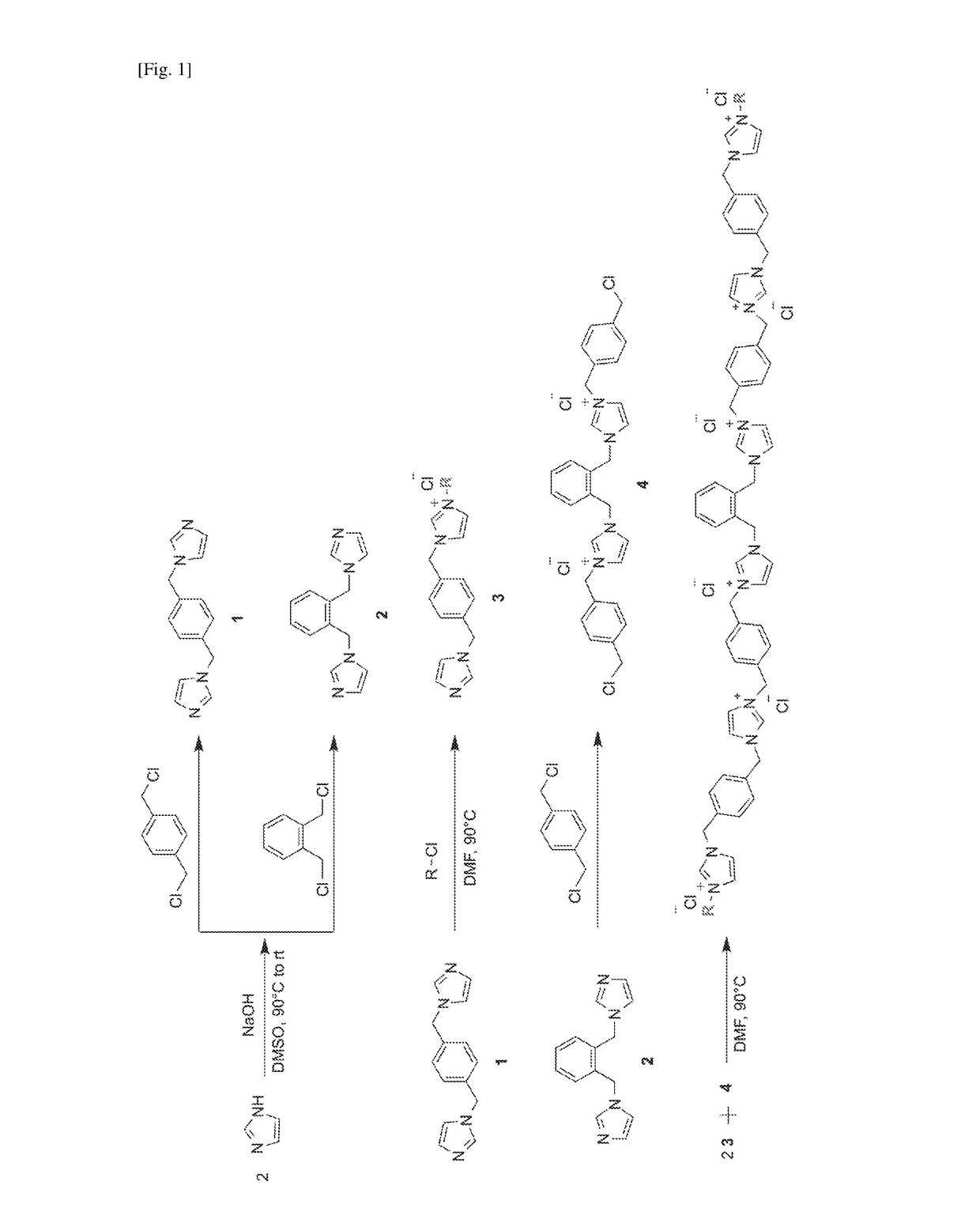
[0148]As shown in the above structure, the end group R of the imidazolium oligomer compound is a cyclohexylmethyl (Cy) (Compound 7) or a linear n-alkyl (n=6 to 16, Compounds 1 to 6).
example 2
Synthesis of the Imidazolium Oligomer Compounds
[0149]All materials were purchased from Sigma Aldrich or Merck, and used as purchased. All manipulations were done without any special precautions to eliminate air or moisture. Nuclear magnetic resonance (NMR) spectra were obtained using a Bruker AV-400 (400 MHz) spectrometer. Chemical shifts were reported in ppm from tetramethylsilane with the solvent resonance as the internal standard.
[0150]Synthesis of imidazolium oligomer compounds were adapted from protocols reported previously in L. Liu, Y. Huang, S. N. Riduan, S. Gao, Y.-Y Yang, W. Fan, Y. Zhang, Biomaterials, 2012, 33, 8525-8631; L. Liu, H. Wu, S. N. Riduan, Y. Zhang, J. Y. Ying, Biomaterials, 2013, 34, 1018-1023 and Y. Zhang, L. Zhao, P. K. Patra, D. Hu, J. Y. Ying, Nano Today, 2009, 4, 13-20. A representative scheme showing the synthesis of the compounds is shown in FIG. 1.
Representative synthesis of 1,4-bis(N-imidazole-1-ylmethyl)benzene (1)
[0151]A mixture of imidazole (0.9 g...
example 3
Amphiphilicity of the Representative Compounds
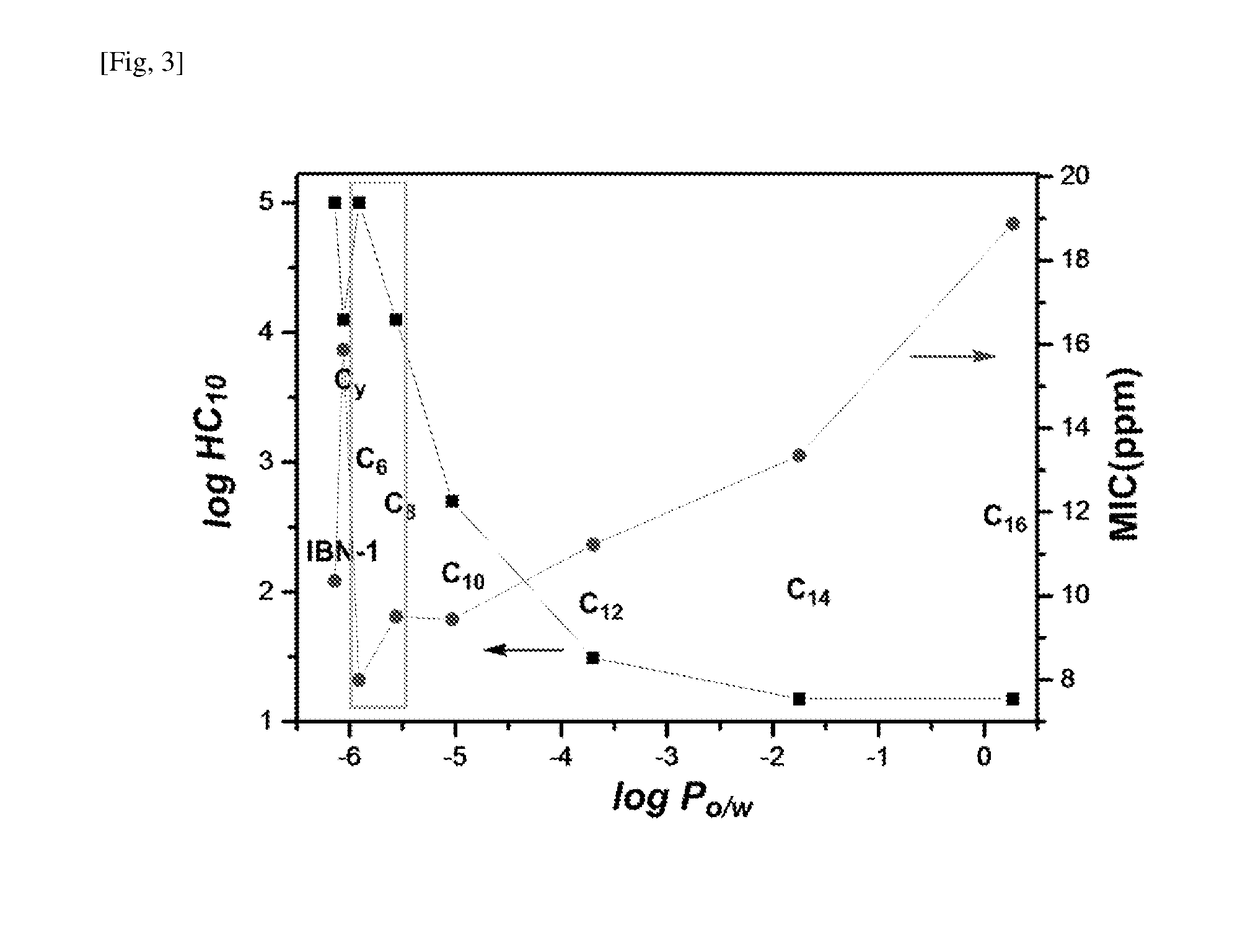
[0170]The calculated log PO / W value of the representative compounds of Example 1 varied from −6.06 (Compound 7) to 0.27 (Compound 6) as shown in Table 2.
[0171]
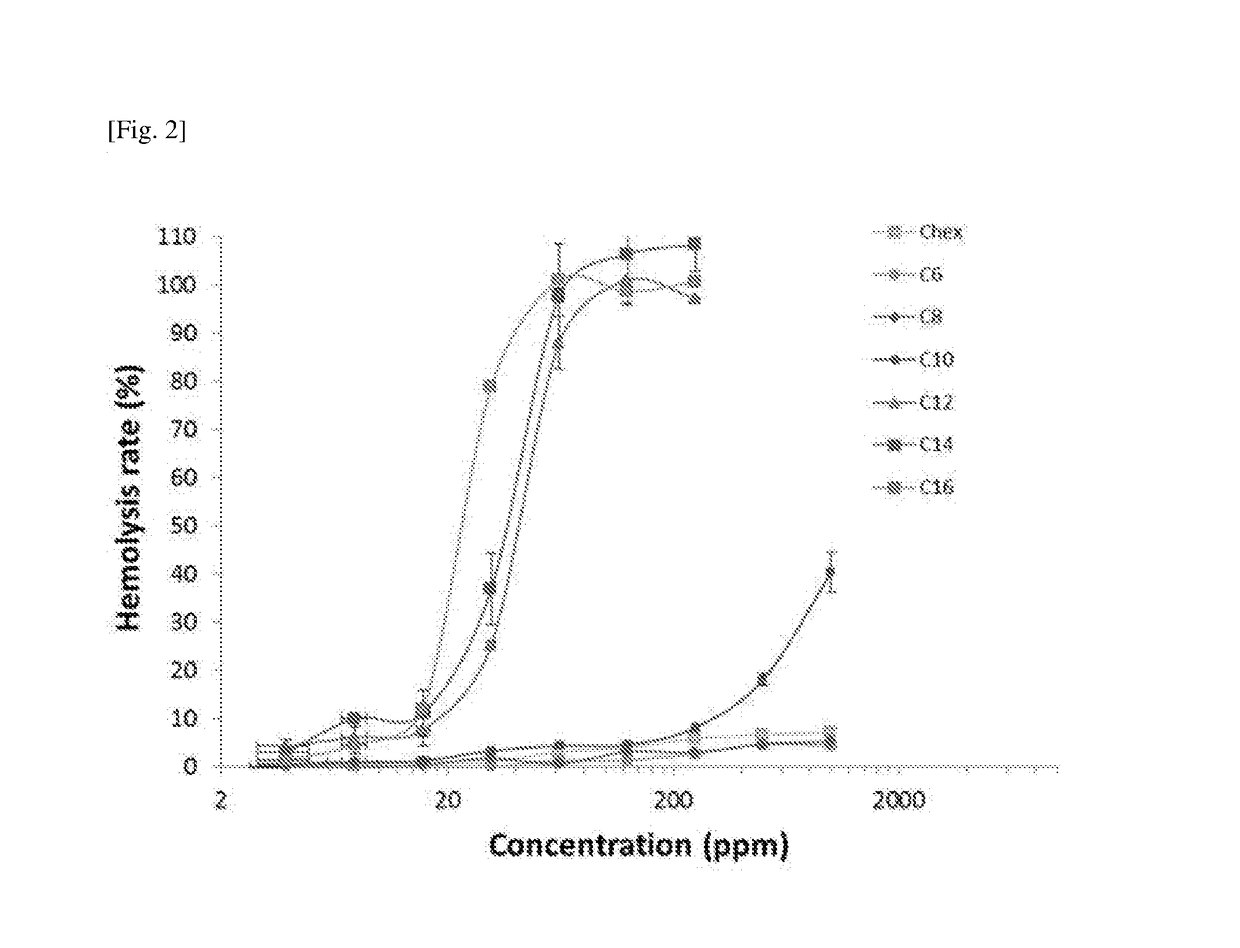
TABLE 2Minimum Inhibitory Concentrations (MIC) andSelectivity Indices of IBN-1 Analogues.aMICSelectivityLogPS. A.E. coliP. A.C. A.GMHC10IndexCompound 1−5.91488168>100000>>1000b Compound 2−5.564816169.51125001314 Compound 3−5.03488319.4450025 Compound 4−3.7048163111.22312.81Compound 5−1.75416163113.35151.15Compound 60.27816166218.88150.83Compound 7−6.06816163115.8712500787 IBN-1−6.1434313110.36>100000>>1000b aMIC values are in ugmL−1; Log P is calculated Molinspiration Property Engine (v2013.09); S. A.: S. aureus; P. A.: P. aeruginosa; C. A.: C. Albicans; GM: geometric mean of the MICs of the 4 microbes.bDid not induce ~10% hemolysis at maximum concentration tested (100,000 ppm); Selectivity index = HC10 / GM.
PUM
 Login to View More
 Abstract
Description
Claims
Application Information
 Login to View More