
Targeted delivery of controlled release polymer systems
a technology of controlled release and polymer, which is applied in the direction of powder delivery, microcapsules, enzymes, etc., can solve the problems of poor tumor/plasma distribution, poor tumor penetration potential, and proved to be considerably more difficult than anticipated, and achieves better tumor/plasma distribution, better tumor penetration potential, and high specificity and affinity
- Summary
- Abstract
- Description
- Claims
- Application Information
AI Technical Summary
Benefits of technology
Problems solved by technology
Method used
Image

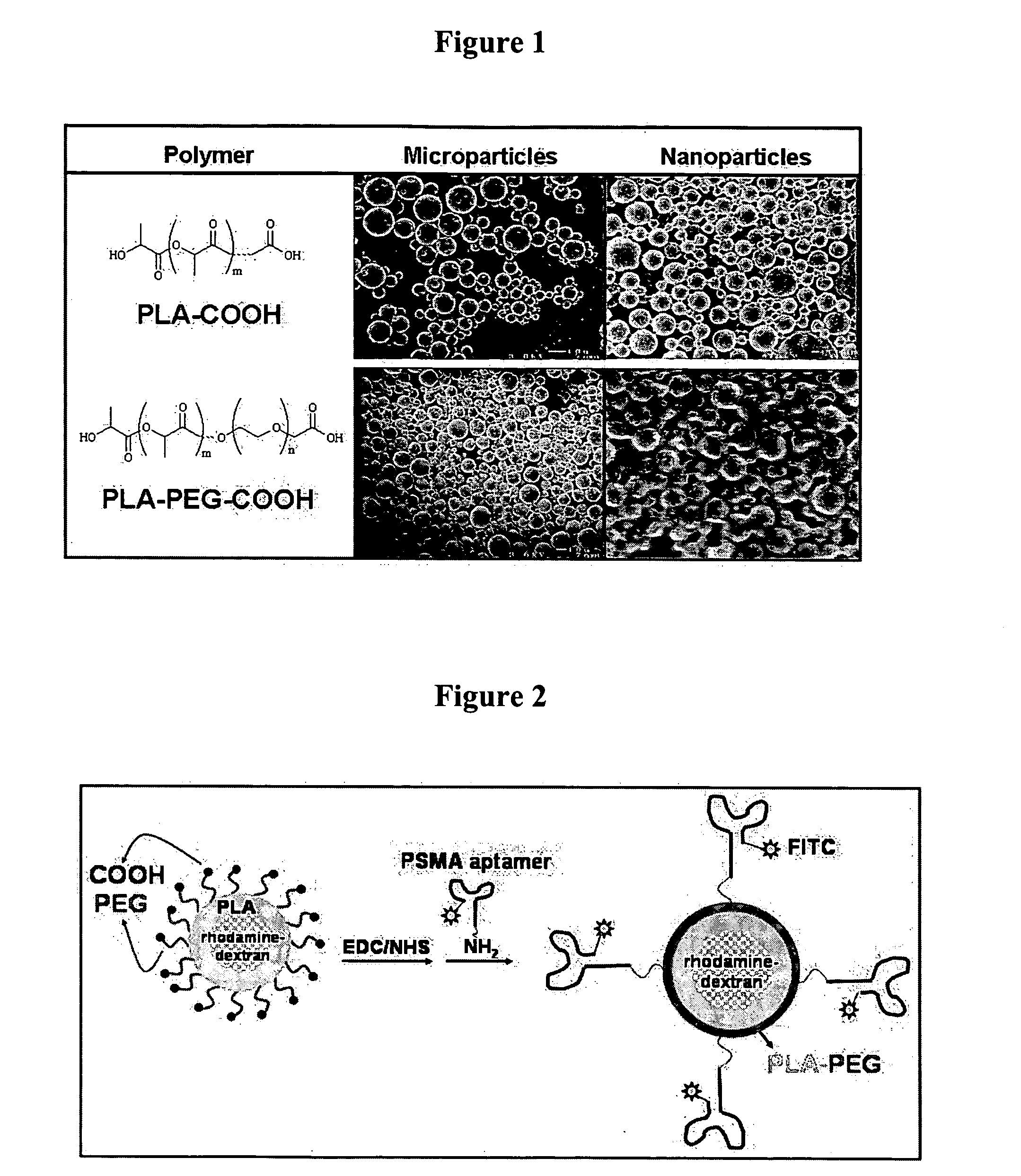
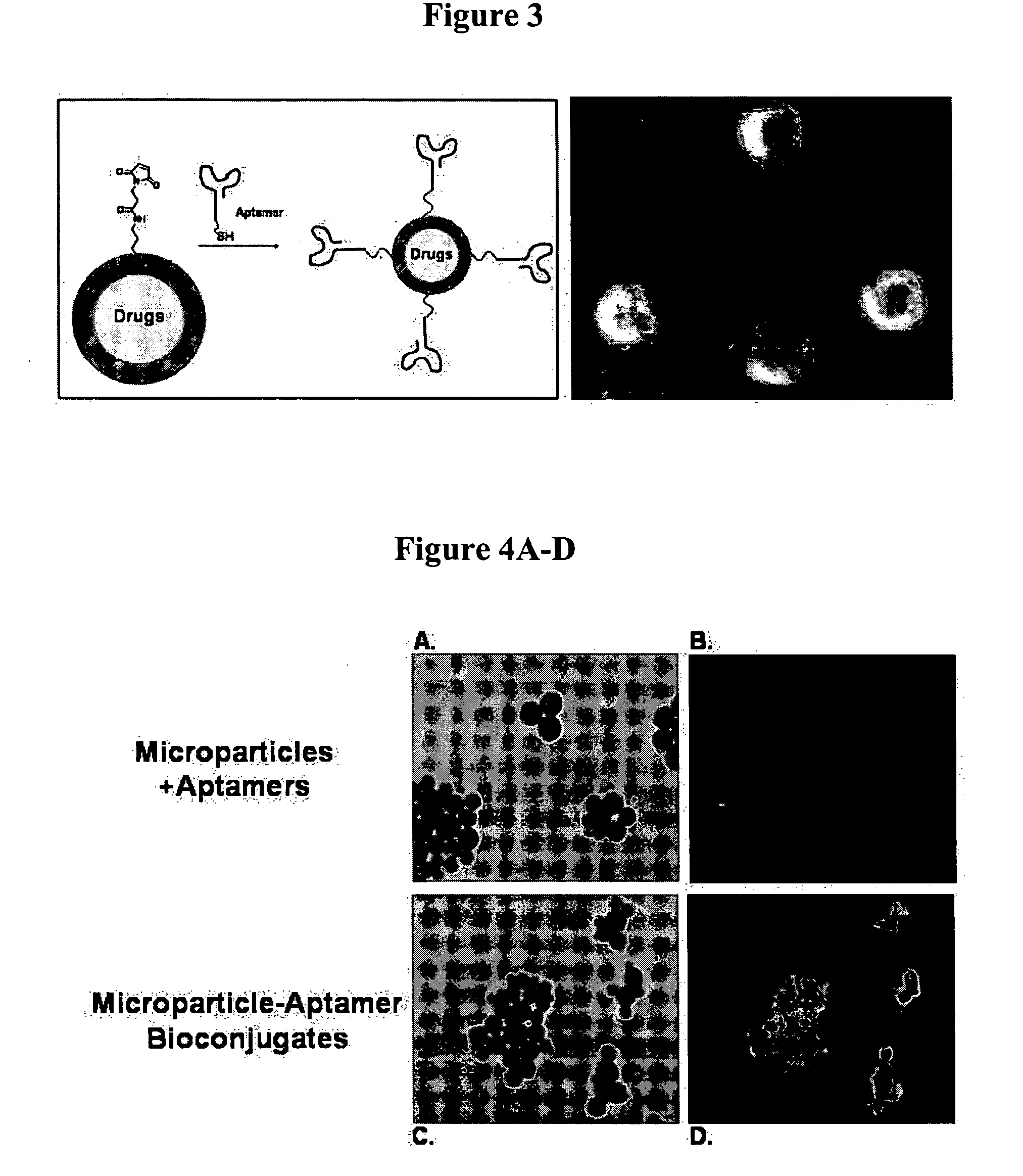
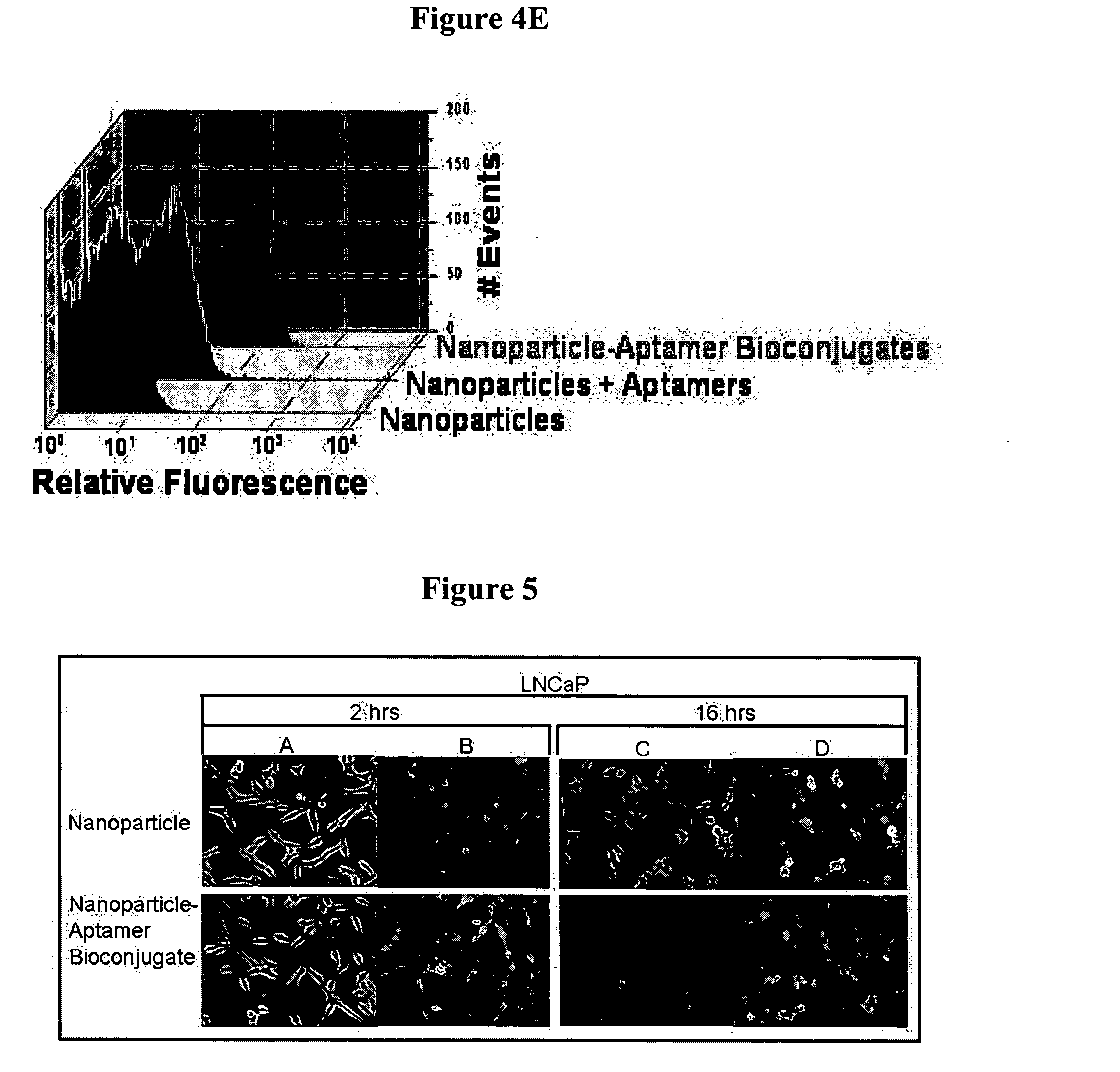
Examples
example 1
Preparation of Polymers
[0090] A. Materials
[0091] Poly(lactic acid) (PLA), poly(lactic-co-glycolic acid) (PLGA), and PLA-COOH were purchased from a commercial vendor. Polyanhydrides, poly(caprolactone), pegylated PLA or PLGA (PLA-PEG-maleimide, PLGA-PEG-maleimide, PLA-PEG-COOH, and PLGA-PEG-COOH), and copolymers of poly(acrylic acids) derivatives were synthesized according to known literature methods. Polymeric cations such as poly(L-lysine) (PLL) and poly(ethylene imines) (PEI) were purchased from commercial vendors. Some chemicals such as N-hydroxysuccinimide (NHS), 1-[3-(dimethylamino)propyl]-3-ethylcarbodiimide hydrochloride (EDC), tin(II) 2-ethylhexanoate, D,L-Lactide, monomethylpoly(ethyleneglycol) (mPEG, average Mn ca. 2000), toluene (99.8%, anhydrous) were purchased from Aldrich Chemical Co (Milwaukee, Wis., USA). Maleimide-PEG3500-OH and COOH-PEG3500-OH were custom synthesized by Nektar Therapeutics. Nucleic acid ligand A10 which binds to prostate specific membrane antigen...
example 2
Preparation of Nano- and Microparticles
[0096] A. Preparation of Drug-Encapsulated Nano- or Microparticles
[0097] A water-in-oil-in-water (W / O / W) solvent evaporation procedure will be used to generate drug-encapsulated nanoparticles. Polymer (example: PLA, PLA-PEG, PLA-COOH, PLA-PEG-COOH, PLA-MAL, PLA-PEG-MAL, poly(sebacic anhydride), etc.) is dissolved in dichloromethane (at 2-10%); an aqueous solution of certain drug will then be added to polymer solution at 4-20% v / v. In model studies, rhodamine or rhodamine-conjugated dextran (at 10 μg / μL) was used as a model small and large molecule drugs, respectively. (For lypophilic drugs, the drug and polymer are mixed together in the dichloromethane, and the procedure then becomes an oil-in-water solvent evaporation process.) The aqueous drug and organic polymer phases are then emulsified using probe sonicator (10 W for 10-90 s). This emulsion is then added to poly(vinyl alcohol) solution (0.1-5% final concentration) or sodium cholate solu...
example 3
Nucleic Acid Ligand-Polymer Particle Conjugates
[0104] A. Preparation of a Nucleic Acid Ligand Conjugated to MAL-PEG-PLA or PLA-MAL particles
[0105] Thiol modified aptamers (thiol-18C-aptamer) (1 nmol) will be dissolved in 100 ml of PBS and incubated in the presence of 30 ml of TCEP at room temperature for 30 min. Equimolar ratio (with regards to maleimide groups) of polymer particles dispersed in distilled water were added to the aptamer and the incubation will continue for 10 h under gentle agitation. The resulting solution was dialyzed with DispoDialyzer, MWCO 300,000 (Spectrum Laboratories, Inc., CA) for 2 h in 200 ml distilled water, with 1 change to dialysis solution at 30 min. The aptamer conjugated particles were collected by centrifugation as previously described.
[0106] B. Preparation of a Nucleic Acid Ligand Conjugated to PLA-COOH and PLA-PEG-COOH particles
[0107] Approximately 1 mg of PLA-COOH or PLA-PEG-COOH particles were incubated with 1 ml of 400 mM EDC and 100 mM NH...
PUM
| Property | Measurement | Unit |
|---|---|---|
| dissociation constant | aaaaa | aaaaa |
| dissociation constant | aaaaa | aaaaa |
| dissociation constant | aaaaa | aaaaa |
Abstract
Description
Claims
Application Information
 Login to View More