
Method of determining parameters of a sample by X-ray scattering applying an extended genetic algorithm with truncated use of the mutation operator
- Summary
- Abstract
- Description
- Claims
- Application Information
AI Technical Summary
Benefits of technology
Problems solved by technology
Method used
Image

Examples
Embodiment Construction
In the following, the inventive extended genetic algorithm and its application to x-ray analysis are explained in detail.
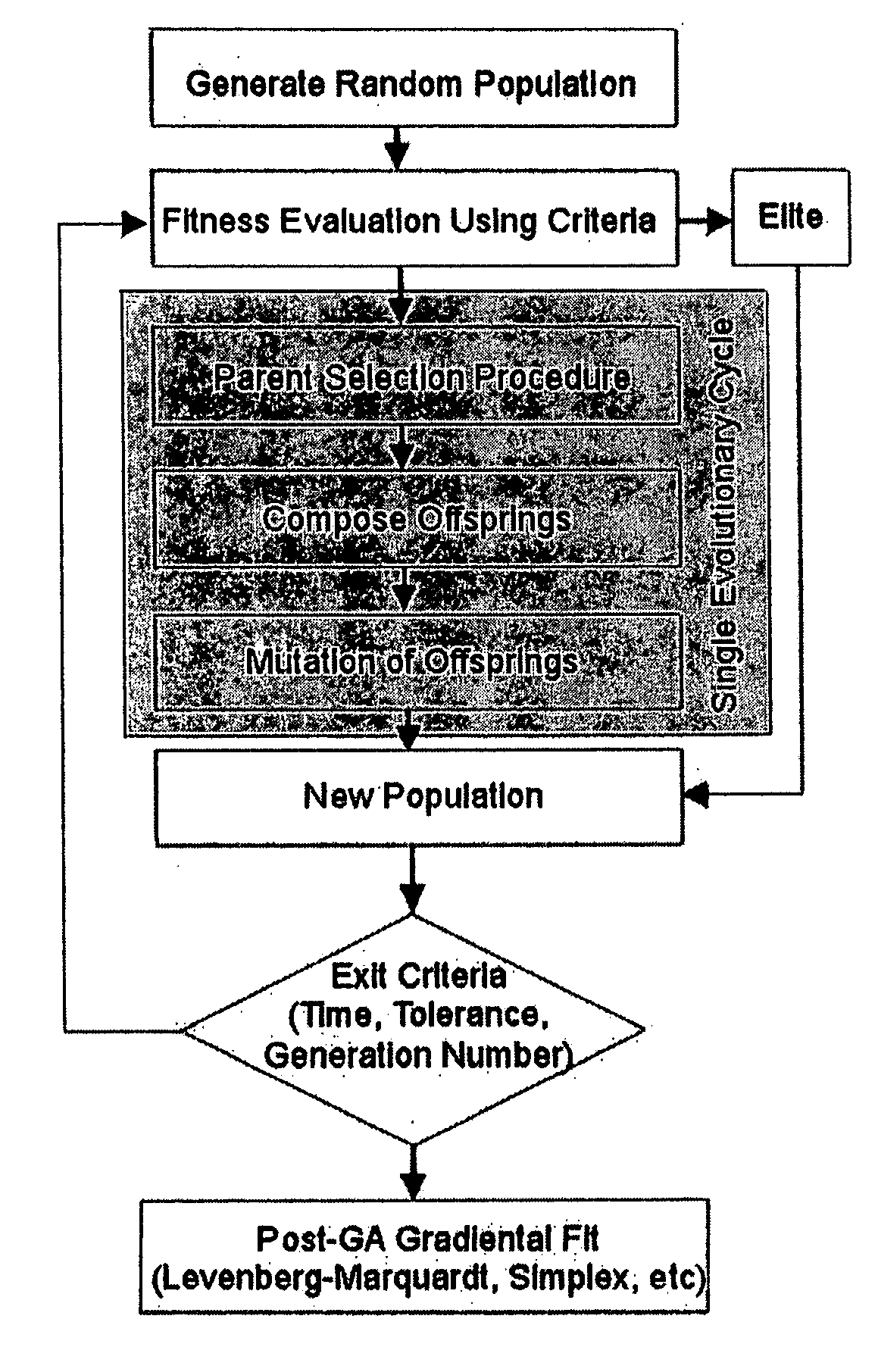
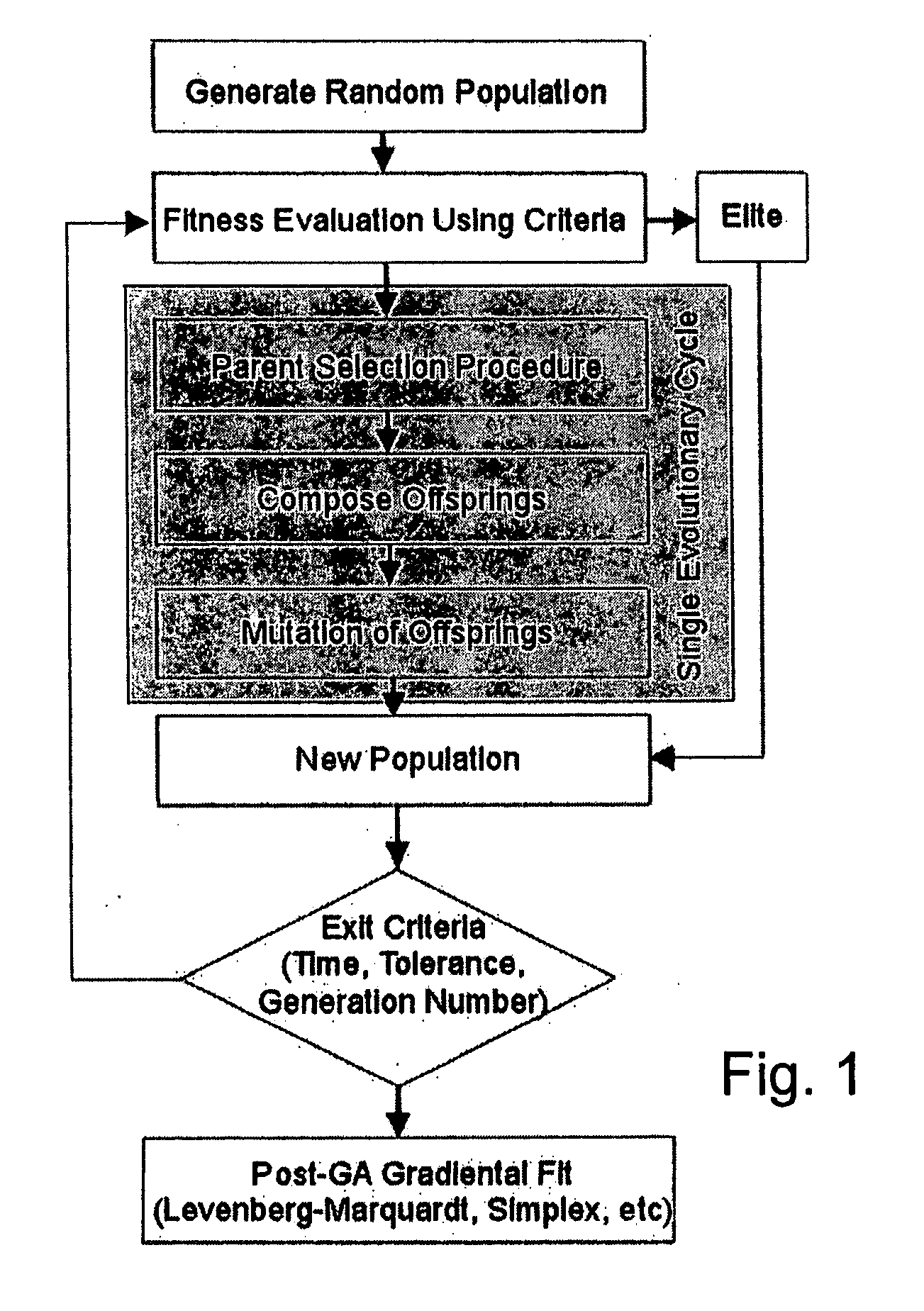
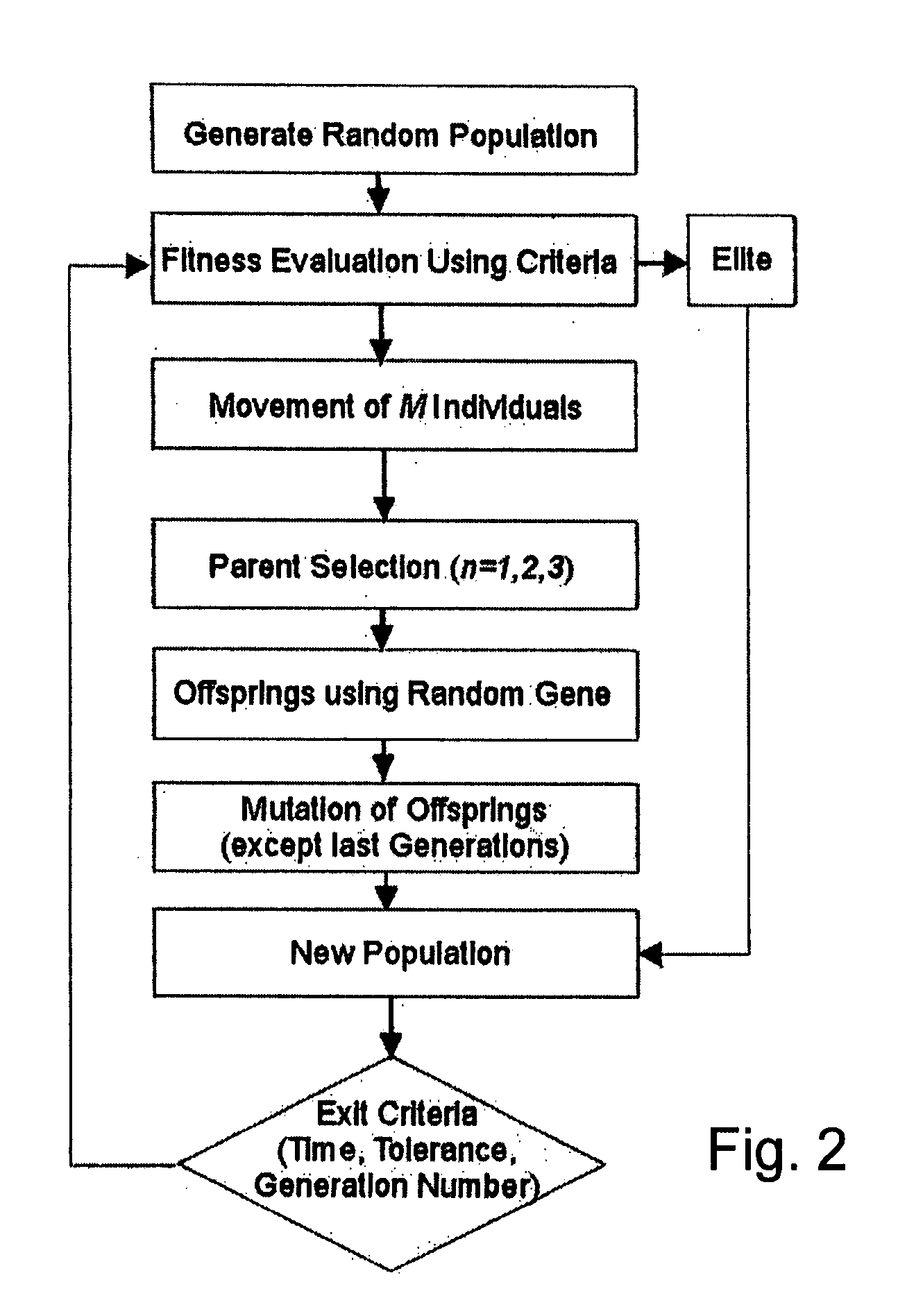
The classic scheme of genetic algorithm is extended to improve the robustness and efficiency of the method. New genetic operators implemented in this work are shown to increase the convergence speed and reliability of the optimization process. A complex model function with multiple local extrema and real x-ray reflectivity and diffraction data have been used to test the modified algorithm. The effectiveness of the new technique is compared to other optimization methods.
X-ray metrological methods in science and industry have been proved to be efficient techniques for sample characterization and growth process development and control. A large variety of sample structures can be probed by x-rays to examine film thickness, interface roughness, crystallographic lattice strain and distortion, material contamination, etc.. Although the measured x-ray data can be use...
PUM
 Login to View More
 Abstract
Description
Claims
Application Information
 Login to View More