
Brazing filler metal, brazing filler metal paste, and heat exchanger
a technology heat exchanger, which is applied in the direction of manufacturing tools, soldering apparatus, transportation and packaging, etc., can solve the problems of difficult to form a joint with uniform composition and the likely reduction of the efficiency of brazing filler metal, so as to reduce the tin content, increase the copper content, and increase the joining strength
- Summary
- Abstract
- Description
- Claims
- Application Information
AI Technical Summary
Benefits of technology
Problems solved by technology
Method used
Image

Examples
Embodiment Construction
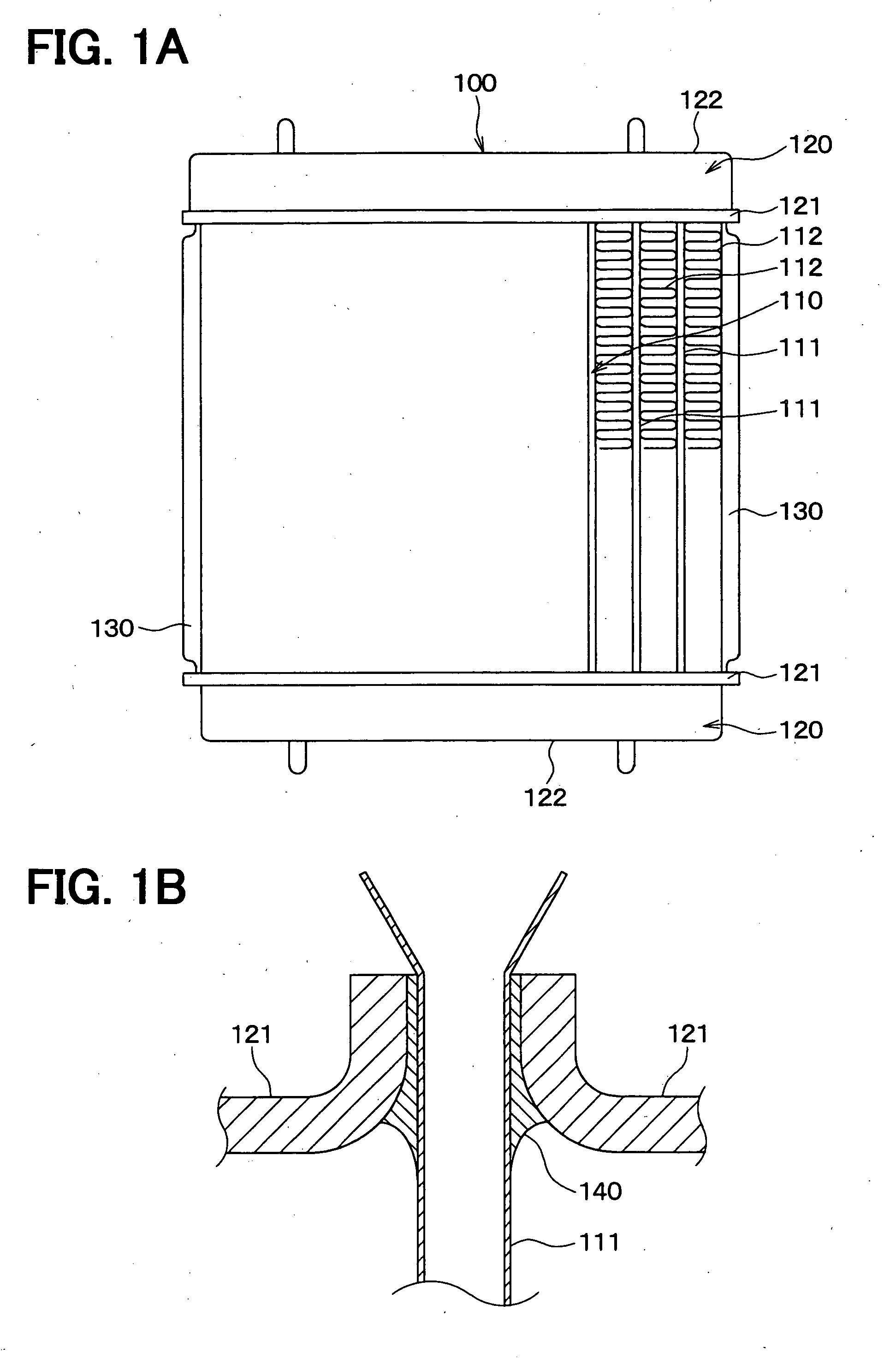
[0023]An exemplary embodiment of the present invention will now be described with reference to FIGS. 1A to 6.
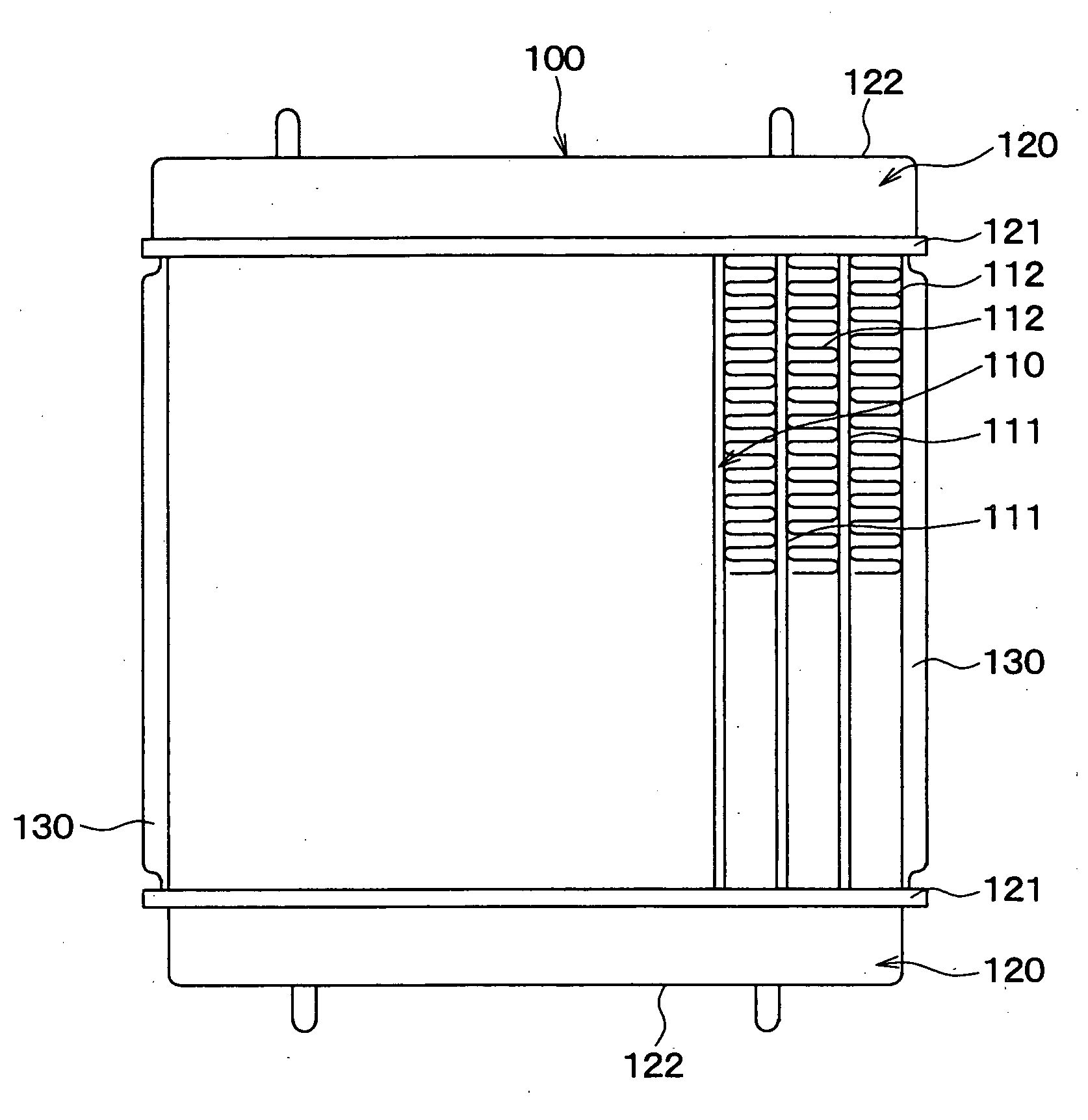
[0024]Referring to FIG. 1A, a heat exchanger 100 has components made of copper or copper alloy. The heat exchanger 100 generally includes a core 110, header tanks 120 and side plates 130. The core 110 includes tubes 111 and fins 112. The tubes 111 are generally flat pipes and define passages therein through which an internal fluid flows. The tubes 111 are arranged parallel to each other, and the fins 112 are disposed between the tubes 111 for facilitating heat exchange between the internal fluid and an external fluid flowing around the tubes 111. The fins 112 have a corrugate shape, for example. The tubes 111 and the fins 112 are joined to each other by brazing.
[0025]The header tanks 120 are connected to ends of the tubes 111. The header tanks 120 extend in a direction perpendicular to a longitudinal direction of the tubes 111. The header tanks 120 are in communication with t...
PUM
| Property | Measurement | Unit |
|---|---|---|
| Percent by mass | aaaaa | aaaaa |
| Percent by mass | aaaaa | aaaaa |
| Percent by mass | aaaaa | aaaaa |
Abstract
Description
Claims
Application Information
 Login to View More