Continued, uninterrupted operation is often critical to the devices for which they are a component.
Unfortunately, their operation can at times be attended by corroded contacts and weakened connections.
As shown thermographically in FIG. 3, corroded contacts can even be a source of danger.
These problems, which are common in industry, are usually initiated due to a combination of poor
workmanship (mainly under-tightening of connectors), loose connections, or
corrosion / oxidation /
contamination / damage in the contact surface.
Once a high-R contact is created, repeated thermal
cycling and vibration may deteriorate the contact quality at an elevated rate and may increase the
contact resistance.
This, combined with vibration, can loosen the connection which may increase the
contact resistance and local temperature.
If the contact resistance increases to an unsafe level, this can result in localized overheating as shown in FIG. 3, supply voltage unbalance, and / or sparking.
Local thermal overloading at the contact may be one of the leading root causes of failure in electrical distribution systems.
This can cause open circuit failures (melting of conductor / contact) or
short circuit failures (insulation damage) in the electric circuit.
This can accelerate the degradation of
machine or
motor insulation, which is often one of the main root causes of failure.
High-R connections can also reduce the
system efficiency and can increase the safety risks in addition to decreasing the distribution circuit and machine or motor reliability, as explained above.
The efficiency of the electrical
distribution system and load can suffer when high-R contacts are present.
According to one study, 36% of the electrical
distribution system problems that result in decreased efficiency are due to poor connections.
As mentioned, the efficiency of machine or motor loads can be decreased when the input supply voltage is unbalanced, since
negative sequence current can cause additional winding losses and can induce negative torque that decreases the output.
It is known that overheating and sparking at the high-R contact can initiate electric fires, and that a significant portion of building fires are caused by poor contacts.
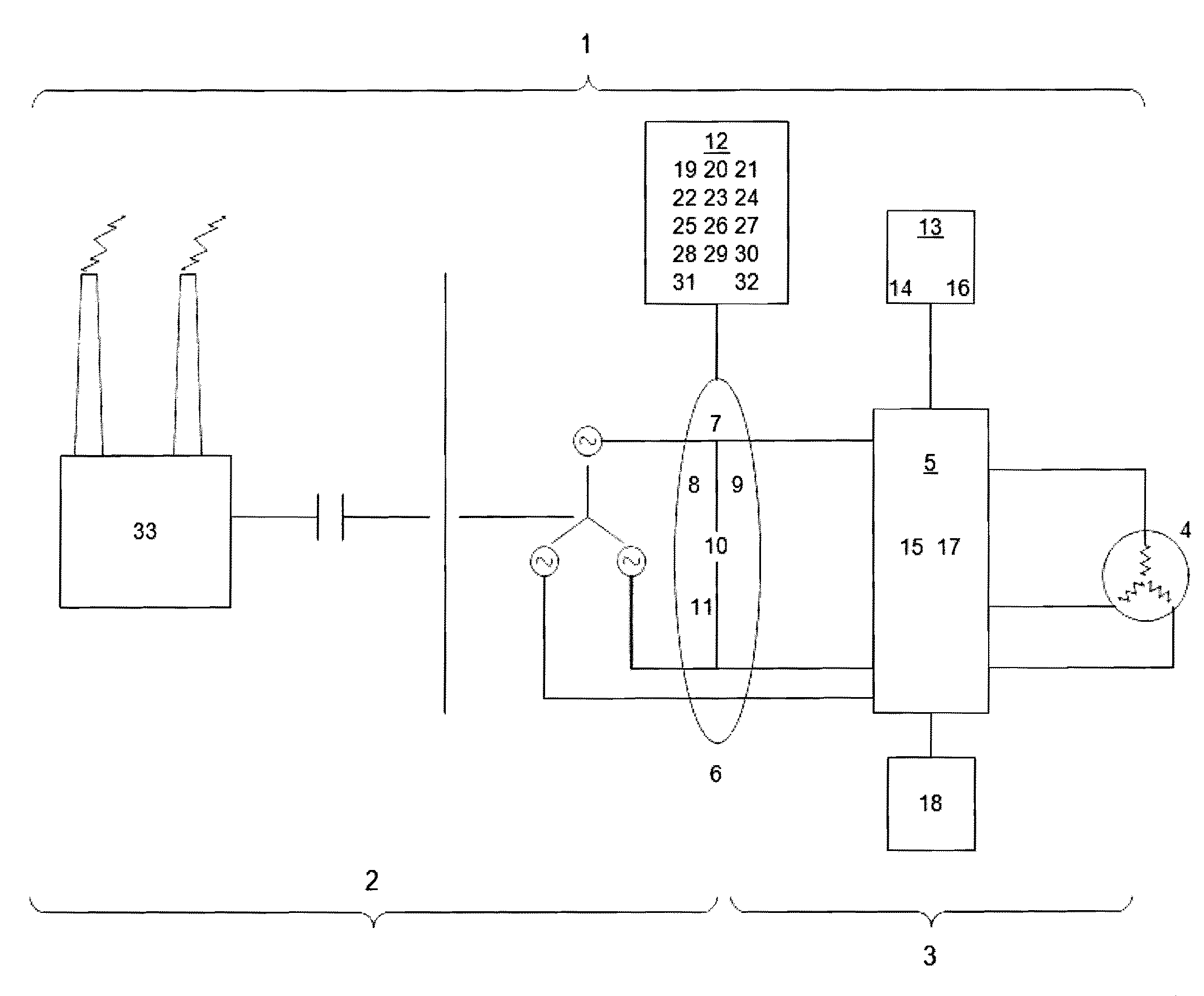
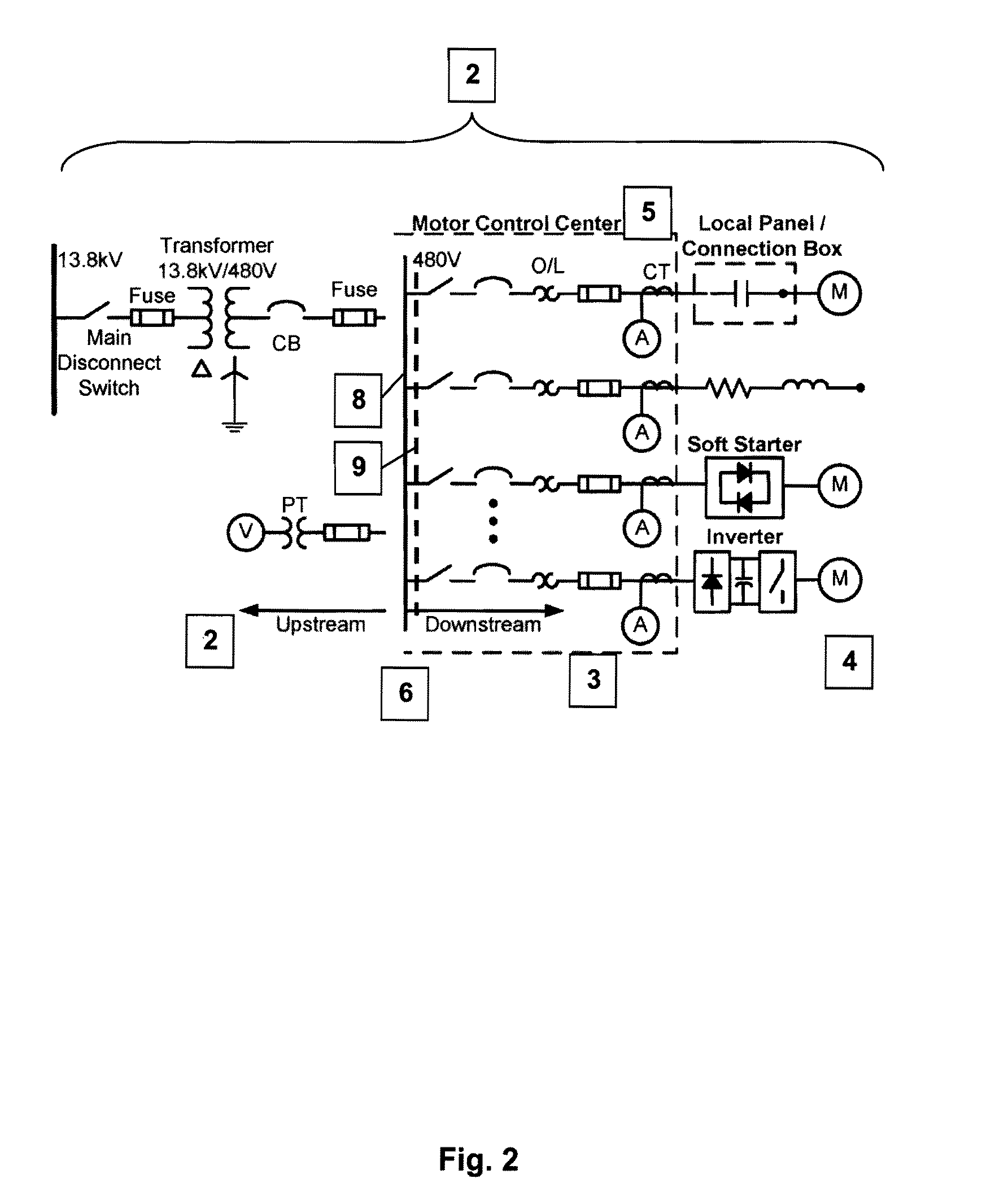
Unfortunately, upstream connection problems are particularly difficult to assess because the upstream circuitry can usually only be viewed in its entirety, that is, from its very source to the point of measurement.
Unlike the downstream path which can be limited by the
measurement point to only the machine or motor and perhaps an associated control center or
Motor Control Center (MCC), the upstream circuitry is almost a complete unknown and is almost completely unpredictable.
This technology's disadvantages are that the testing needs to be performed offline and it needs to be connected directly to the voltage buss.
The most expensive machine or motors in industry, however, tend to be medium or
high voltage.
A further
disadvantage to this method is that it is usually only capable of finding
high resistance connections downstream from where the equipment is connected.
Although it is very effective for detecting high-R problems, its limitations of being performed off-line and usually only being able to identify problems downstream from where the test is performed remain as significant drawbacks.
This usually requires that the
Motor Control Center (MCC) be opened and this can cause safety hazards.
As an
online test, the intrusion of a voltage measurement can create risks.
This also usually means that the
Motor Control Center (MCC) either needs to be opened—causing obvious safety
arc flash hazards—or suitable IR windows need to be installed in all locations with a potential of failure.
IR
thermography can be
safer, faster, and more accurate compared to the
voltage drop test for finding high-R contacts, but it is attended by the drawbacks of requiring good
line of sight to the problem and expensive equipment or service.
These on-line tests can only be performed when the machine is in use, and the results depend on the load current making it difficult to assess the severity of the fault.
All the tests available for monitoring high-R connections are inconvenient since they are either offline or walk-around type tests and do not provide
continuous monitoring capability.
The validity of the method has been shown experimentally; however, the method requires intensive computation and training of the neural network.
Like the neural network technique, this newer technique appears limited by its symmetrical component based nature.
Thus, it appears that it can only detect high-R problems located downstream from the point of voltage measurement.
Unfortunately none of the above techniques fulfill these criteria.


 Login to View More
  Login to View More