
Method for measurement of physiologically active substance derived from organism and measurement apparatus
a physiologically active substance and measurement method technology, applied in the field of physiologically active substance measurement and measurement method of organisms, can solve the problems of endotoxin induced severe side effects such as fever and shock, and the turbidimetric method may require a very long time period for gelation of lal, so as to reduce the measurement time period
- Summary
- Abstract
- Description
- Claims
- Application Information
AI Technical Summary
Benefits of technology
Problems solved by technology
Method used
Image

Examples
production example 1
[0090]A stainless stir bar (φ1 mm, length 5 mm) was placed in a glass container (outer diameter φ7 mm, length 50 mm, hereinafter, abbreviated as cuvette), and the opening section of the cuvette was covered with aluminum foil. Some of the covered cuvettes were collectively further covered with the aluminum foil and subjected to heat treatment at 250° C. for 3 hours to sterilize the glass containers (dry-heat sterilization). According to this procedure, endotoxin adhering to the containers were thermally decomposed and inactivated.
example 1
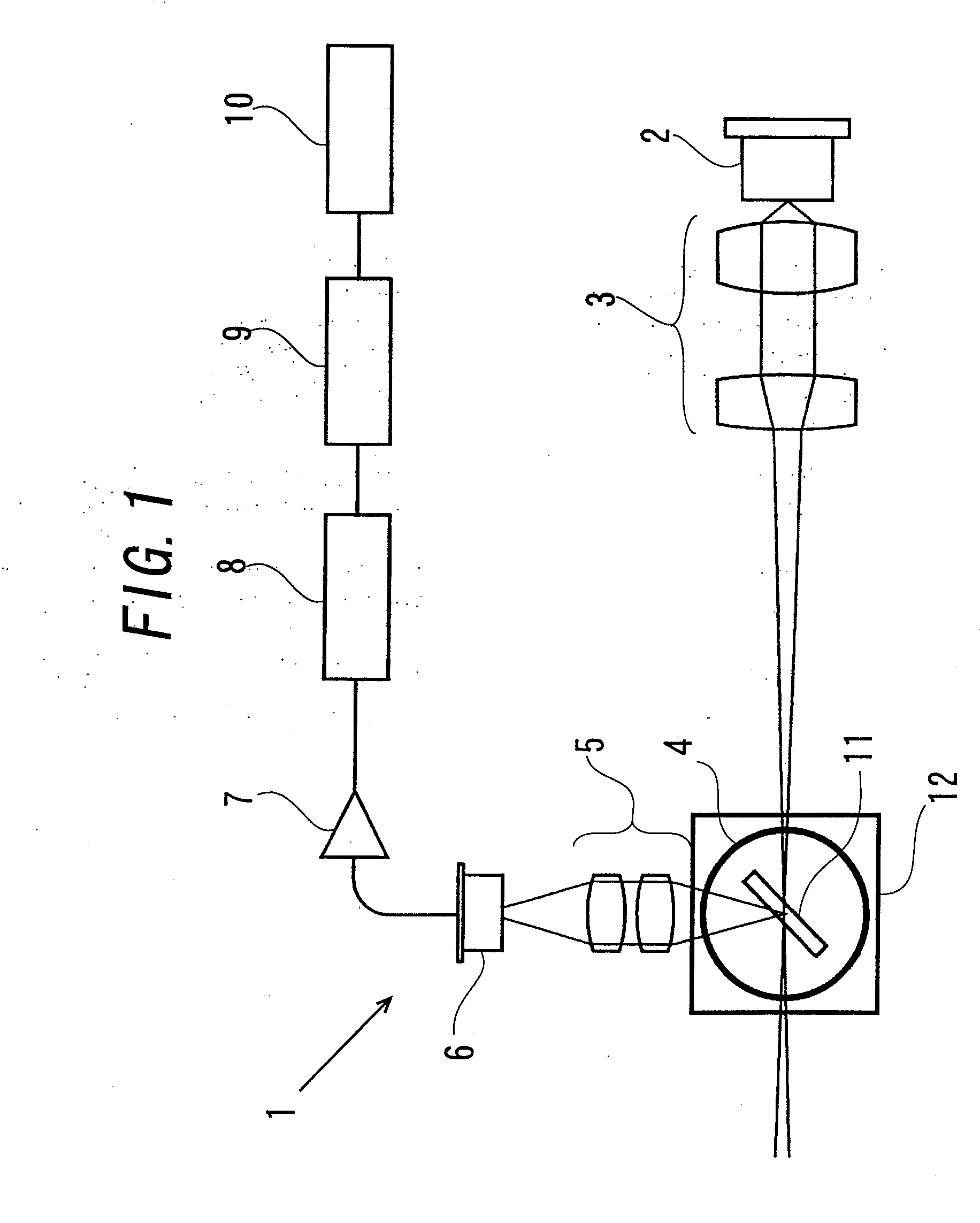
[0091]An illumination optical system capable of focusing and irradiating laser beam (diameter of input port into sample is 0.2 mm) was produced using a semiconductor laser (power 10 mW, wavelength 655 nm) in appropriate combination of lenses. In this case, the power density of incident light is about 80 mW / mm2. A sample containing 0.01 EU / mL endotoxin was mixed with LAL (Limulus ES-II Single Test Wako: manufactured by Wako Pure Chemical Industries, Ltd.), and then the mixture was charged in the cuvettes produced in Production Example 1. The cuvettes were set in a holder part capable of rotating the stainless stir bar 11 in the sample by the magnetic stirrer 12 as illustrated in FIG. 1 to stir the mixture. In this example, the cuvettes were used as the sample cells 4.
[0092]Stirring of the sample was performed at 1000 rpm. It should be noted that the holder part was heat-retained at 37° C. to progress the gelation reaction of LAL. The sample containing the LAL reagent and endotoxin wa...
example 2
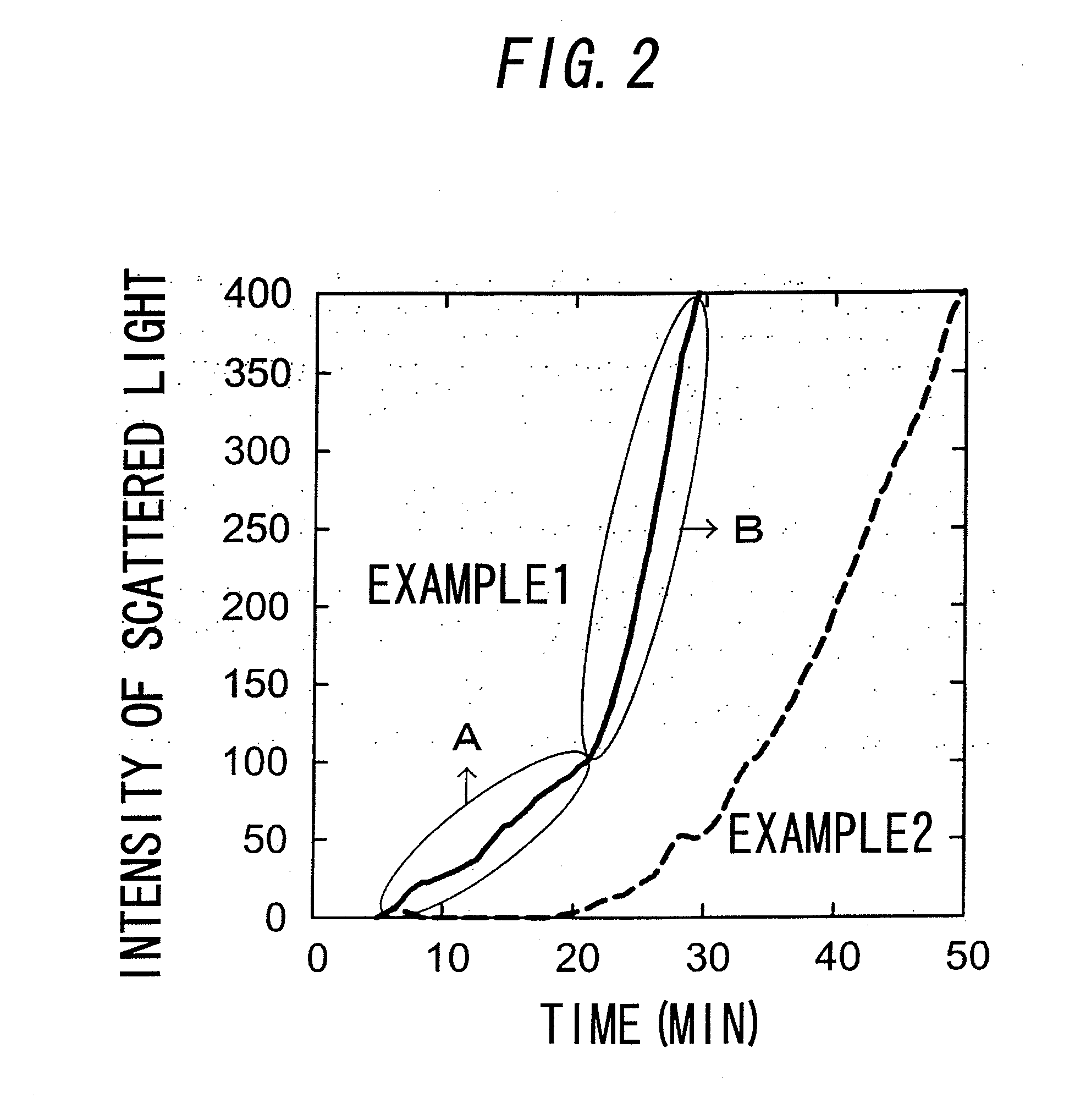
[0094]An optical system (diameter of input port into sample is 3.0 mm) capable of irradiating laser light as parallel light like a laser pointer was produced using a semiconductor laser (power 10 mW; wavelength 655 nm) in appropriate combination of lenses. The differences from Example 1 are only the conditions of the light source optical system, and as for the other conditions, the same treatment as in Example 1 was performed to record time-series changes in the scattered light. It should be noted that, in this case, the power density of incident light is about 0.35 mW / mm2.
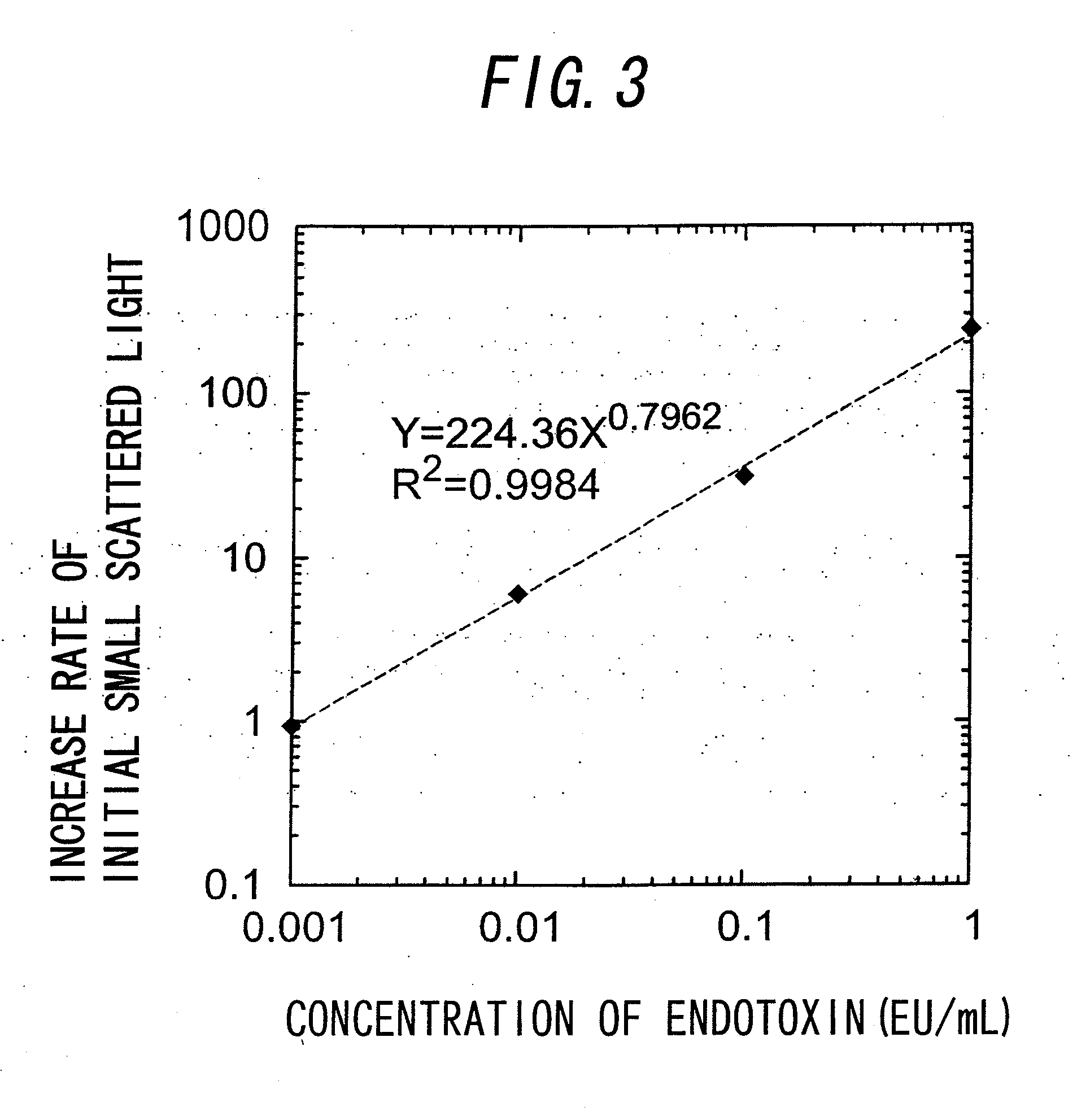
[0095]FIG. 2 shows the results of Examples 1 and 2. In FIG. 2, the horizontal axis represents the time (min), and the vertical axis represents the scattered light intensity obtained from the power of the photodiode. In Example 1, as shown in the part A surrounded by the ellipse in the figure, there is a phase where the scattered light increases form the early time of the reaction, and then the phase is changed to ...
PUM
| Property | Measurement | Unit |
|---|---|---|
| wavelength | aaaaa | aaaaa |
| wavelength | aaaaa | aaaaa |
| wavelength | aaaaa | aaaaa |
Abstract
Description
Claims
Application Information
 Login to View More