
Grid and method of manufacturing a grid for selective transmission of electromagnetic radiation, particularly x-ray radiation for mammography applications
a technology of electromagnetic radiation and grid, which is applied in the direction of solid-state diffusion coating, nuclear engineering, discharge tube/lamp details, etc., can solve the problems of material loss, time-consuming and costly to manufacture such grid, and may be a highly complex three-dimensional structure that is not easily achievable, so as to reduce or simplify the handling of such grid, the effect of large area
- Summary
- Abstract
- Description
- Claims
- Application Information
AI Technical Summary
Benefits of technology
Problems solved by technology
Method used
Image

Examples
Embodiment Construction
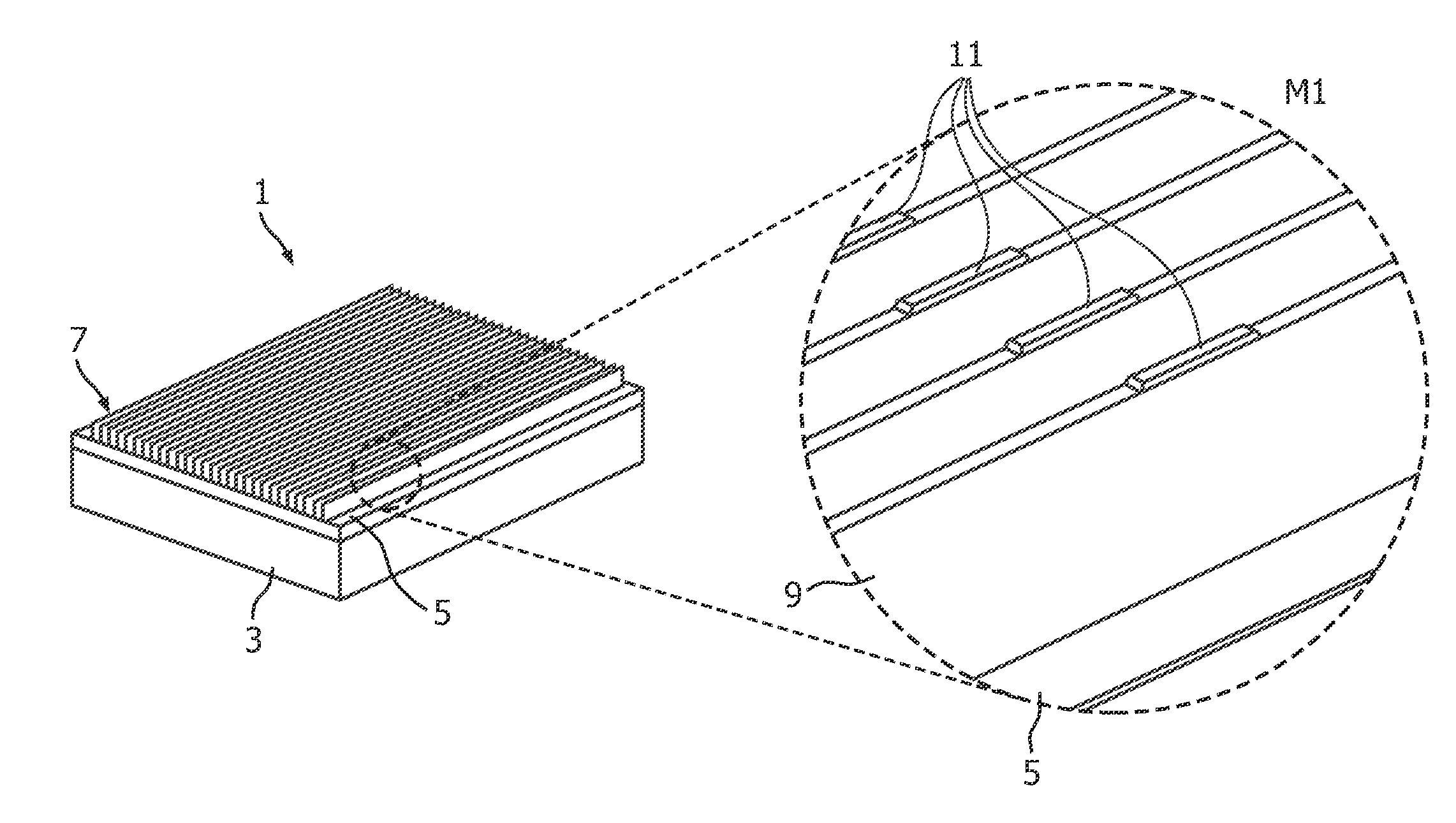
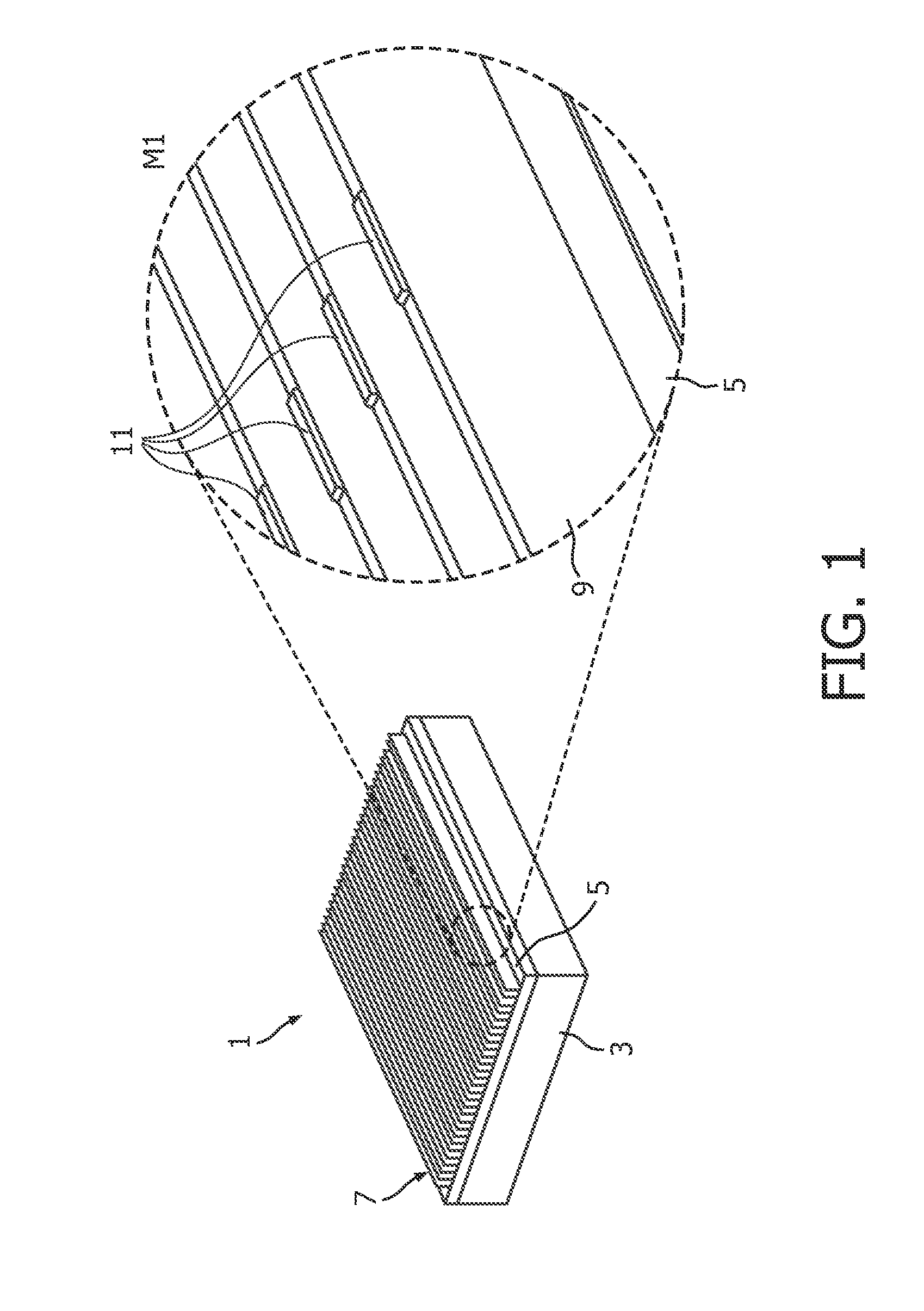
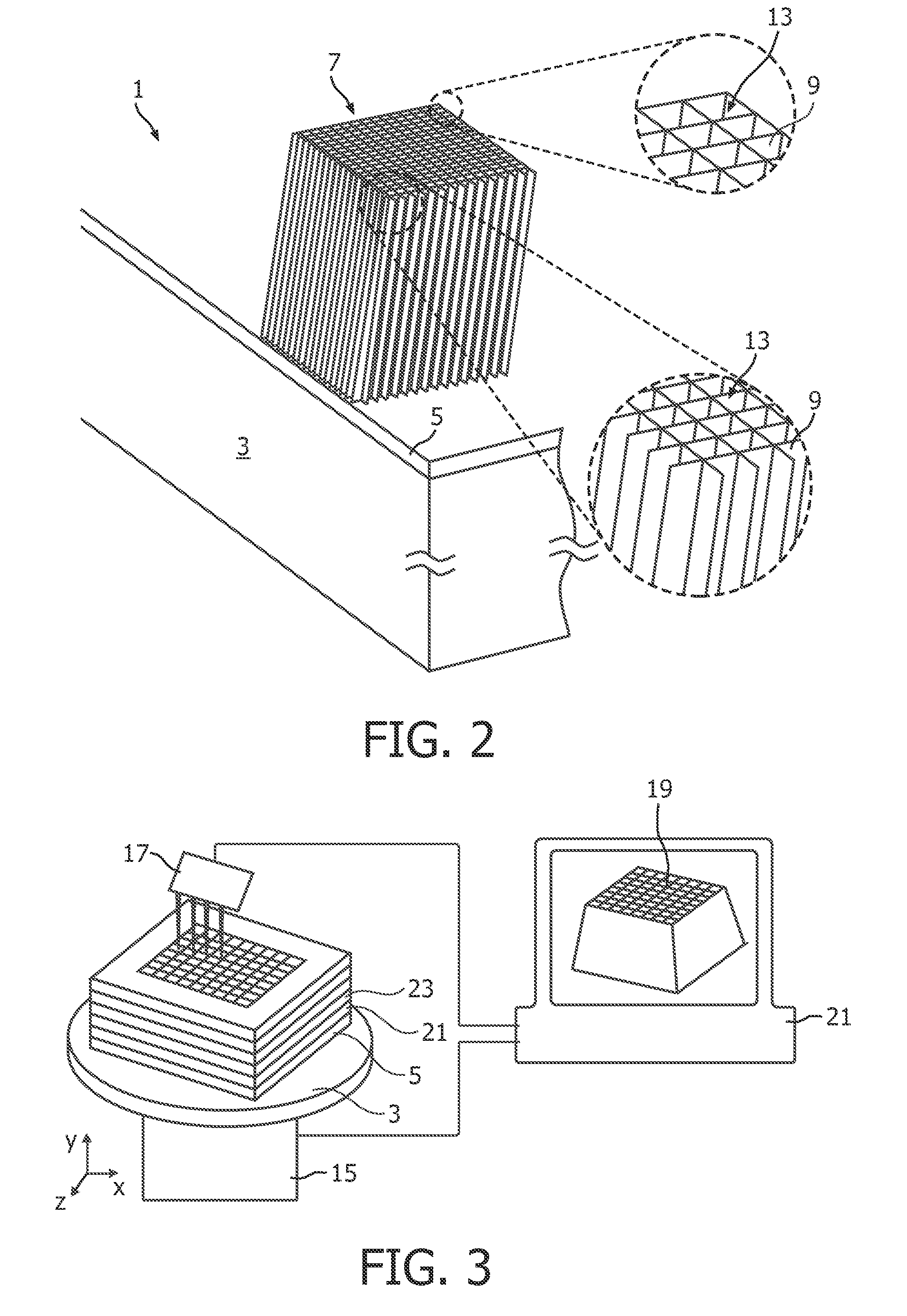
[0046]An exemplary embodiment of a method of manufacturing a grid 1 for selective transmission of electromagnetic radiation according to the invention will be described with reference to FIGS. 1, 2 and 3.
[0047]In a first step, a support element 3 having self-supporting stability and being made for example with carbon fibres is coated with a thin layer 5 of metal such as molybdenum or tungsten. The thus coated support element is then positioned in a working chamber of a selective laser sintering device. The precise positioning with respect to the position of the laser beam of the SLS device may be achieved by a previous system calibration. The metal layer 5 may serve as a base layer or seeding layer for the subsequent laser sintering process. After a layer of metal powder is arranged on the metal sheet, selective laser sintering is used to sinter a first layer of a sintered selective transmission structure 7 to be manufactured. After the first layer is completed, a next layer of meta...
PUM
| Property | Measurement | Unit |
|---|---|---|
| Thickness | aaaaa | aaaaa |
| Adhesion strength | aaaaa | aaaaa |
| Mechanical stability | aaaaa | aaaaa |
Abstract
Description
Claims
Application Information
 Login to View More