

Titanium dioxide NANO particle modified by surface stabilizer, titanium dioxide NANO ink comprising the same, solar cell employing the same, and producing method of the same
a surface stabilizer and titanium dioxide technology, applied in the field of nano particles, can solve the problems of limited control of the linewidth between electrodes, high cost, and high amount of expensive paste, and achieve the effects of minimizing surface tension, and reducing the risk of sintering cracks
- Summary
- Abstract
- Description
- Claims
- Application Information
AI Technical Summary
Benefits of technology
Problems solved by technology
Method used
Image

Examples
examples
[0032]The examples and experiments will now be described. The following examples are for illustrative purposes only and not intended to limit the scope of the present invention.
example
Preparation of Titanium Dioxide Nano Particle and Manufacture of Solar Cell Using the Same
[0033]Toluenesulfonic acid (1.72 mL) was dissolved in butanol (25 mL). After mixing butanol (150 mL) with Millipore water (5 mL) and adding titanium isopropoxide (12 mL), the resultant mixture was added to the toluenesulfonic acid solution. The mixture was reacted at room temperature for 1 hour and then at 110° C. for 6 hours. The reaction was proceeded further by adding phenylsulfonic acid.
[0034]The solvent was evaporated from the resultant titanium dioxide colloid solution to adjust the volume to about 120 mL.
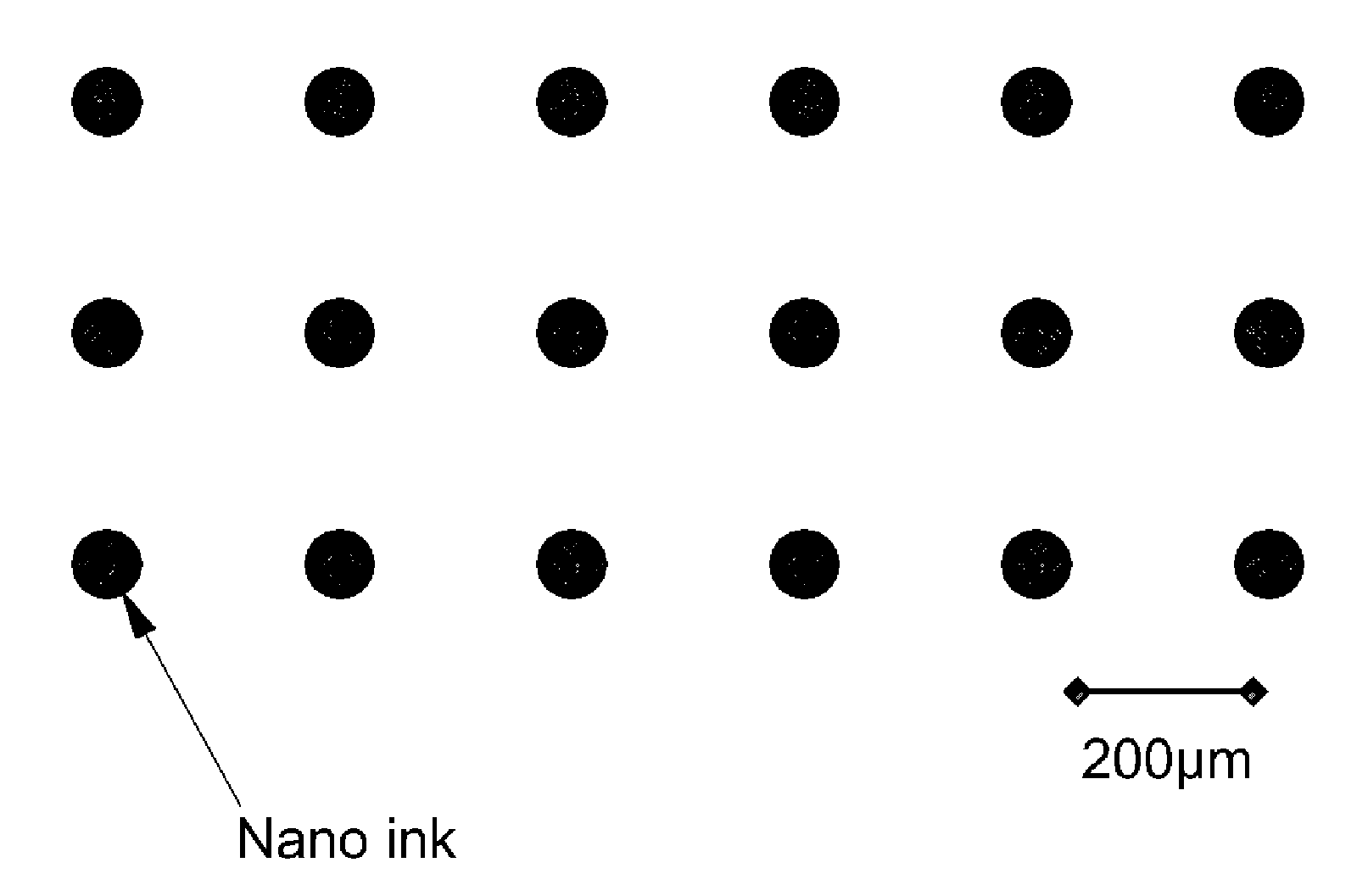
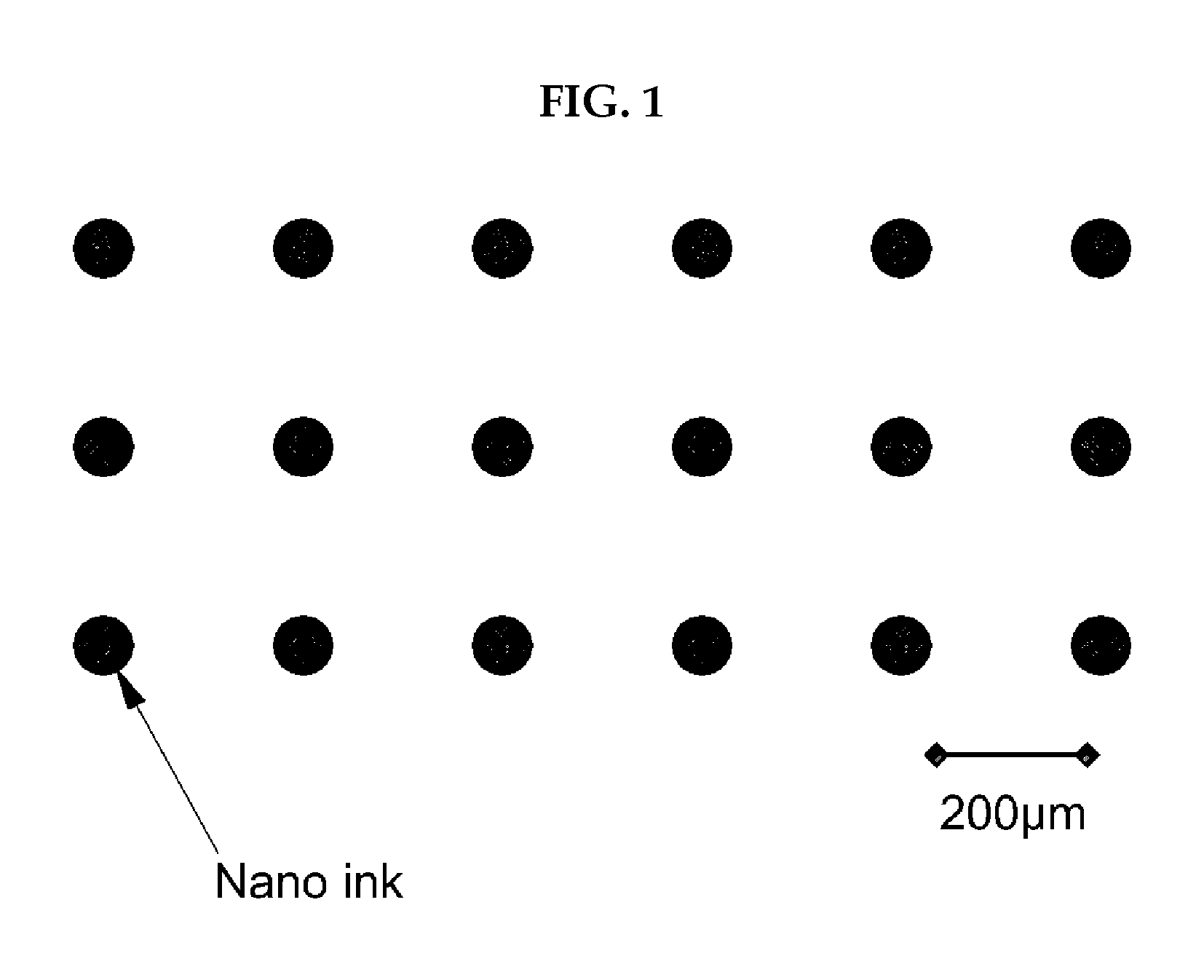
[0035]Polyethylene oxide-polypropylene oxide copolymer (40:60, based on weight, 10 g) was added to the solution and then mixed. 1 hour later, the solution was treated with a tip-type sonicator for 10 minutes. FIG. 1 shows an image of thus prepared titanium dioxide nano ink printed by ink-jetting. It can be seen that the titanium dioxide nano particles are dispersed well with an interval ...
PUM
| Property | Measurement | Unit |
|---|---|---|
| Temperature | aaaaa | aaaaa |
| Percent by mass | aaaaa | aaaaa |
| Percent by mass | aaaaa | aaaaa |
Abstract
Description
Claims
Application Information
 Login to View More