
Liquid material for forming three-dimensional object and material set for forming three-dimensional object, and three-dimensional object producing method and three-dimensional object producing apparatus
- Summary
- Abstract
- Description
- Claims
- Application Information
AI Technical Summary
Benefits of technology
Problems solved by technology
Method used
Image

Examples
example 1
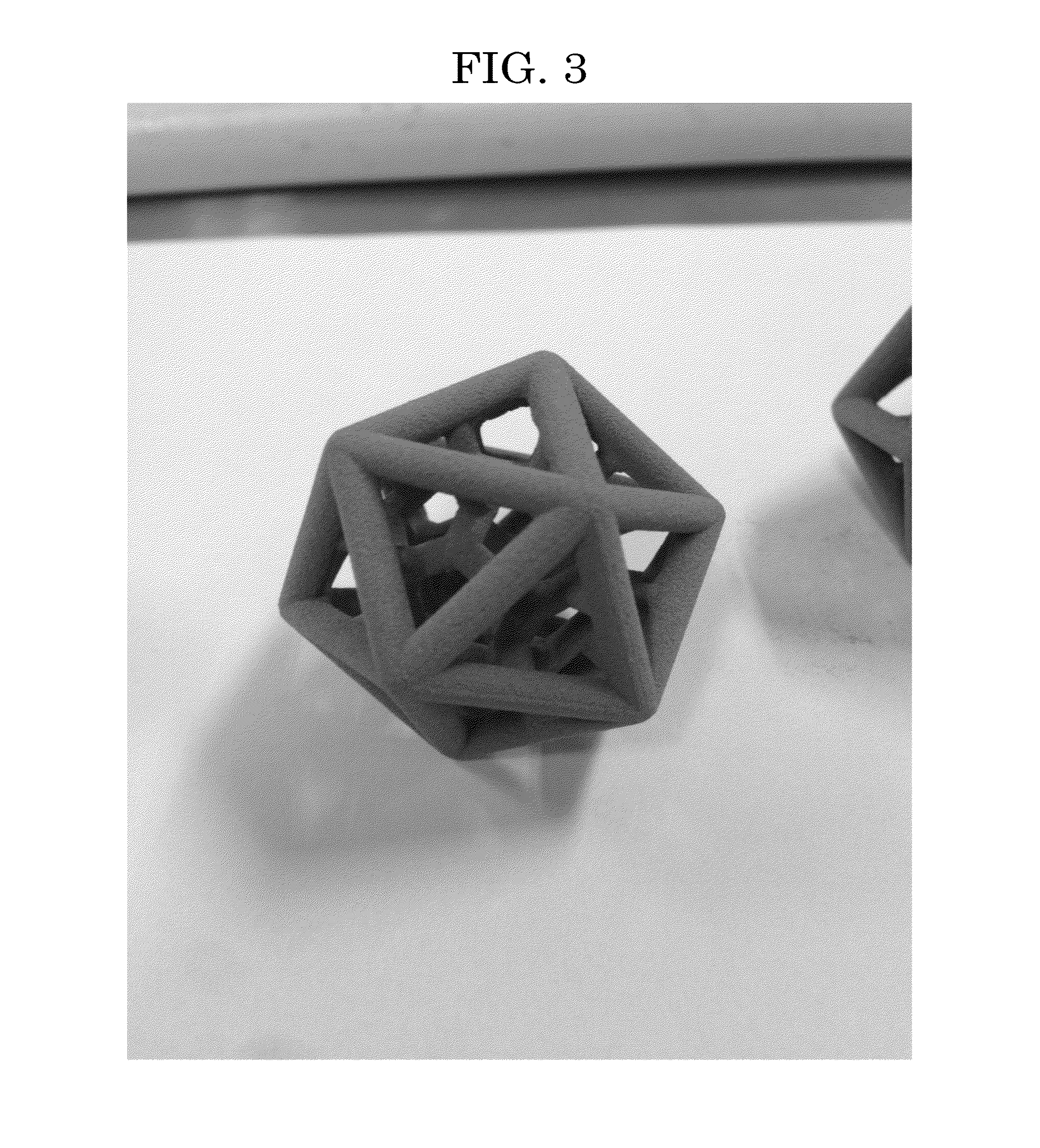
[0177]A three-dimensional object 1 was produced in the manner described below with the produced powder material 1 for forming a three-dimensional object and the liquid material 1, and a shape printing pattern having a size of 70 mm in length and 12 mm in width.
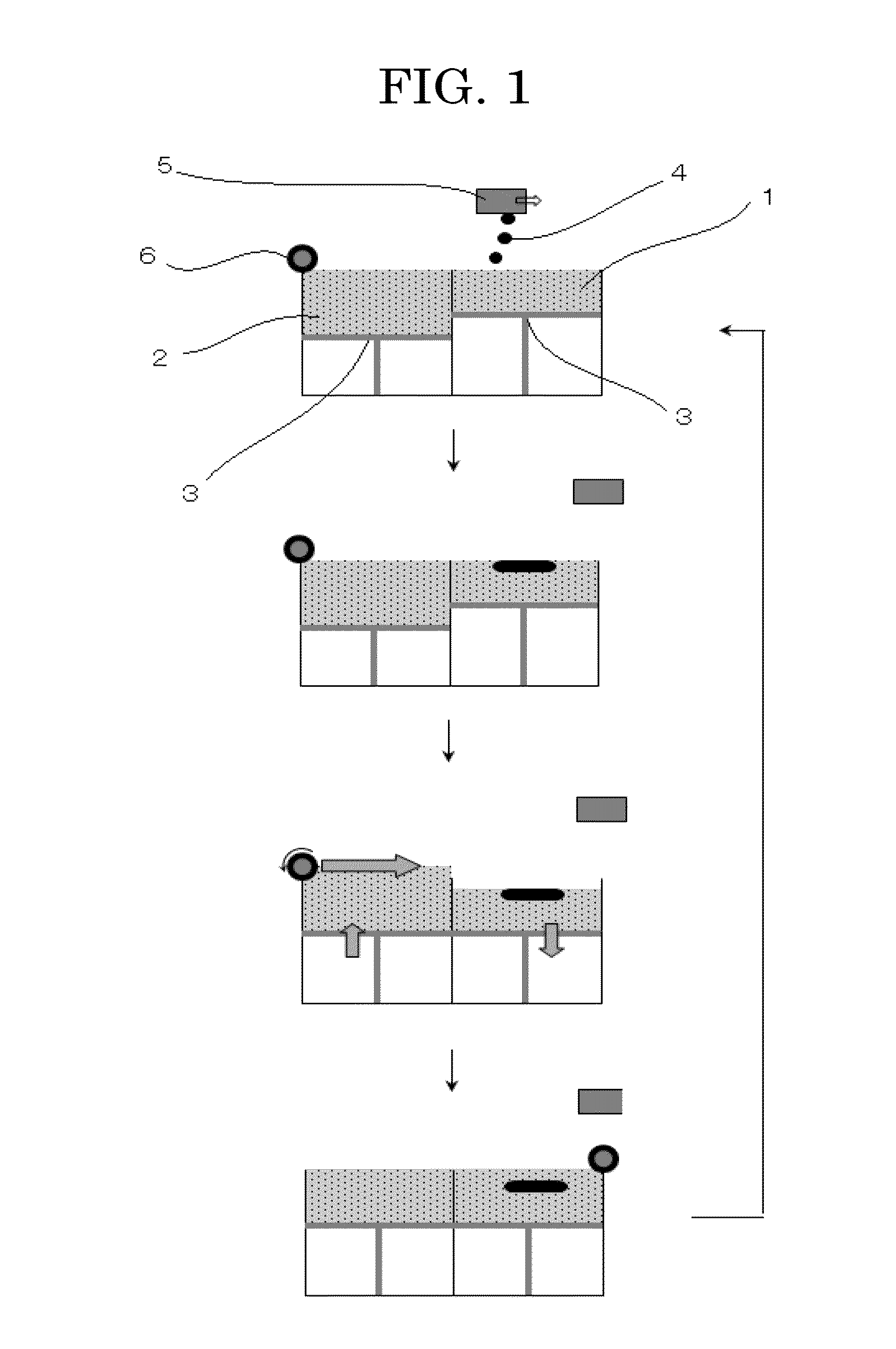
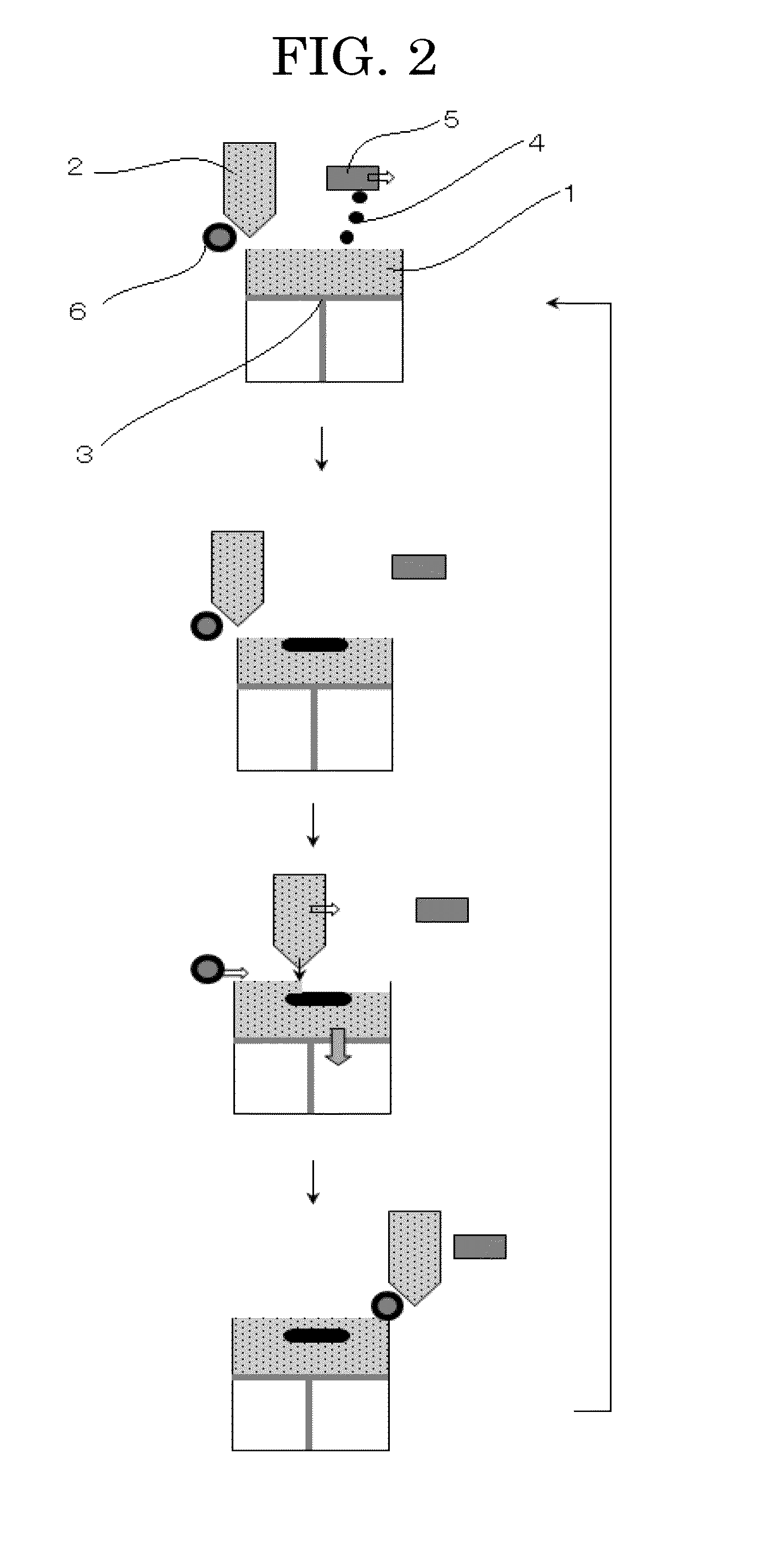
[0178]1) With a known three-dimensional object producing apparatus as illustrated in FIG. 1, the powder material 1 for forming a three-dimensional object was moved from the supplying-side powder storing tank to the forming-side powder storing tank to supply the powder material 1 for forming a three-dimensional object onto the supporting member to have an average thickness of 100 μm.
[0179]2) Next, the liquid material 1 was delivered (discharged) onto the surface of the supplied powder material 1 for forming a three-dimensional object from nozzles of a known inkjet discharging head. The polyvinyl alcohol was dissolved in the water contained in the liquid material 1, and the acetoacetyl group-modified polyvinyl alcohol was cross-...
example 2
[0192]A three-dimensional object 2 was produced in the same manner as in Example 1, except that polyvinyl pyrrolidone (5 parts by mass) used in Example 1 as the resin was changed to sodium polyacrylate (ARON A-7185 available from Toagosei Co., Ltd.) (1.5 parts by mass) to prepare a liquid material 2. The three-dimensional object 2 was evaluated in the same manner as in Example 1. The results are presented in Table 1.
example 3
[0193]A three-dimensional object 3 was produced in the same manner as in Example 1, except that polyvinyl pyrrolidone (5 parts by mass) used in Example 1 as the resin was changed to an acrylic-carboxylic acid-based copolymer (ARON A-20L available from Toagosei Co., Ltd.) (0.5 parts by mass) to prepare a liquid material 3. The three-dimensional object 3 was evaluated in the same manner as in Example 1. The results are presented in Table 1.
PUM
| Property | Measurement | Unit |
|---|---|---|
| Temperature | aaaaa | aaaaa |
| Temperature | aaaaa | aaaaa |
| Angle | aaaaa | aaaaa |
Abstract
Description
Claims
Application Information
 Login to View More