Check patentability & draft patents in minutes with Patsnap Eureka AI!

Electrophoretic display

a technology of electrophoretic display and display screen, applied in the direction of electrophoretic coating, static indicating device, instruments, etc., can solve the problems of limited resolution and performance of current epd devices by conventional materials

Active Publication Date: 2020-09-17
LYTEN INC
View PDF1 Cites 3 Cited by
  • Summary
  • Abstract
  • Description
  • Claims
  • Application Information

AI Technical Summary

Benefits of technology

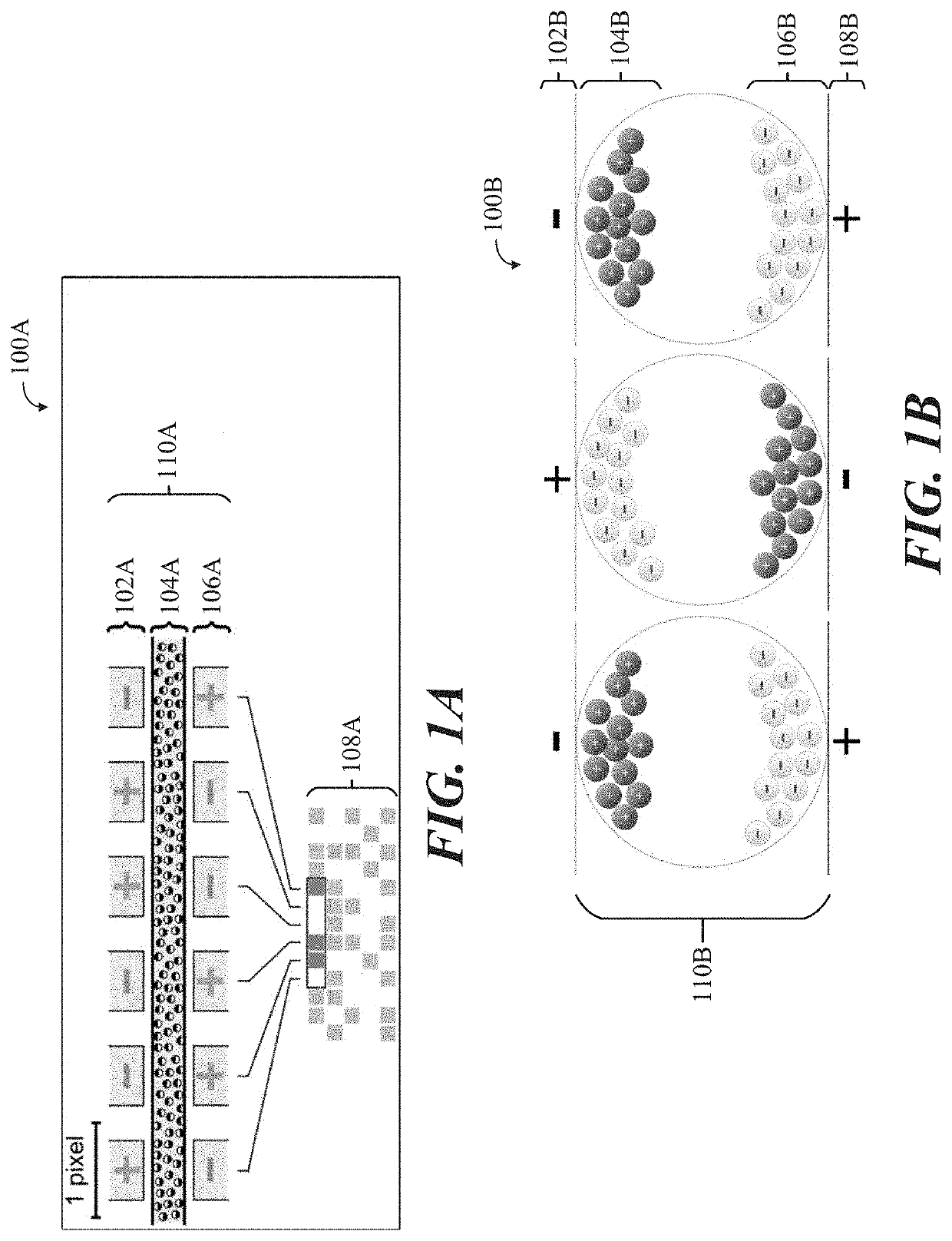
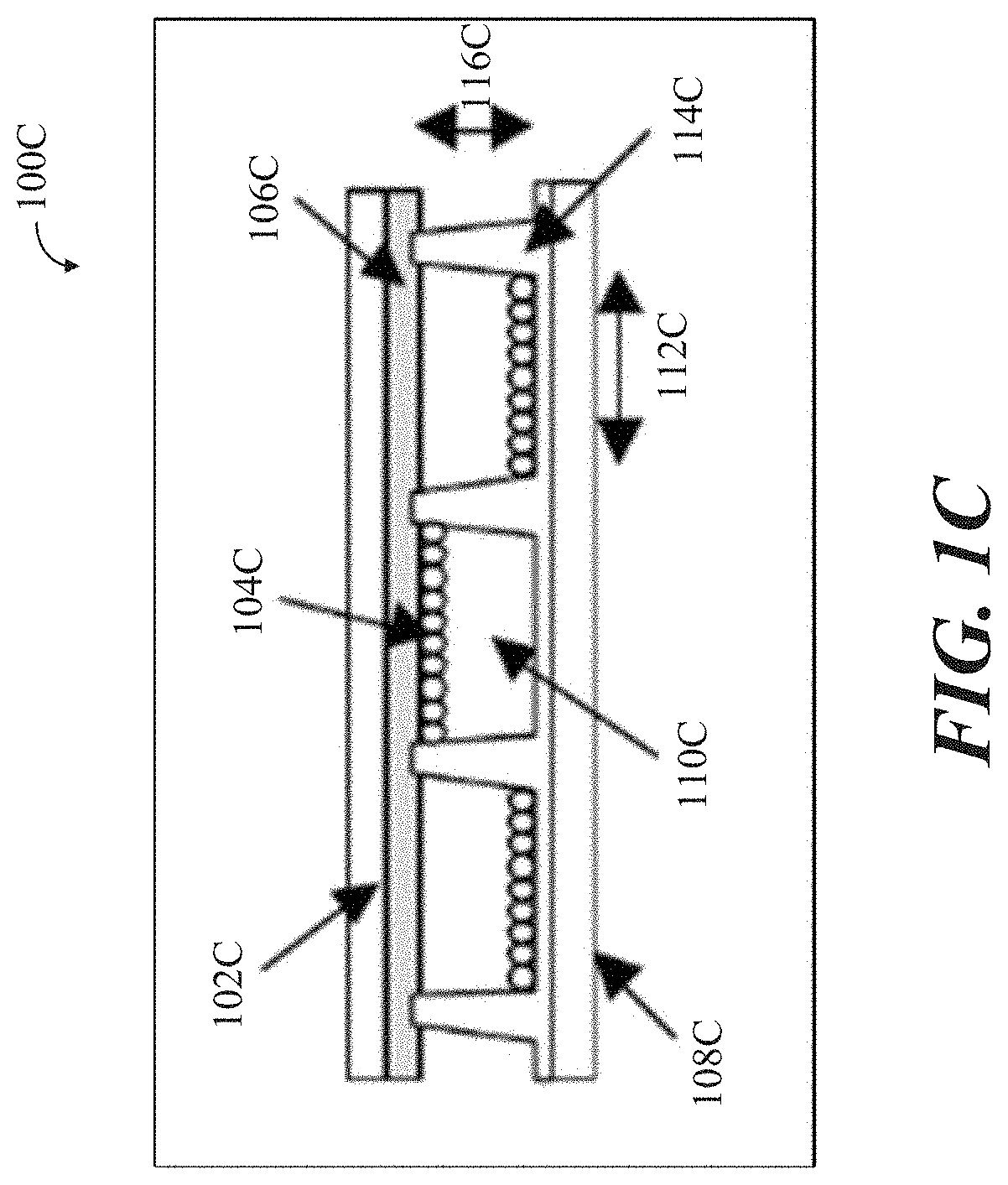
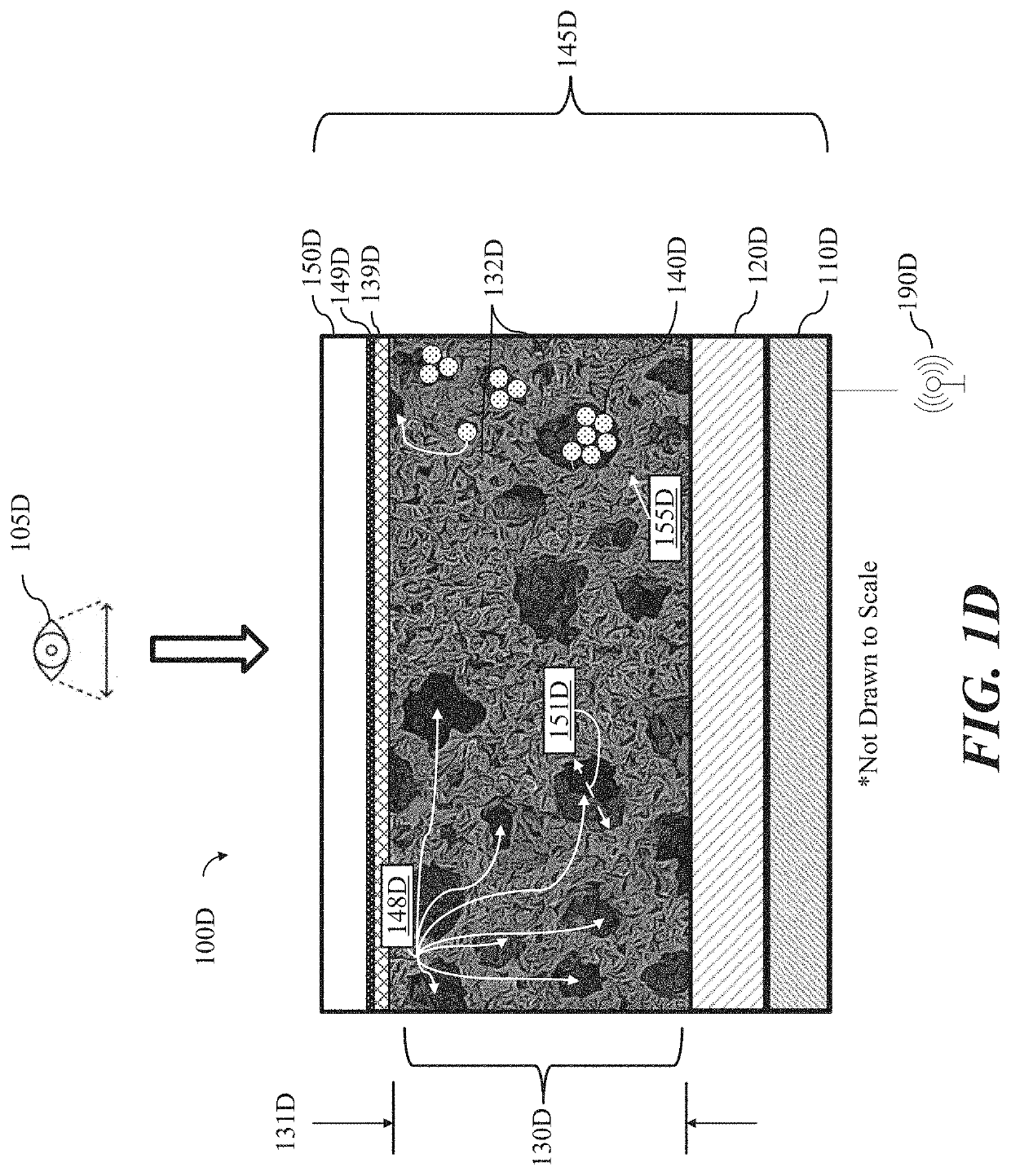
This patent describes a new technology for creating electrophoretic displays. The technology involves a three-dimensional carbon-based structure that guides the movement of charged particles in response to an electric field. The structure has a unique morphology made up of graphene nanoplatelets fused together and cross-linked by a polymer. The structure includes inter-particle pathways and intra-particle pathways that allow the charged particles to move through the structure. The technology also includes a method for producing the electrophoretic display structure and a display device that includes the carbon-based structure. The technical effects of this technology include improved display quality, reduced power consumption, and improved responsiveness.

Problems solved by technology

Current EPD devices are limited in resolution and performance by usage of conventional materials.

Method used

the structure of the environmentally friendly knitted fabric provided by the present invention; figure 2 Flow chart of the yarn wrapping machine for environmentally friendly knitted fabrics and storage devices; image 3 Is the parameter map of the yarn covering machine
View more

Image

Smart Image Click on the blue labels to locate them in the text.
Viewing Examples
Smart Image
  • Electrophoretic display
  • Electrophoretic display
  • Electrophoretic display

Examples

Experimental program
Comparison scheme
Effect test

example 1

, Electrophoretic Ink 1

[0122]Graphene was prepared using any one or more of the aforementioned techniques and / or a method reported in U.S. Pat. No. 9,812,295, entitled “Microwave Chemical Processing,” or in U.S. Pat. No. 9,767,992, entitled “Microwave Chemical Processing Reactor.” 10 g of graphene was added to 250 mL of 96% sulfuric acid cooled in an ice bath, and the resulting mixture was stirred for at least 90 minutes. 50 g of KMnO4 was slowly added to the reaction mixture to prevent any heating. After stirring for 30 minutes, the reaction mixture was heated to 35 C and stirred for additional 2 hours. 450 mL of H2O and 50 mL of H2O2 were added initially, and then additional 700 mL of H2O was added. The reaction mixture was filtered and wash with 5% HCl and plenty of H2O until the eluent pH reached 7 to yield graphene oxide.

[0123]300 mg of the graphene oxide was dispersed and sonofragmented in 30 mL of H2O using a probe sonicator set at 30% amplitude (Sonics VCX 750) for 2 hours. ...

example 2

, Electrophoretic Ink 2

[0124]Example 1 was repeated with carbon nano-onions (CNO) instead of graphene to make a CNO based ink.

example 3

, Electrophoretic Ink 3

[0125]900 mg of graphene was dispersed in 90 mL of CH2Cl2 and irradiated with a sonication probe at 20 kHz at 0° C. After 2 hours of sonication, the average particle size was 191 nm, which was measured using a dynamic light scattering method. To the fragmented carbon dispersion, 9.0 g of tetrabutylammonium bromide in 15 mL of H2O, 1.2 g of KMnO4 in 15 mL of H2O, and 40 mL of acetic acid were added, and the mixture stirred overnight. Resulting graphene hydroxide was washed with aqueous ethanol (50 wt %, 100 mL) for at least 5 times to remove impurities. 5 g of oleic acid was added to 500 mg of graphene hydroxide in 100 mL of hexane, and the mixture was stirred at 60° C. for 20 hrs. Oleic acid functionalized carbon was obtained by centrifugation, which was washed with 30 mL of hexane at least three times. To make an electrophoretic ink, 100 mg of the oleic acid functionalized graphene was mixed with 100 mg of Span 85 in 2.5 g of dodecane. The mixture was mixed i...

the structure of the environmentally friendly knitted fabric provided by the present invention; figure 2 Flow chart of the yarn wrapping machine for environmentally friendly knitted fabrics and storage devices; image 3 Is the parameter map of the yarn covering machine
Login to View More

PUM

PropertyMeasurementUnit
pore sizeaaaaaaaaaa
polydispersity indexaaaaaaaaaa
diameteraaaaaaaaaa
Login to View More

Abstract

This disclosure provides an electrophoretic display system including a first electrode disposed on a substrate and a three-dimensional (3D) carbon-based structure configured to guide a migration of electrically charged electrophoretic ink particles dispersed therein that are configured to be responsive to application of a voltage to the first electrode. The 3D carbon-based structure includes a plurality of 3D aggregates defined by a morphology of graphene nanoplatelets orthogonally fused together and cross-linked by a polymer; and, a plurality of channels interspersed throughout the 3D carbon-based structure defined by the morphology. The plurality of channels includes a plurality of inter-particle pathways and a plurality of intra-particle pathways. Each inter-particle pathway can include a smaller dimension than each inter-particle pathway. A second electrode is disposed on the 3D carbon-based structure. Each 3D aggregate can include any one or more of graphene, carbon nano-onions, carbon nanoplatelets, or carbon nanotubes.

Description

RELATED APPLICATIONS[0001]This application claims priority to U.S. Provisional Patent Application No. 62 / 866,464 entitled “Electrophoretic Display” filed on Jun. 25, 2019 and this application is a continuation-in-part to U.S. patent application Ser. No. 16 / 706,542 filed on Dec. 6, 2019 entitled “Resonant Gas Sensor”, which claims priority to U.S. Provisional Patent Application No. 62 / 815,927, filed on Mar. 8, 2019 entitled “Resonant Gas Sensor”, and which is a continuation of U.S. patent application Ser. No. 16 / 239,423 filed Jan. 3, 2019 entitled “Resonant Gas Sensor”, which claims priority to U.S. Provisional Patent Application No. 62 / 613,716, filed Jan. 4, 2018 entitled “Volatiles Sensor”; and this application is a continuation-in-part of and claims the benefit of priority to U.S. patent application Ser. No. 16 / 282,895, filed Feb. 22, 2019, entitled “Antenna with Frequency-Selective Elements”, which is a continuation of U.S. patent application Ser. No. 15 / 944,482 filed Apr. 3, 201...

Claims

the structure of the environmentally friendly knitted fabric provided by the present invention; figure 2 Flow chart of the yarn wrapping machine for environmentally friendly knitted fabrics and storage devices; image 3 Is the parameter map of the yarn covering machine
Login to View More

Application Information

Patent Timeline
no application Login to View More
Patent Type & Authority Applications(United States)
IPC IPC(8): G01N27/414C01B32/182B01J20/28
CPCG01N33/004G01N33/0039G01N27/127G01N33/0037B01J20/28066C01B2204/32C01B32/182G01N27/4141G01N33/0044G01N29/036G01N27/4045C01B2204/04G01N2291/014C01B2204/22C01B32/18C01B32/194Y02A50/20G02F1/167G02F1/1679G02F1/1675C09D5/44C25D13/02G02F2001/1678G09G3/344G02F1/165
Inventor LIM, SUNG H.STOWELL, MICHAEL W.LANNING, BRUCE
Owner LYTEN INC
Features
  • R&D
  • Intellectual Property
  • Life Sciences
  • Materials
  • Tech Scout
Why Patsnap Eureka
  • Unparalleled Data Quality
  • Higher Quality Content
  • 60% Fewer Hallucinations
Social media
Patsnap Eureka Blog
Learn More