
Carbyne-Based Sensing Device for High Spatial Resolution in DNA Sequencing and Biomolecule Characterization and Method of Fabricating the Same
- Summary
- Abstract
- Description
- Claims
- Application Information
AI Technical Summary
Benefits of technology
Problems solved by technology
Method used
Image

Examples
Embodiment Construction
[0020]With reference to FIGS. 1-12D, the preferred embodiments of the present invention may be described.
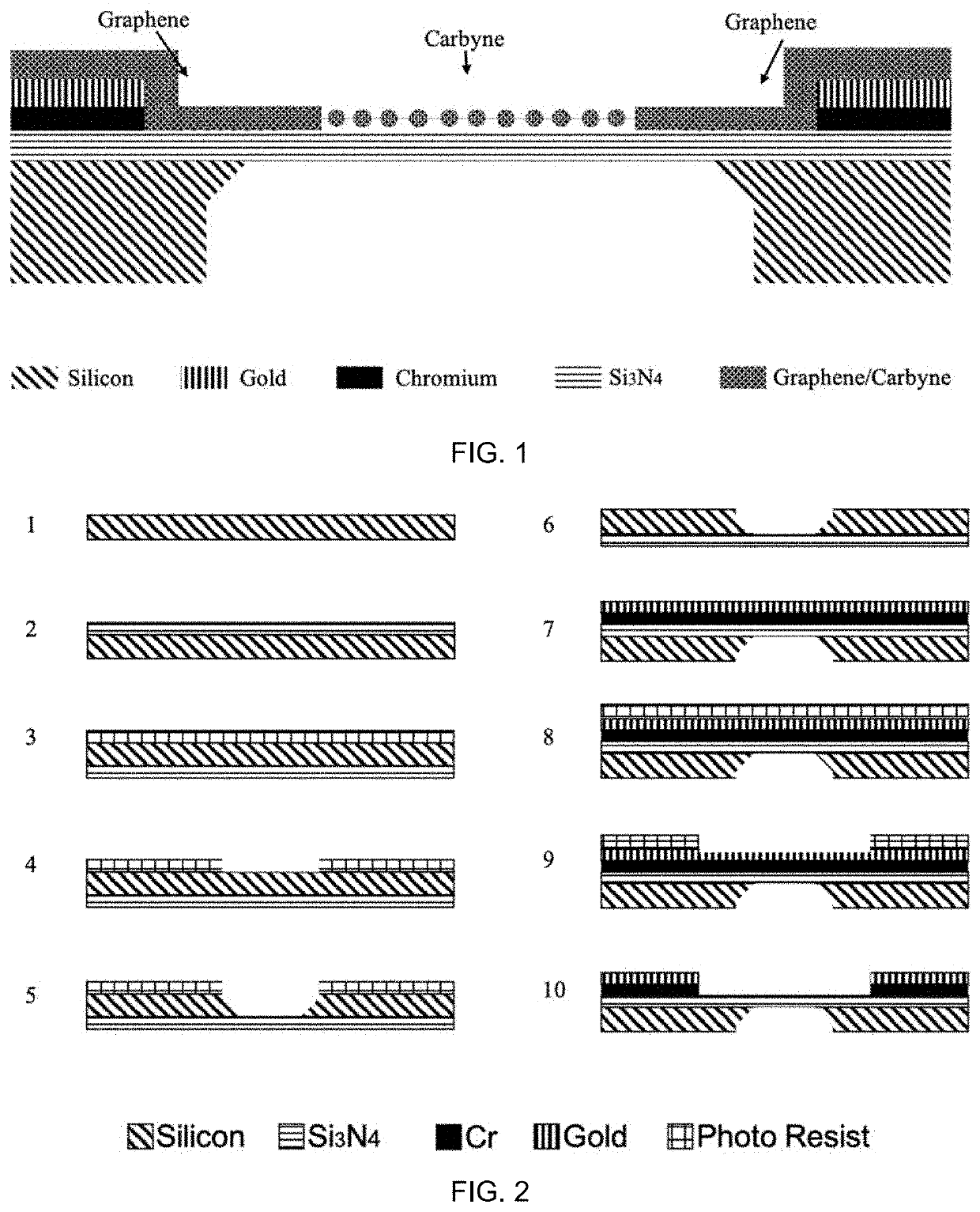
[0021]The present invention is directed to a carbyne-based sensing device useful for high spatial resolution in DNA sequencing and biomolecule characterization and a method of fabricating the same. The carbyne based sensing device of the present invention generally includes: (a) a carbyne fabricated from graphene, (b) chromium and gold electrodes connected to the graphene for electrical accessibility to the carbyne, and (c) a thin silicon nitride layer deposited on a silicon substrate with the silicon nitride layer acting as a diaphragm to support the carbyne, as shown in FIG. 1.
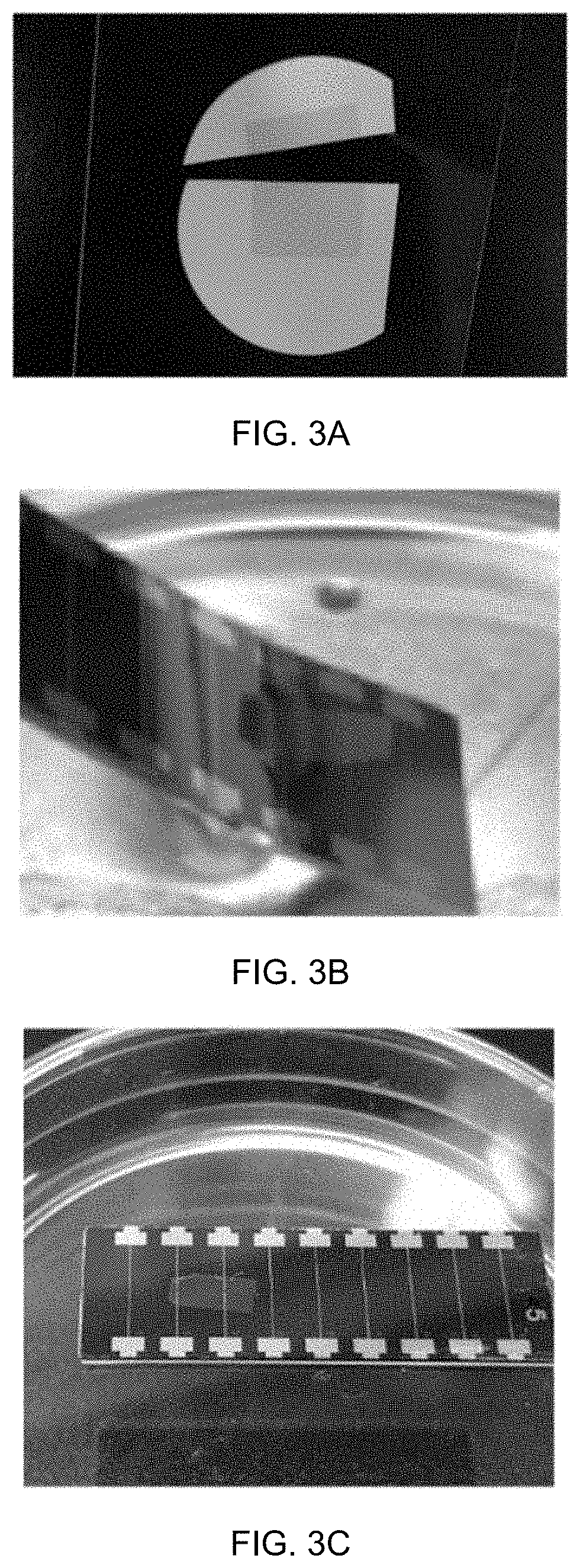
[0022]The carbyne device is generally fabricated by depositing the thin silicon nitride layer on the silicon substrate using chemical vapor deposition (CVD), followed by photolithography and KOH wet etch to achieve the freestanding silicon nitride diaphragm. Chromium and Gold (Cr / Au) are then deposited in...
PUM
| Property | Measurement | Unit |
|---|---|---|
| Length | aaaaa | aaaaa |
| Resolution enthalpy | aaaaa | aaaaa |
Abstract
Description
Claims
Application Information
 Login to View More