Accurate, high speed weighing apparatus and method

a weighing apparatus and high-speed technology, applied in the field of items weighing, can solve the problems of small extraneous but undesirable output, average out random electrical system noise that is always present, etc., and achieve the effect of exceeding the capacity of the object or item, less filtering, and reducing amplitud
US6963036B1Inactive Publication Date: 2005-11-08ZICHER HEINZ

Patent Information

Authority / Receiving Office
US · United States
Patent Type
Patents(United States)
Current Assignee / Owner
ZICHER HEINZ
Publication Date
2005-11-08
Estimated Expiration
Not applicable · inactive patent

Smart Images

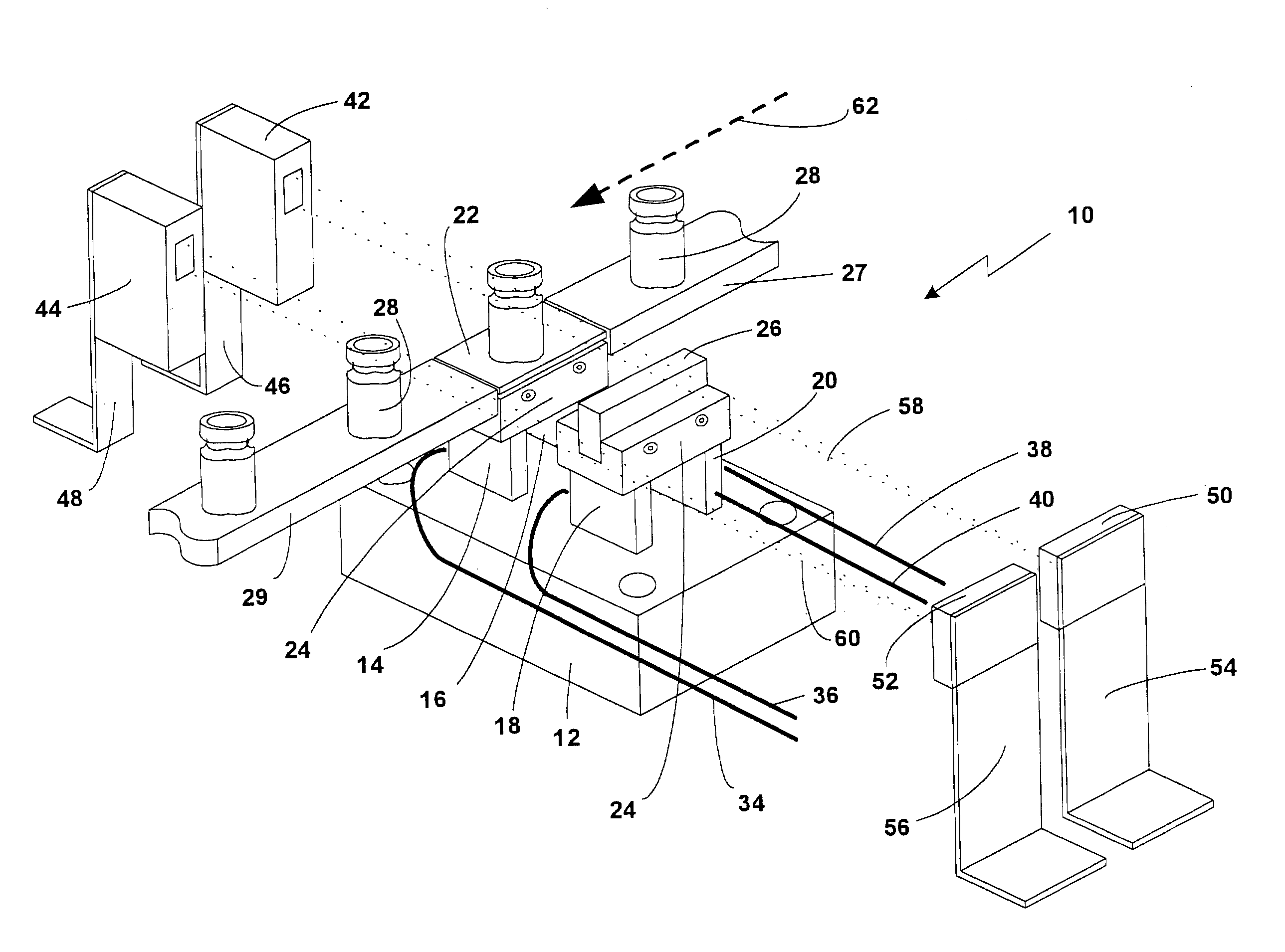
  • Figure 1
    Figure 1
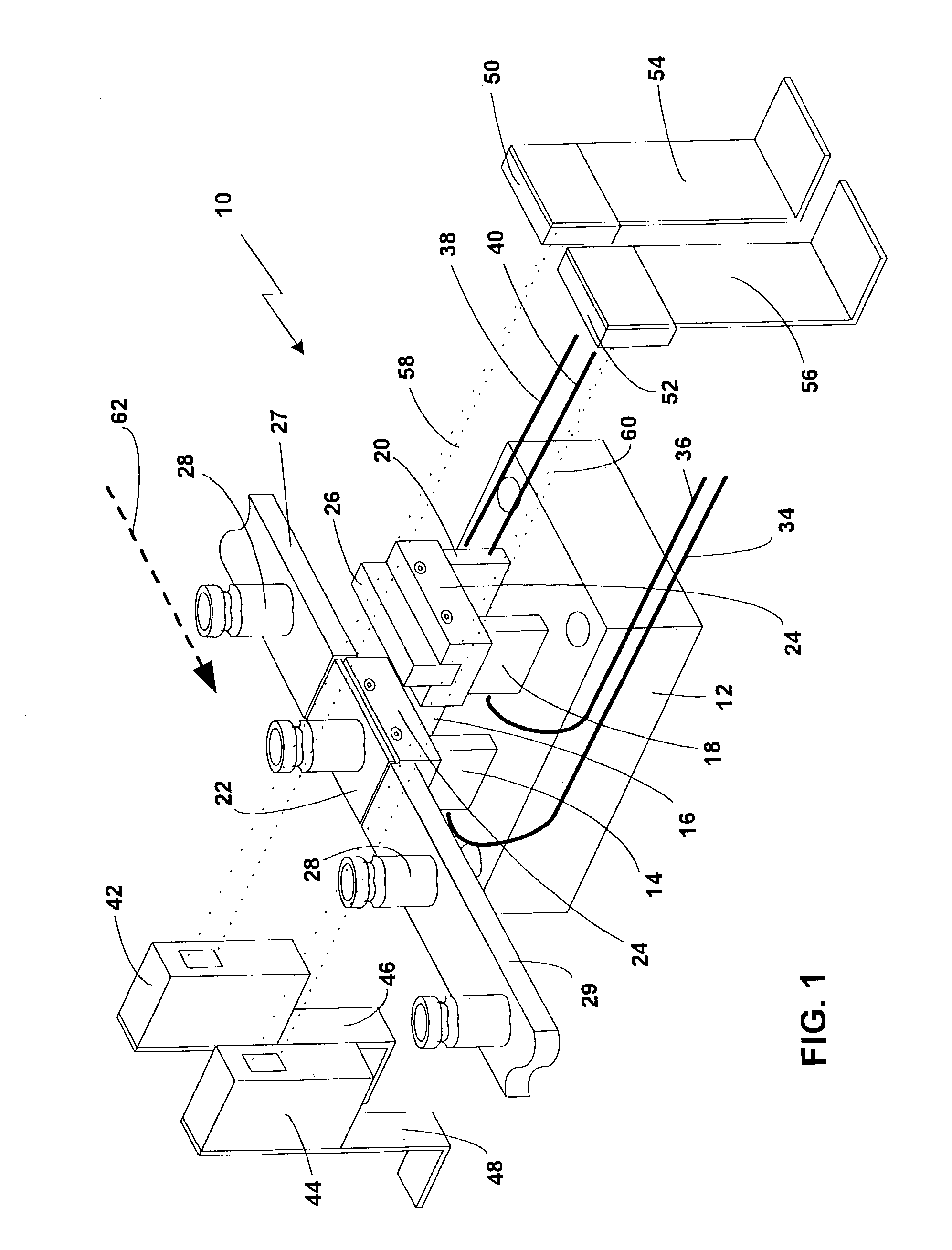
  • Figure 2
    Figure 2
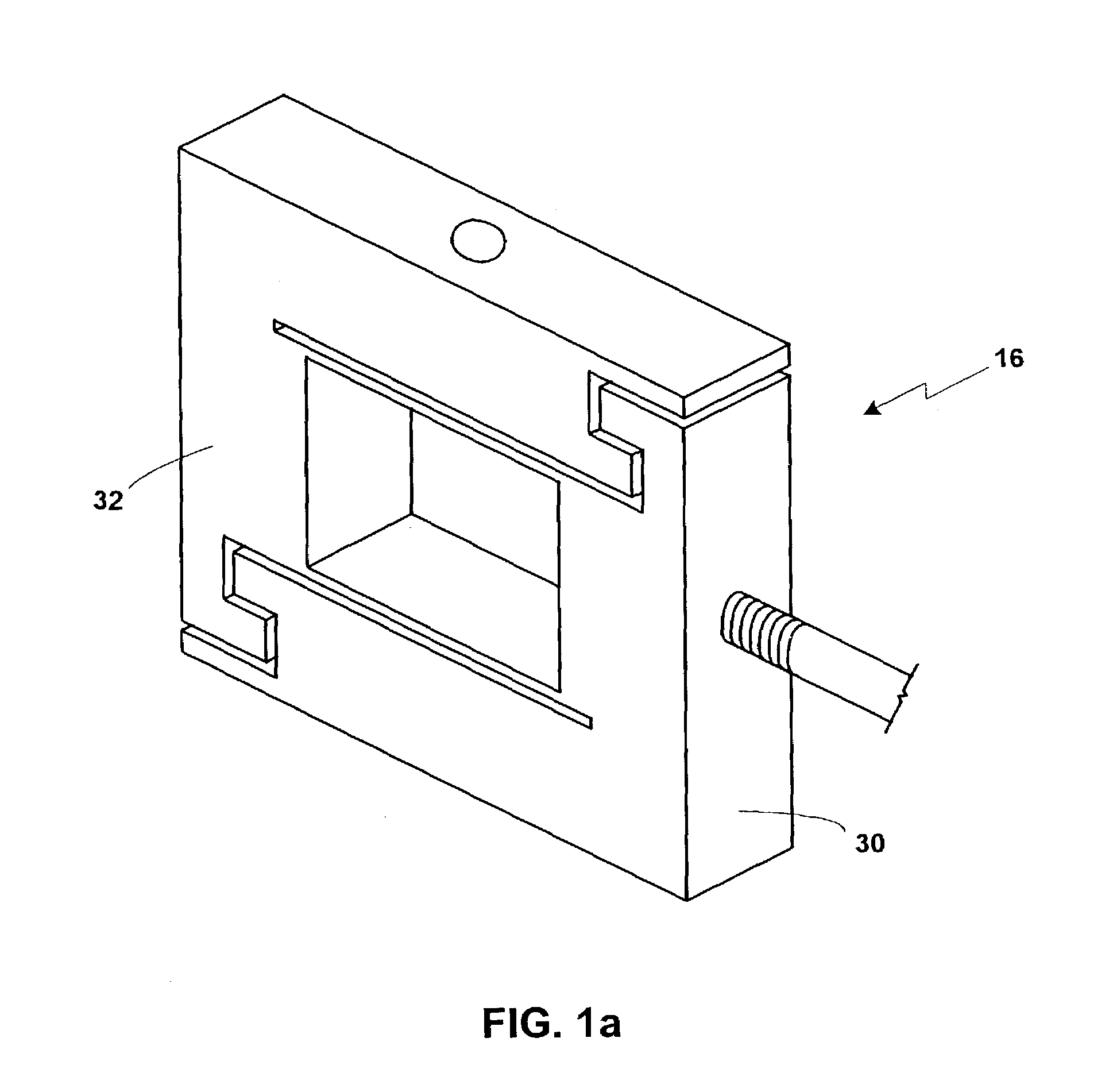
  • Figure 3
    Figure 3
Patent Text Reader

Abstract

The static or dynamic weighing apparatus for weighing an object or item, comprising a weighing assembly that includes a base with four (4) load cells attached to it, two (2) active load cells and two (2) passive load cells. Each active load cell has a mounting side and a weighing side. They are mounted to the base and to each other via a rigid weighing platform and are rotated 180° with respect to each other in the horizontal plane, thereby generating respective inverse error signals when an object or item is placed on or passes over the weighing platform. The two (2) passive load cells are mounted in the same manner. A combination of the voltage outputs from each of the respective two (2) load cells pairs negates all horizontally and vertically induced errors thus yielding a highly accurate two (2) times normal weight signal of the object or item being weighed. Error voltages felt by the passive assembly, representing any present vertical vibration, is removed via electrical circuitry from the actual active weighing voltage output, resulting in a true weight of the object or item being weighed. The resulting output voltage over the designated time interval then represents the true weight of the object or item being weighed. A voltage-to-frequency converter is employed to transmit the corrected true frequency output due to the actual analog output voltage resulting from the active weight being measured to a binary counter over a pre-specified time period. By counting a pulse train that varies directly to the applied voltage over a specified period of time results in a natural averaging weight and the resulting count is the average and true count of the representative weight of the object or item being weighed.
Need to check novelty before this filing date? Find Prior Art

Description

BACKGROUND OF THE INVENTION

[0001] 1. Field of the Invention

[0002] The present invention relates to the weighing of items by employing a four (4) load cell configuration that permits for the optimum cancellation of all ambient environmental vibration in both the horizontal and vertical planes. The four load cell configuration is implemented in an apparatus where a tare weighing and a gross weighing are always performed for each and every item presented for weighing so to avoid all adverse temperature effects. The apparatus is used for both “static” and “dynamic” weighing. In a static configuration, the item is placed and removed from the weighing assembly using robotics, etc., while for a dynamic configuration the items are conveyed across the weighing assembly using some sort of conveyance mechanism. For static weighing, a minimum weighing rate of one (1) tare and gross weight reading per presentation per second is provided. For dynamic weighing, a rate of weighing of up to ten (10) t...

Claims

the structure of the environmentally friendly knitted fabric provided by the present invention; figure 2 Flow chart of the yarn wrapping machine for environmentally friendly knitted fabrics and storage devices; image 3 Is the parameter map of the yarn covering machine
Login to View More