
Non-volatile semiconductor memory element and corresponding production and operation method
a technology of non-volatile semiconductors and memory elements, applied in semiconductor devices, solid-state devices, instruments, etc., can solve the problems high operating voltage, and only limited implementation of high integration density, and achieve the effect of simplifying the structur
- Summary
- Abstract
- Description
- Claims
- Application Information
AI Technical Summary
Benefits of technology
Problems solved by technology
Method used
Image

Examples
Embodiment Construction
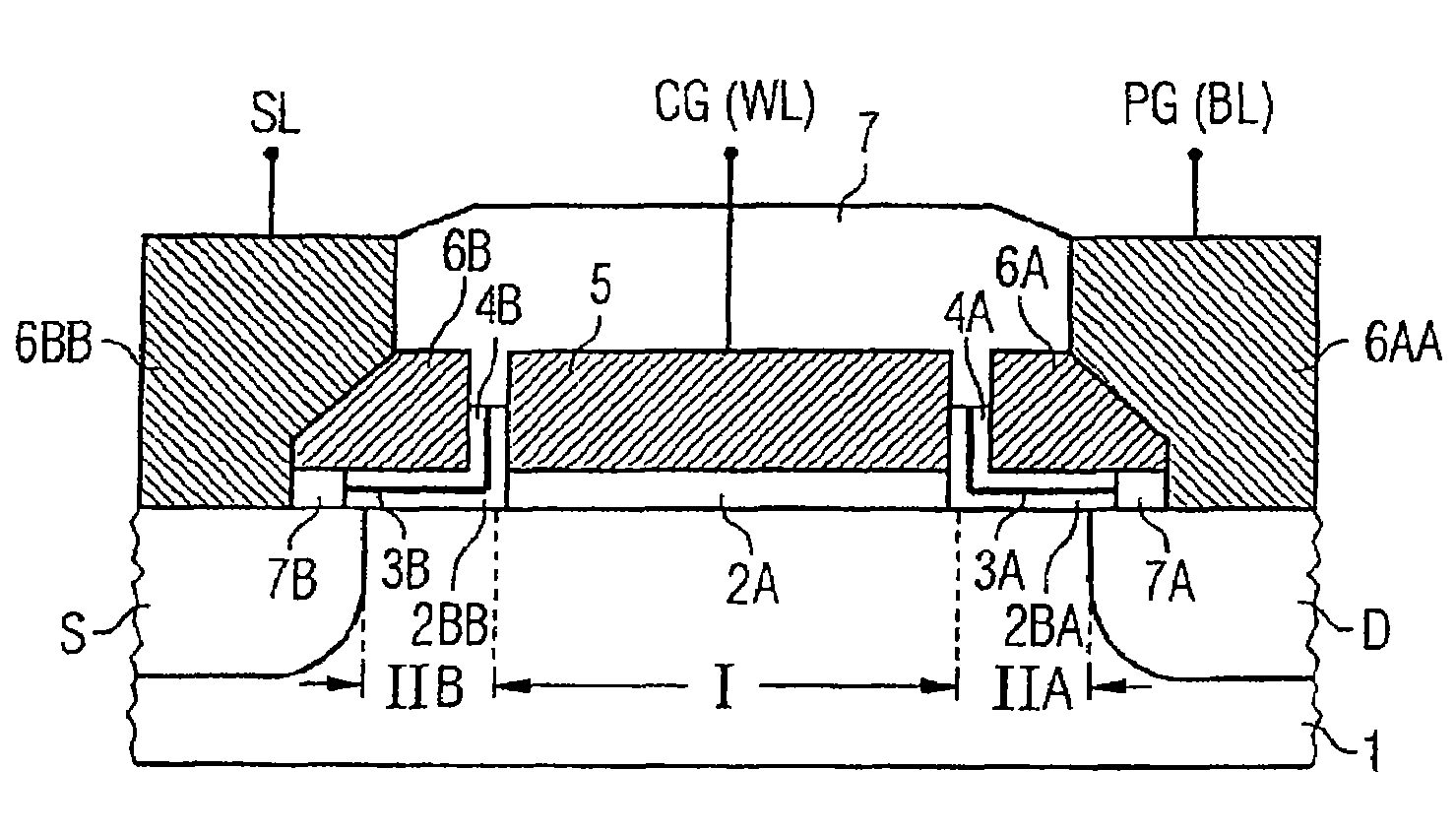
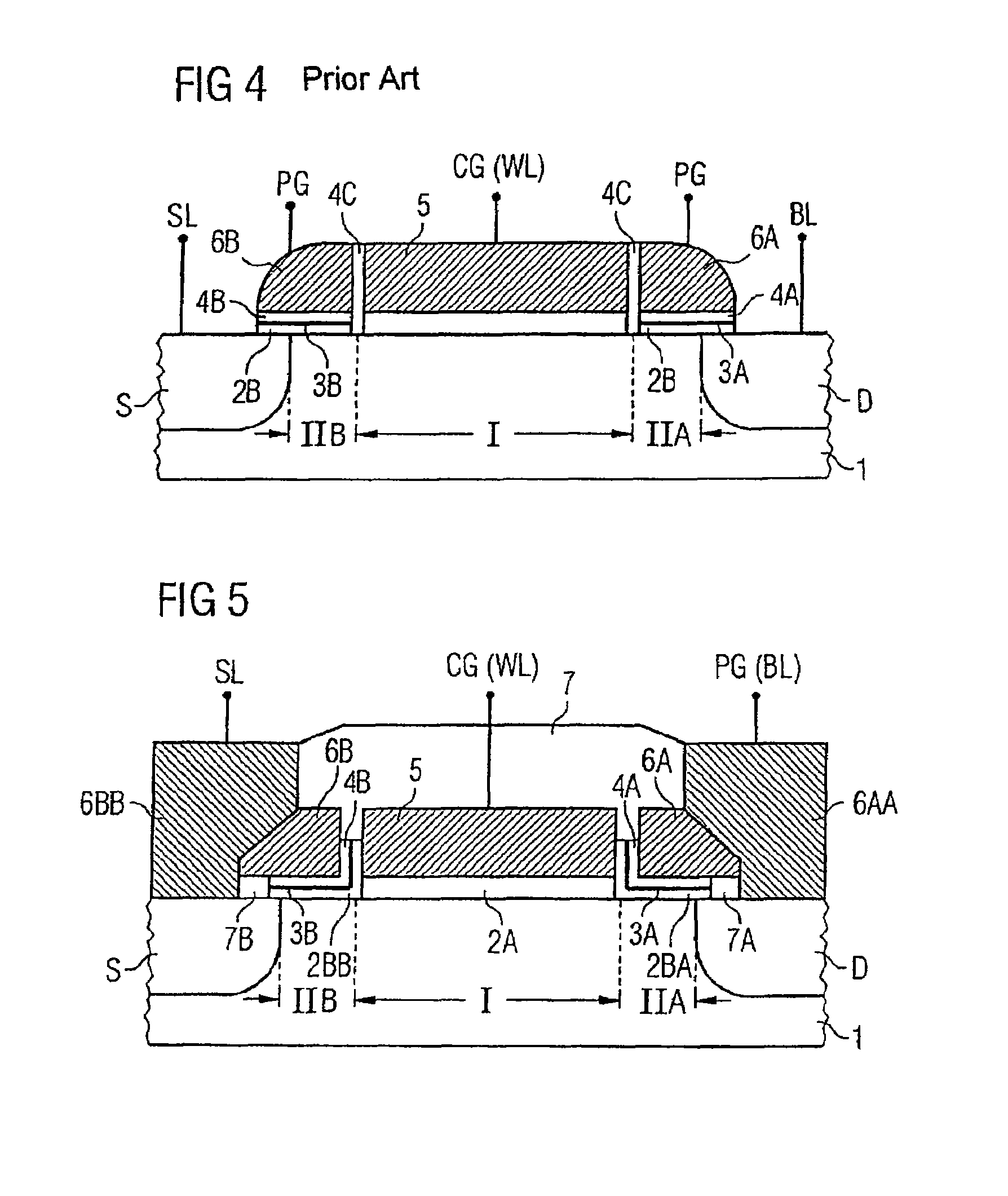
[0037]In the text which follows, the invention will be described by means of a dual-bit split-gate storage element for storing two memory states in a source side and drain side area but, in principle, corresponding nonvolatile semiconductor storage elements for storing only a single state are also conceivable. In particular, it should be pointed out that due to the symmetry of the storage element shown in the figures, the source region and the drain region can be considered as being equivalent and, in consequence, are also correspondingly interchangeable. In particular, this also applies to the source side and drain side layers, where only the respective connection potentials need to be exchanged.
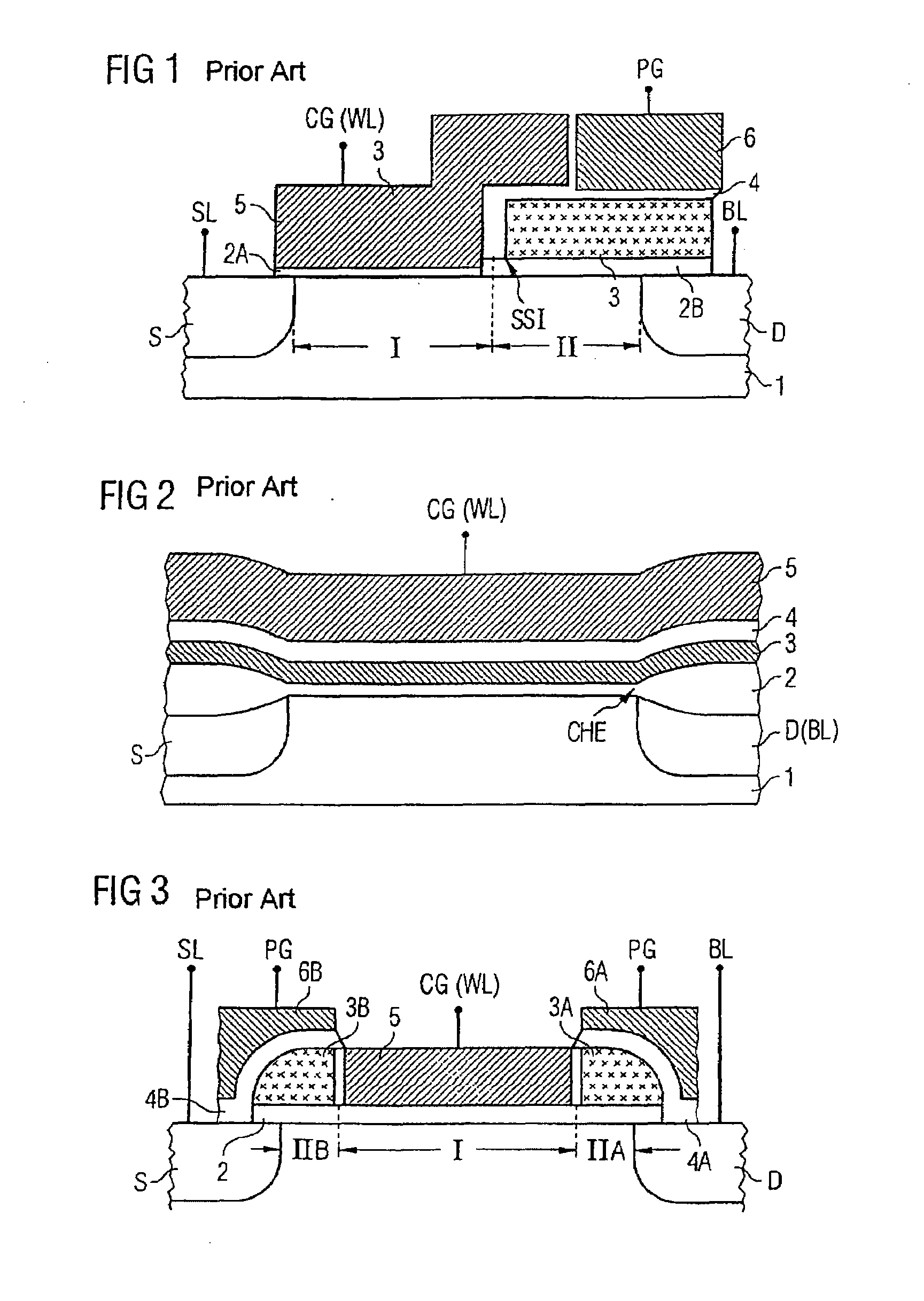
[0038]FIG. 5 shows a simplified sectional view of a dual-bit split-gate storage element according to the invention, identical reference symbols representing identical or corresponding layers and elements as in FIGS. 1 to 4 and a repeated description being omitted in the text which follows.
[...
PUM
 Login to View More
 Abstract
Description
Claims
Application Information
 Login to View More