
Process for multistage residue hydroconversion integrated with straight-run and conversion gasoils hydroconversion steps
a technology of hydroconversion step and hydroconversion gas, which is applied in the direction of hydrocarbon oil cracking, hydrocarbon oil cracking, physical/chemical process catalysts, etc., can solve the problems of increasing the cost of building and operating the overall plant, and affecting the quality of the overall plant. , to achieve the effect of high feedstock throughput ra
- Summary
- Abstract
- Description
- Claims
- Application Information
AI Technical Summary
Benefits of technology
Problems solved by technology
Method used
Image

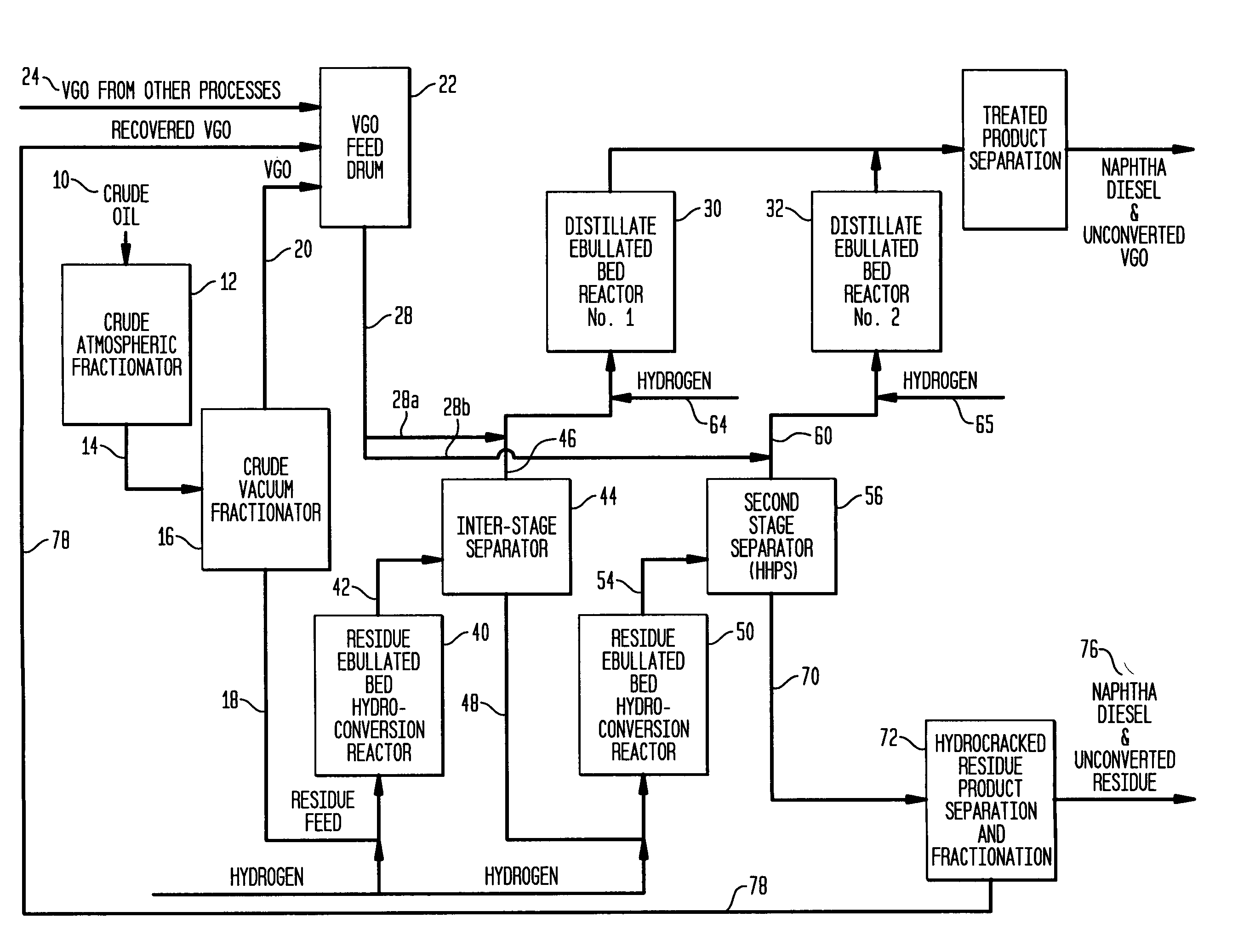
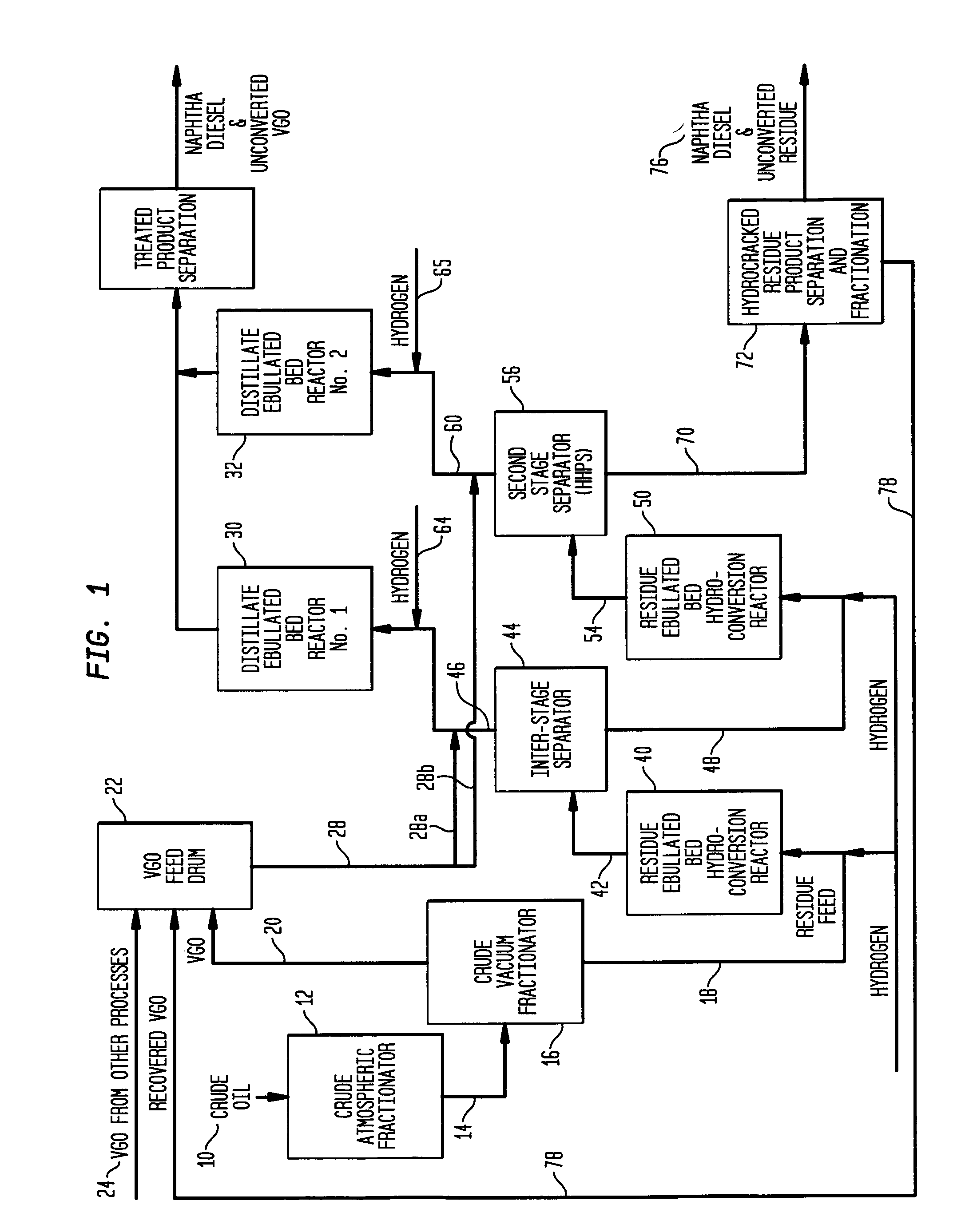
Examples
example 1
[0057]Vacuum residue feedstock is processed in a two-stage in series residue ebullated-bed unit. The feedrate to the plant is relatively high (>50,000 BPSD) and near the limit for a single train plant. The vacuum residue conversion system utilized in the example are residue ebullated-bed reactors. In addition to the vacuum residue feed to the residue ebullated-bed reactors, there are other VGO boiling range feedstocks (straight run, coker VGO and FCC cycle oils), which also require hydrotreatment and it is desirable to coprocess these streams in separate distillate ebullated-bed reactors along with the residue ebullated-bed overhead material which contains product diesel and vacuum gas oils. A summary of the feedstocks for this example is shown in Table 1.
[0058]This high feedrate and the need to minimize initial investment necessitated the use of interstage separation where a separation vessel between the residue ebullated-bed reactors is used to remove the gas and unreacted hydroge...
PUM
| Property | Measurement | Unit |
|---|---|---|
| boiling point | aaaaa | aaaaa |
| boiling point | aaaaa | aaaaa |
| boiling point | aaaaa | aaaaa |
Abstract
Description
Claims
Application Information
 Login to View More