

Three-dimensional freeform waveguides for chip-chip connections
a freeform waveguide and chip-chip connection technology, applied in the field of microoptics and nanooptics, can solve the problems of strong limitations of the waveguide geometries that can be created with this method, the inability to realize compact photonic wire bonds, and the inability to create free form curves with variable waveguide cross sections
- Summary
- Abstract
- Description
- Claims
- Application Information
AI Technical Summary
Benefits of technology
Problems solved by technology
Method used
Image

Examples
Embodiment Construction
[0037]In the drawings, like reference numbers are used to denote like components in the different figures.
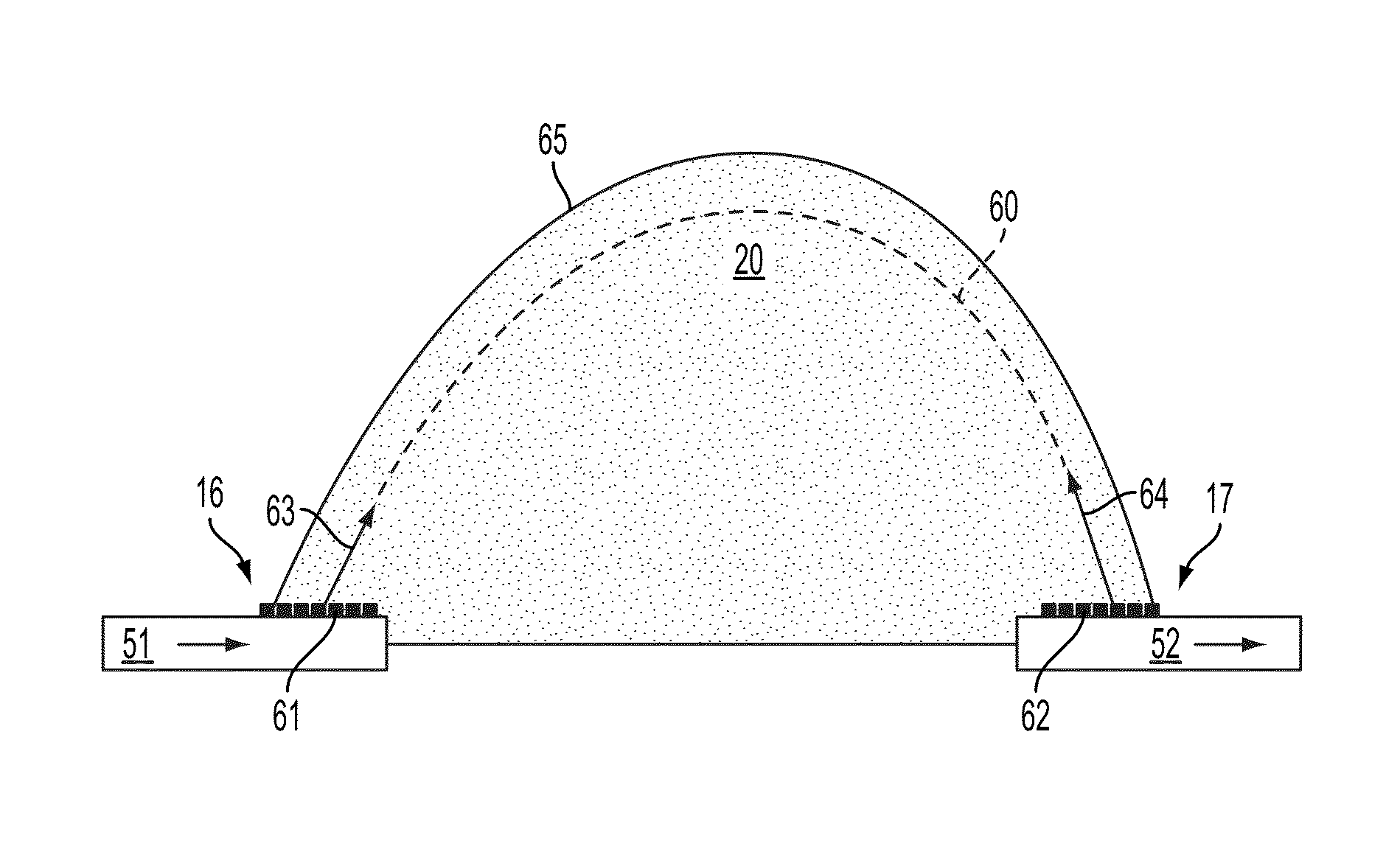
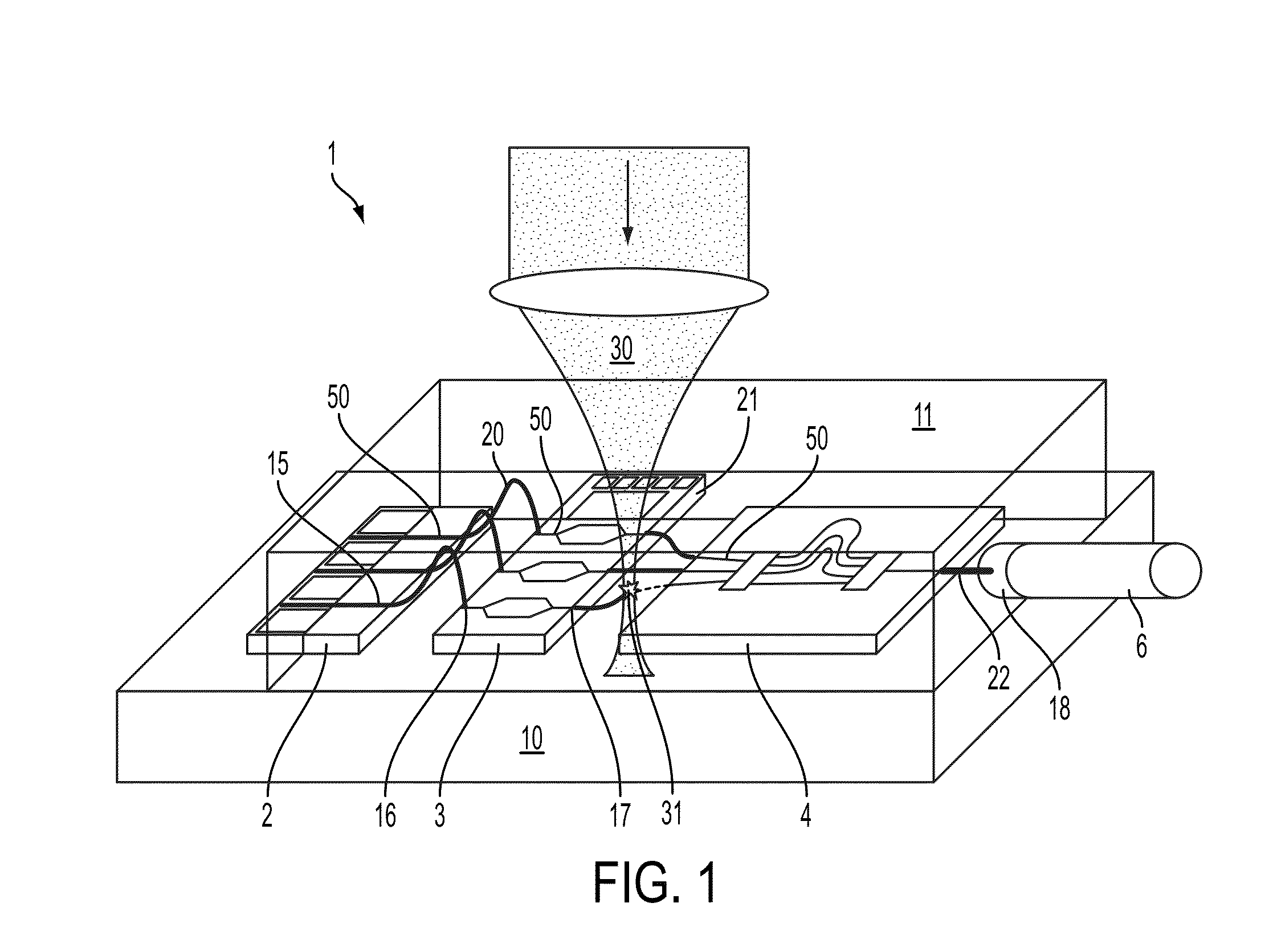
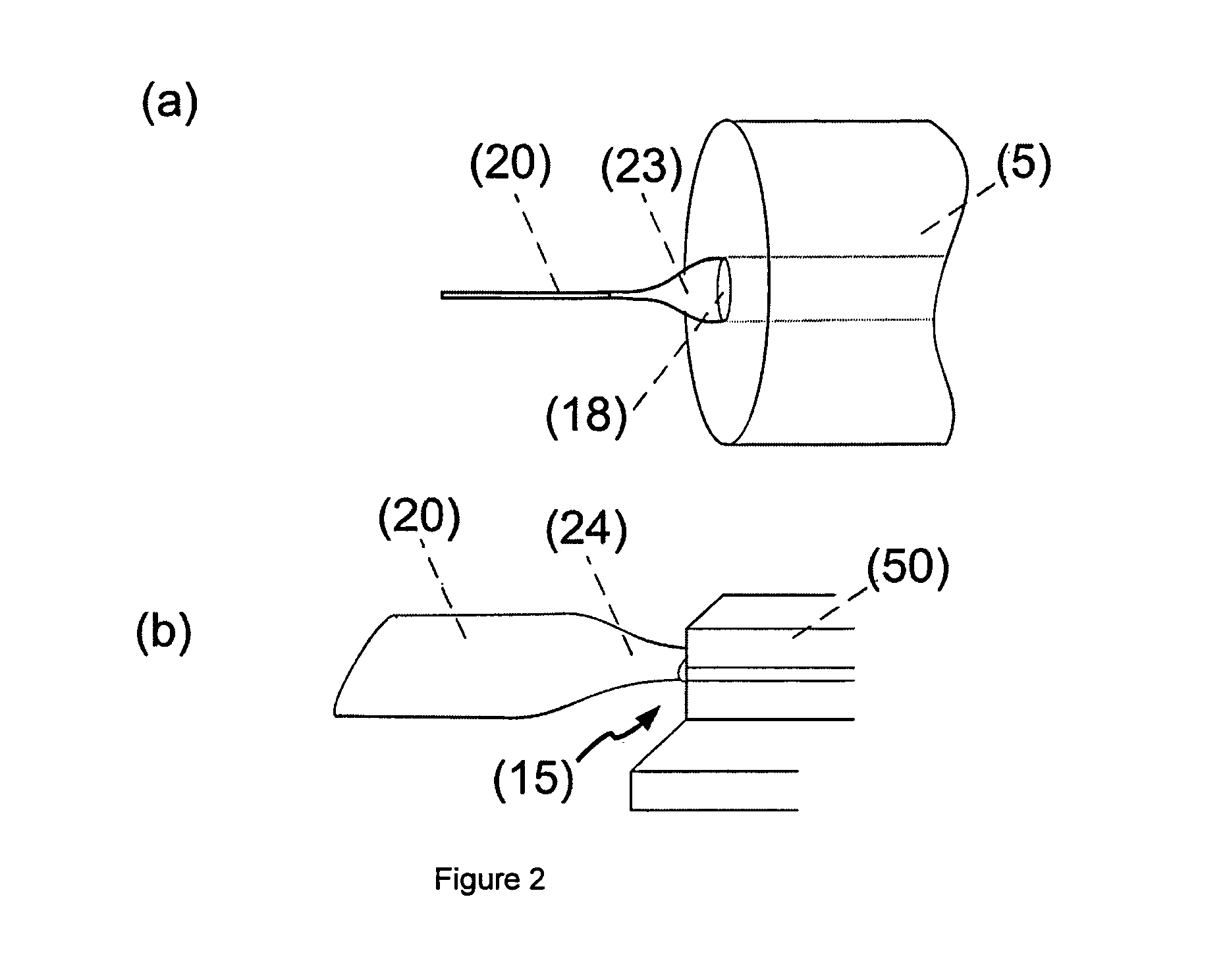
[0038]The waveguide structures upon which the invention is based are intended for the low-loss optical connection of lateral single-mode planar integrated photonic systems. The functional principle of the invention is explained with the example of the arrangement illustrated in FIG. 1. The optical arrangement (1) consists of several photonic systems that are planar integrated on different substrates (2-4) (“chips”) and which contain lateral single-mode waveguides (50). The waveguides (50) positioned on different chips are to be interconnected and / or are to be connected to output and input waveguides (5-6) (see also FIGS. 12-15), only input / output waveguide (6) being shown in FIG. 1. For this, the elements (2-6) to be connected are mounted on a component carrier (10) and are covered at least partially with a resist material (11). Each of the elements to be connected comprises opt...
PUM
 Login to View More
 Abstract
Description
Claims
Application Information
 Login to View More