
Process for producing aromatic carboxylic acid
a technology of aromatic carboxylic acid and process, which is applied in the preparation of carboxylic compounds, bulk chemical production, organic chemistry, etc., can solve the problems of low purification efficiency, low catalyst activity or product yield, and low reaction temperature, so as to improve catalyst activity and improve purification efficiency , the effect of producing an aromatic carboxylic acid object efficiently
- Summary
- Abstract
- Description
- Claims
- Application Information
AI Technical Summary
Benefits of technology
Problems solved by technology
Method used
Image

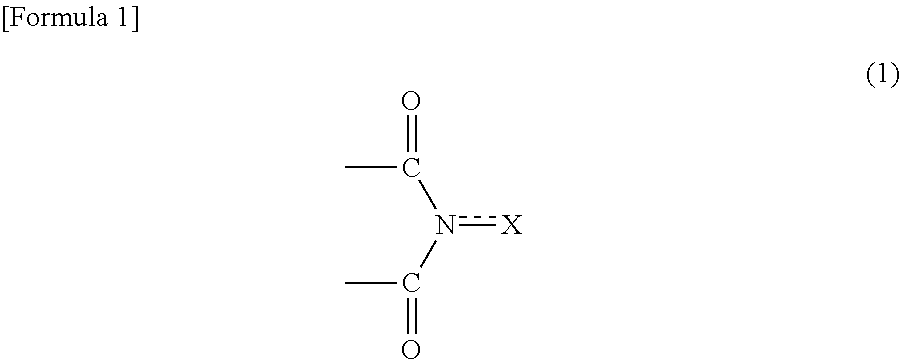
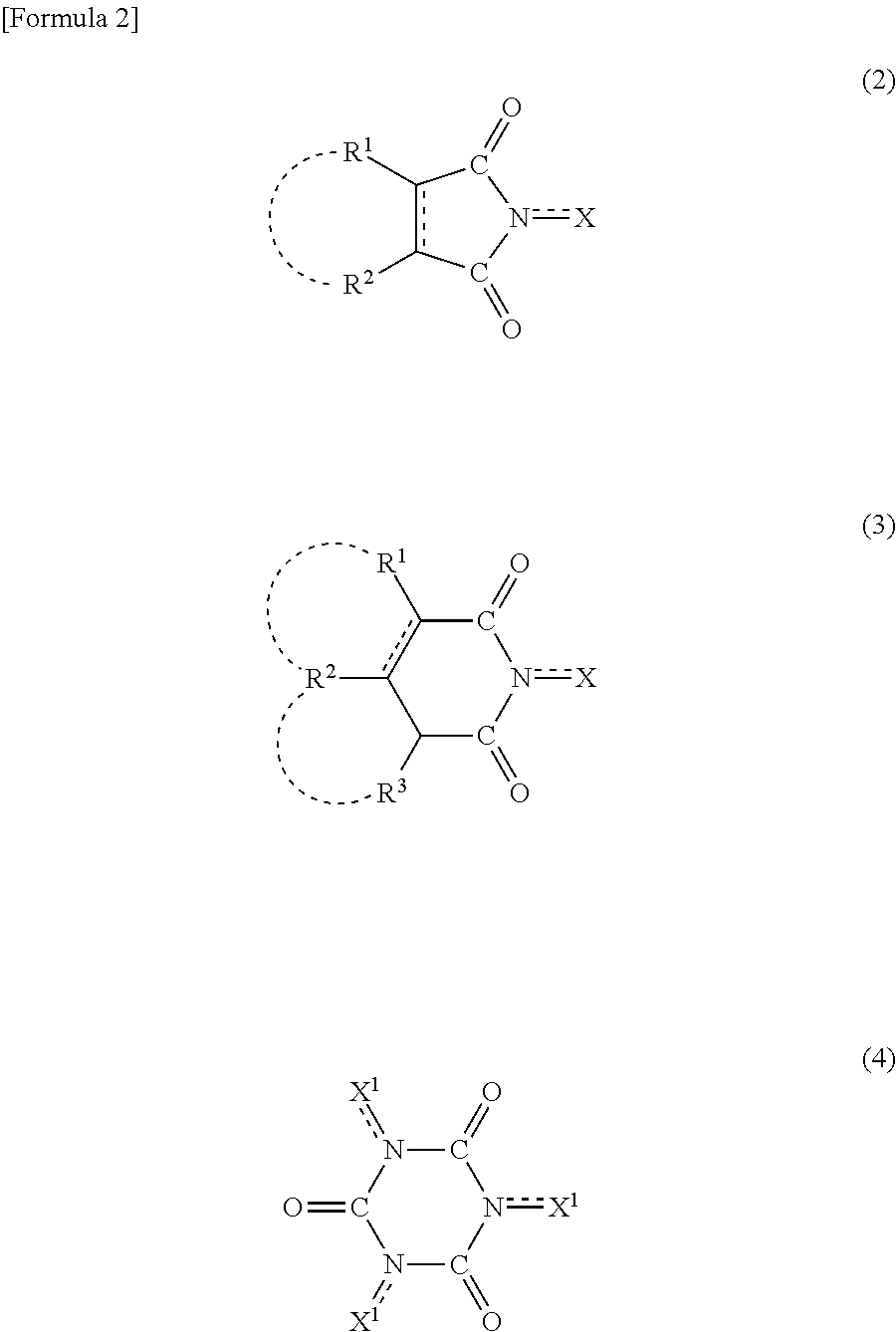
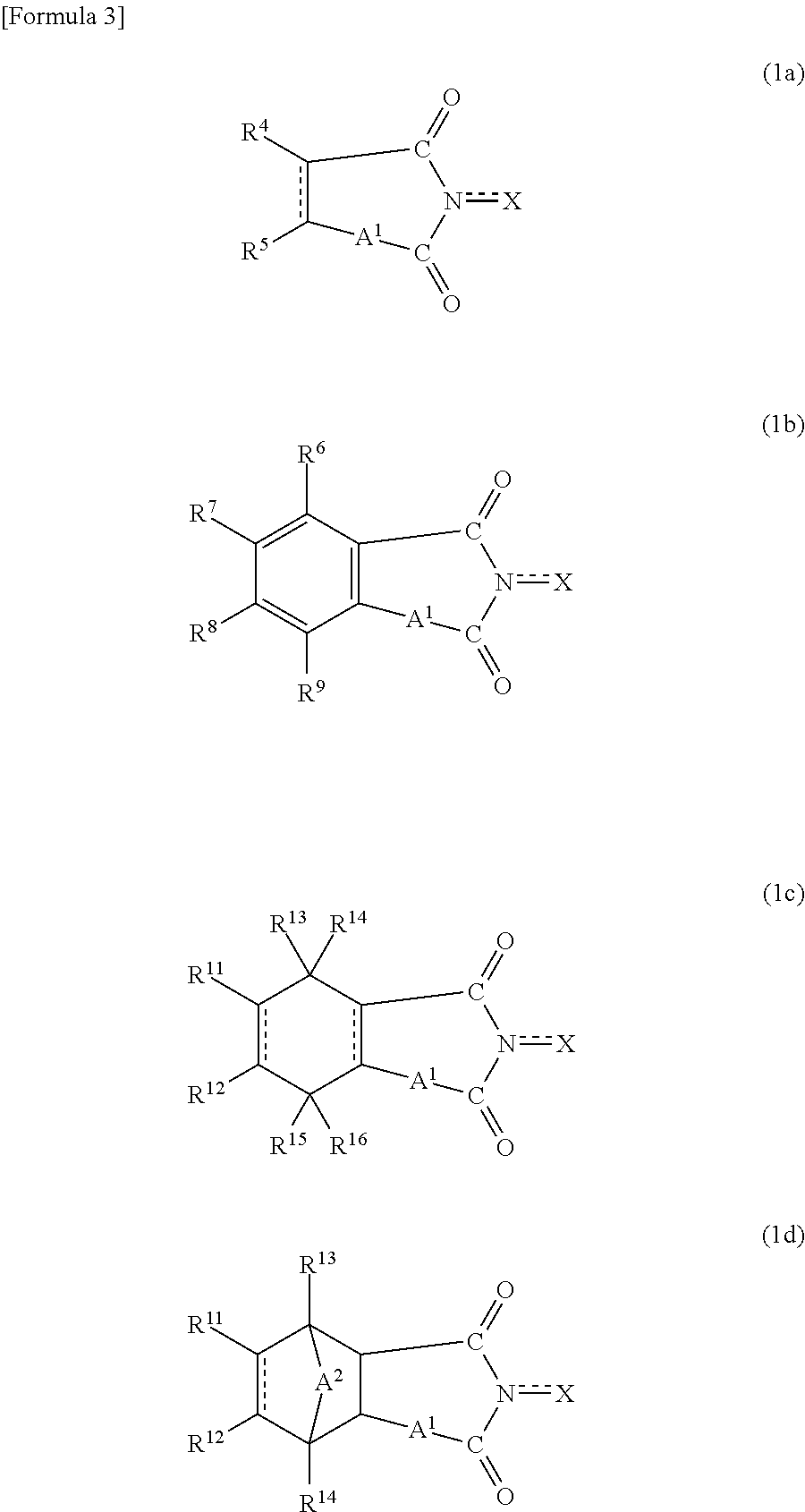
Examples
example 1
[0105]Into an air-flow pressure reactor (or air-flow pressurizable reactor) equipped with a dehydrator similar to Dean-Stark apparatus, 300 g (2.8 mol) of p-xylene, 0.20 g (1.1 mmol) of cobalt acetate (bivalent), and 0.20 g (1.2 mmol) of manganese acetate (bivalent) were charged. Nitrogen was introduced into the reactor to raise the reactor pressure to 0.5 MPa. The mixture was heated to 150° C., and the reactor was ventilated with a mixed gas of air and nitrogen to adjust the oxygen concentration contained in off-gas to 5%. A separately prepared mixture of 0.25 g (2.2 mmol) of N-hydroxysuccinimide and 2 g of water was continuously fed in the reactor over 5 hours. Incidentally, it was assumed that the reaction was started at the time the addition of the catalyst was started, and that the reaction was completed at the time the addition of the catalyst was completed. Moreover, the reaction was carried out with trapping the produced water. After the reaction was completed, the reactor w...
example 2
[0107]The reaction was conducted in the same manner as in Example 1 except that 0.025 g (0.141 mmol) of trihydroxyisocyanuric acid was used instead of N-hydroxysuccinimide. The conversion of the substrate and the amount and yield of the product were determined. As the results, the conversion of p-xylene was 36.4%, and 113 g of p-toluic acid (yield 29.7%), 21 g of terephthalic acid (yield 4.52%), and 0.30 g of benzoic acid as a by-product (yield 0.0878%) were obtained.
example 3
[0108]The reaction was conducted in the same manner as in Example 1 except that 10 g (73.5 mmol) of p-toluic acid was used in addition to 300 g (2.8 mol) of p-xylene and that the amount of manganese acetate (bivalent) was 0.10 g instead of 0.20 g and the amount of N-hydroxysuccinimide was 0.17 g instead of 0.25 g. The conversion of the substrate and the amount of the product were determined. As the results, the conversion of p-xylene was 48.9%, and the amounts of the products were as follows: 150 g of p-toluic acid, 44 g of terephthalic acid, and 0.40 g of benzoic acid as a by-product.
PUM
| Property | Measurement | Unit |
|---|---|---|
| mol % | aaaaa | aaaaa |
| feeding time | aaaaa | aaaaa |
| temperature | aaaaa | aaaaa |
Abstract
Description
Claims
Application Information
 Login to View More