

Method for crushing laver cells by using yeast display lipase cooperated with supersonic wave
A technology of lipase and ultrasound, applied in the field of bioengineering, can solve problems affecting the efficiency of laver cell disruption, unfavorable laver polysaccharide and laver protein extraction, etc.
- Summary
- Abstract
- Description
- Claims
- Application Information
AI Technical Summary
Problems solved by technology
Method used
Image


Examples
Embodiment 1
[0026] Example 1 Preparation of yeast-displayed lipase and yeast-displayed protease
[0027] Synthesize lipase gene (Genbank No.: AF229435), protease gene (Genbank No.: NM_012708.2) and cell wall α-lectin gene of Pichia pastoris GS115 (Genbank No.: M28164) by artificial synthesis. (or protease gene) C-terminus plus linking peptide sequence GSSGGSGGSGGSGGSGS (linker), the nucleotide sequence LIP-linker-α-agglutinin (or PRO-linker-α-agglutinin) is obtained after connection, and EcoR I is added at both ends of the sequence and Not I restriction sites, wherein LIP is the lipase gene (PRO is the protease gene), and α-agglutinin is the cell wall α-lectin gene.
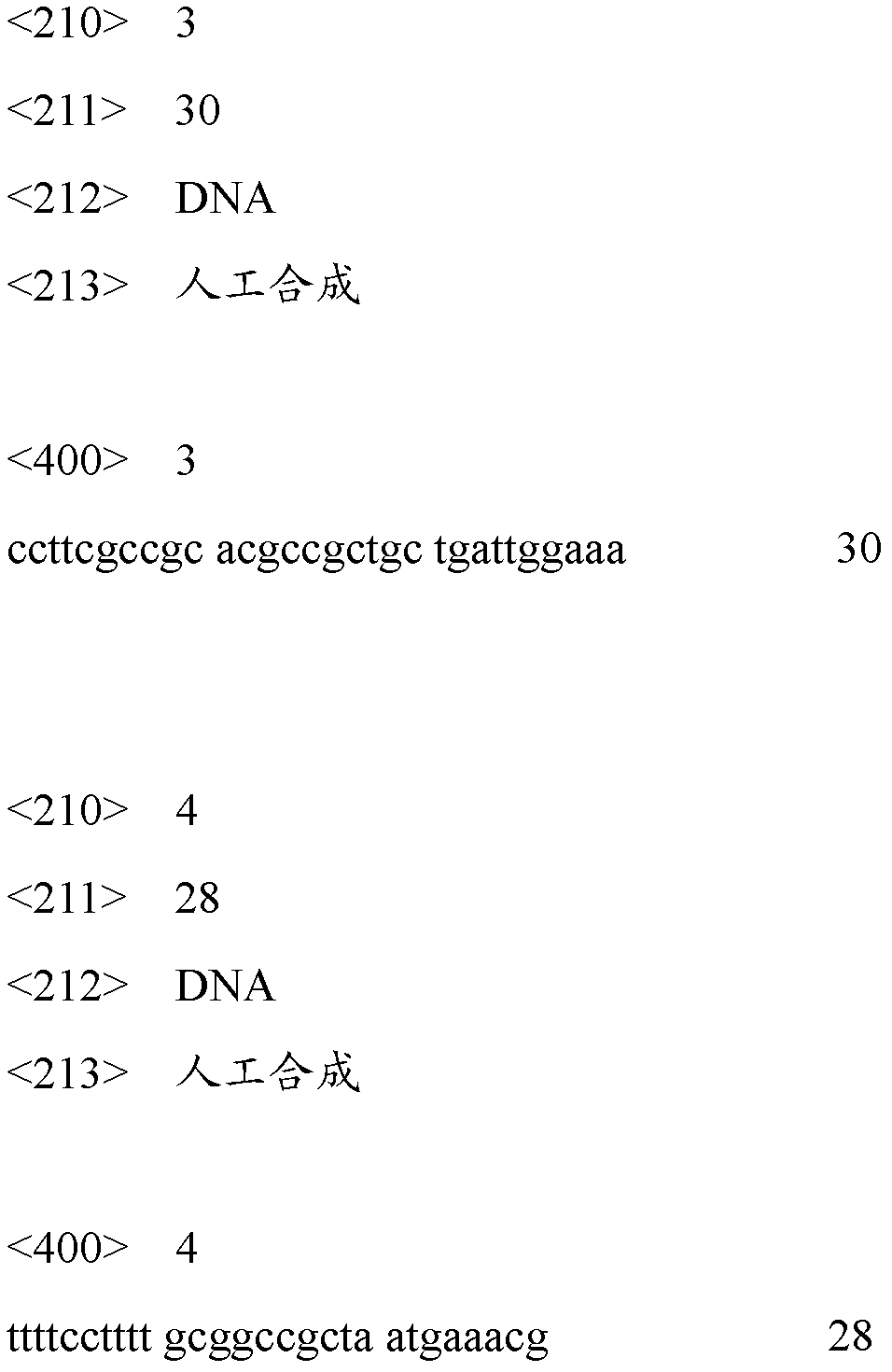
[0028] Using the above-mentioned artificially synthesized sequences as templates, PCR amplification was carried out using the following primer pairs,
[0029] Primer pairs for lipase:
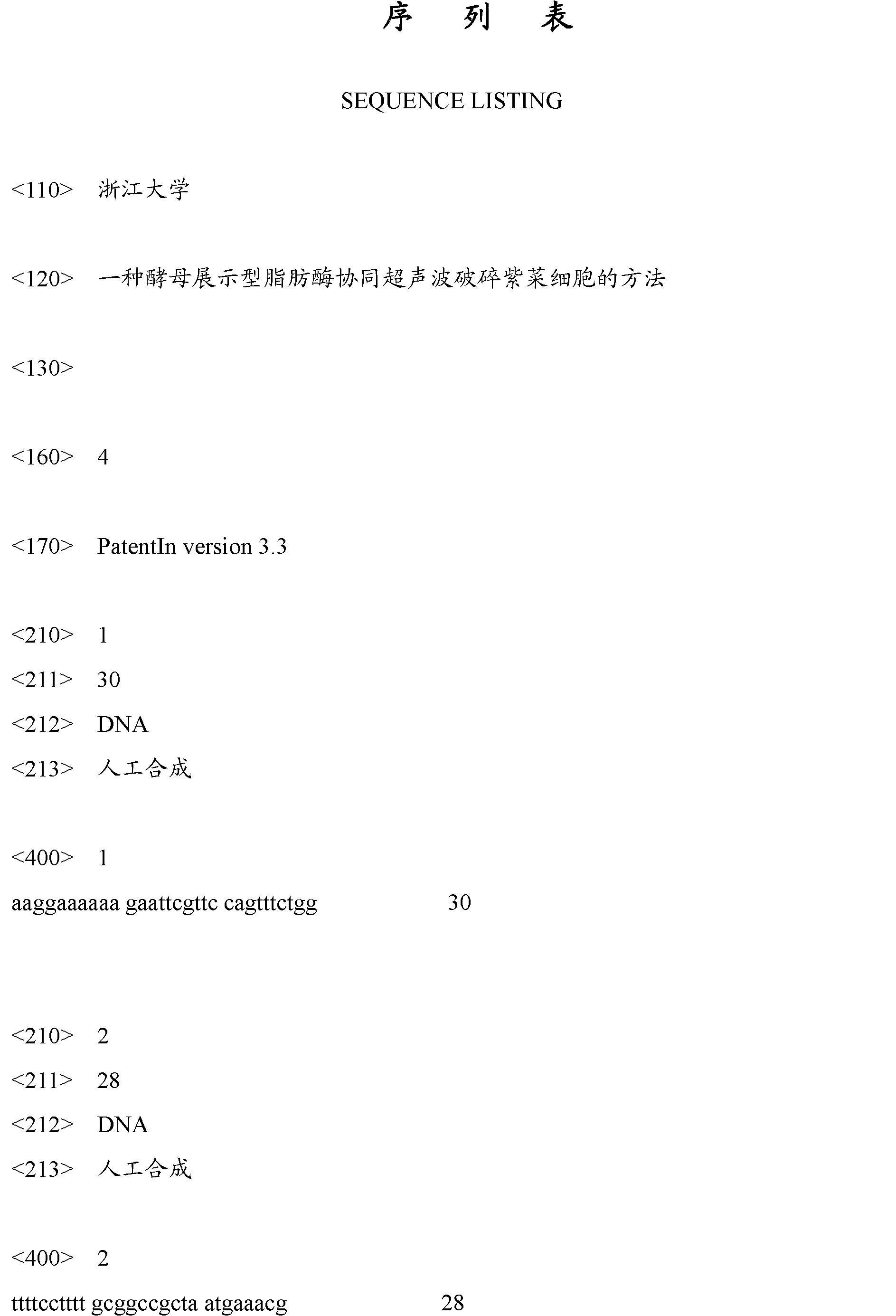
[0030] Upstream primer: 5'-AAGGAAAAAAAGAATTCGTTCCAGTTTCTGG~3';
[0031] Downstream primer: 5'-TTTTCCTTTTGCGGCCGCTAATGAAACG~3'
[0032] P...
Embodiment 2
[0039] Example 2 Yeast Displayed Lipase Collaborative Ultrasonic Disruption of Porphyra Cells
example 1
[0040] Example 1: 1000 grams of water, 20 grams of dried seaweed powder, and 1 gram of yeast-displayed lipase were prepared into a mixed suspension. The stirring speed of the system was 100 rpm, the temperature was 35°C, and the treatment time was 30 minutes. 730W, ultrasonic treatment time of 65min, and treatment temperature of 30°C to obtain cell disruption liquid, centrifuge (4000g 30min) to remove the precipitate, and measure the yield of laver protein and laver polysaccharide in the supernatant.
PUM
 Login to View More
 Abstract
Description
Claims
Application Information
 Login to View More