Preparation method for amphiphilic polymer drug micelle with calcium phosphate shell
An amphiphilic polymer, drug-loaded micelle technology, which is applied in the directions of non-active ingredient medical preparations, active ingredients-containing medical preparations, pharmaceutical formulas, etc., to achieve no drug burst release phenomenon, easy operation, and stability. Good results
- Summary
- Abstract
- Description
- Claims
- Application Information
AI Technical Summary
Problems solved by technology
Method used
Image

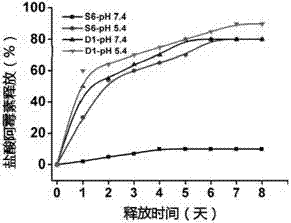
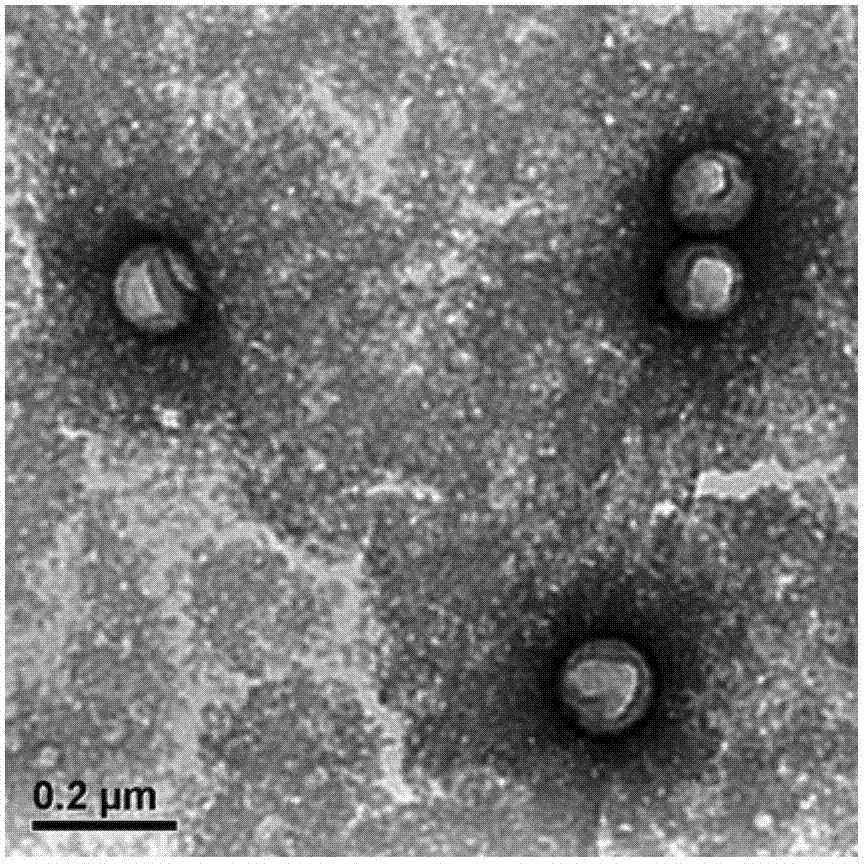
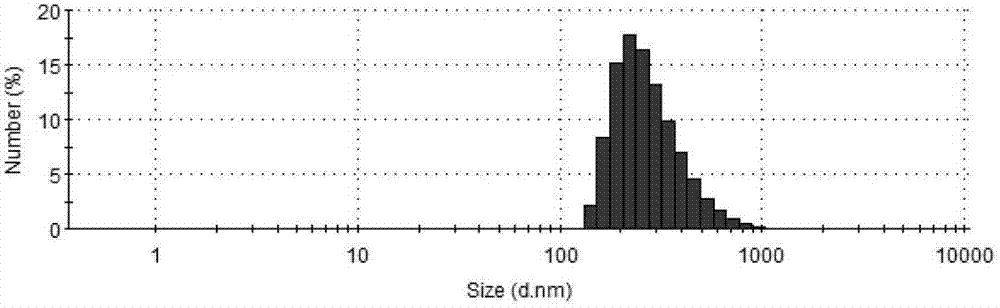
Examples
Embodiment 1
[0020] Dissolve 10 mg of amphiphilic polyethylene glycol-polylactic acid polymer in 1 mL of dichloromethane, and dissolve it completely under ultrasound. Weigh calcium chloride to prepare a 250 mM calcium chloride solution (pH 6.0). Use a pipette gun to draw 100 μL of calcium chloride solution and 100 μL of mitoxantrone solution (5 mg / mL) into the dichloromethane solution of the amphiphilic polymer, and the solution is separated. Ultrasonic emulsification was performed for 3 minutes in an ultrasonic cell pulverizer (ultrasound for 1 second, with an interval of 2 seconds) to form a primary emulsion. The primary emulsion was mixed with 3 mL of 2% (w / w) polyvinyl alcohol solution, and ultrasonic emulsification was continued for 5 minutes in an ultrasonic cell pulverizer (ultrasound for 1 second with an interval of 2 seconds) to form a double emulsion. Add the double emulsion dropwise to 10 mL of 0.3% (w / w) polyvinyl alcohol solution and stir to make it evenly dispersed. The dic...
Embodiment 2
[0022] Dissolve 10 mg of amphiphilic polyethylene glycol-polyphenylpropionic acid polymer in 1 mL of dichloromethane and dissolve it completely under ultrasound. Weigh calcium chloride to prepare a 50 mM calcium chloride solution (pH 7.5). Use a pipette gun to draw 100 μL of calcium chloride solution and 100 μL of 5-fluorouracil solution (1 mg / mL) into the dichloromethane solution of the amphiphilic polymer, and the solution is separated. Ultrasonic emulsification was performed for 3 minutes in an ultrasonic cell pulverizer (ultrasound for 1 second, with an interval of 2 seconds) to form a primary emulsion. The primary emulsion was mixed with 3 mL of 2% (w / w) polyvinyl alcohol solution, and ultrasonic emulsification was continued for 5 minutes in an ultrasonic cell pulverizer (ultrasound for 1 second with an interval of 2 seconds) to form a double emulsion. Add the complex emulsion dropwise to 10 mL of 0.3% (w / w) polyvinyl alcohol solution and stir to make it evenly dispersed...
Embodiment 3
[0024] Dissolve 10 mg of amphiphilic polyethylene glycol-polylactic acid polymer in 1 mL of dichloromethane, and dissolve it completely under ultrasound. Weigh calcium chloride to prepare a 100 mM calcium chloride solution (pH 7.0). Pipette 100 μL of calcium chloride solution and 100 μL of clindamycin solution (2 mg / mL) into the dichloromethane solution of the amphiphilic polymer, and the solution is separated. Ultrasonic emulsification was performed for 3 minutes in an ultrasonic cell pulverizer (ultrasound for 1 second, with an interval of 2 seconds) to form a primary emulsion. The primary emulsion was mixed with 3 mL of 2% (w / w) polyvinyl alcohol solution, and ultrasonic emulsification was continued for 5 minutes in an ultrasonic cell pulverizer (ultrasound for 1 second with an interval of 2 seconds) to form a double emulsion. Add the complex emulsion dropwise to 10 mL of 0.3% (w / w) polyvinyl alcohol solution and stir to make it evenly dispersed. The dichloromethane was r...
PUM
 Login to View More
 Abstract
Description
Claims
Application Information
 Login to View More
 - R&D
- Intellectual Property
- Life Sciences
- Materials
- Tech Scout
- Unparalleled Data Quality
- Higher Quality Content
- 60% Fewer Hallucinations
Browse by: Latest US Patents, China's latest patents, Technical Efficacy Thesaurus, Application Domain, Technology Topic, Popular Technical Reports.
© 2025 PatSnap. All rights reserved.Legal|Privacy policy|Modern Slavery Act Transparency Statement|Sitemap|About US| Contact US: help@patsnap.com