A fluorescent bioprobe for simultaneously detecting three ions of cu2+, mg2+ and pb2+ and its detection method
A fluorescent biological probe, fluorescence technology, applied in the field of detection, can solve the problems of interfering with the catalytic activity of deoxynuclease, affecting the sensitivity of metal detection, etc.
- Summary
- Abstract
- Description
- Claims
- Application Information
AI Technical Summary
Problems solved by technology
Method used
Image


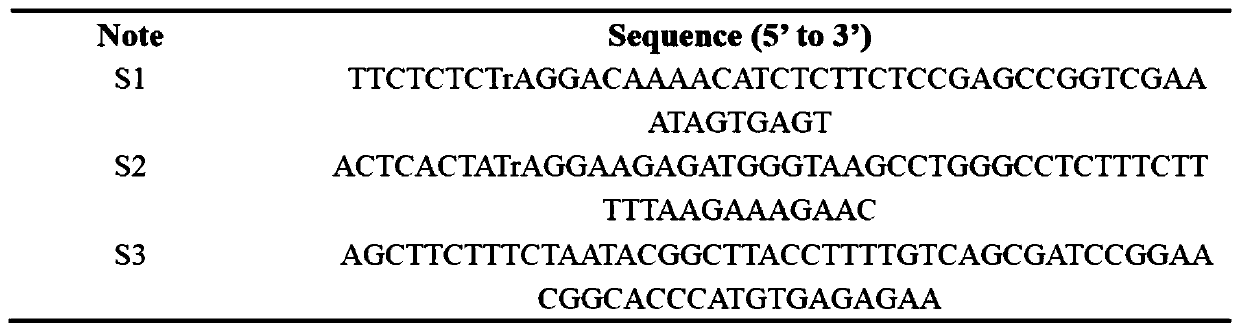
Examples
Embodiment 1
[0058] The preparation of embodiment 1 graphene oxide (GO)
[0059] Weigh 2g of graphite powder and dissolve it in 50mL of concentrated sulfuric acid, stir for 2h; slowly add 10g of potassium permanganate at 20°C, then transfer to a 35°C water bath and stir vigorously for 4h; add 600mL of ultrapure water to dilute the reaction solution; gradually add dropwise 20mL 30%H 2 o 2 solution; the reaction mixture was washed 5 times with 0.1mol / L HCl and ultrapure water, and ultrasonically dispersed for 1h; the GO mixture was centrifuged at 5000rpm for 10min, and the supernatant was taken as GO for the experiment.
Embodiment 2
[0060] Embodiment 2 The effectiveness analysis of fluorescent biological detection system of the present invention
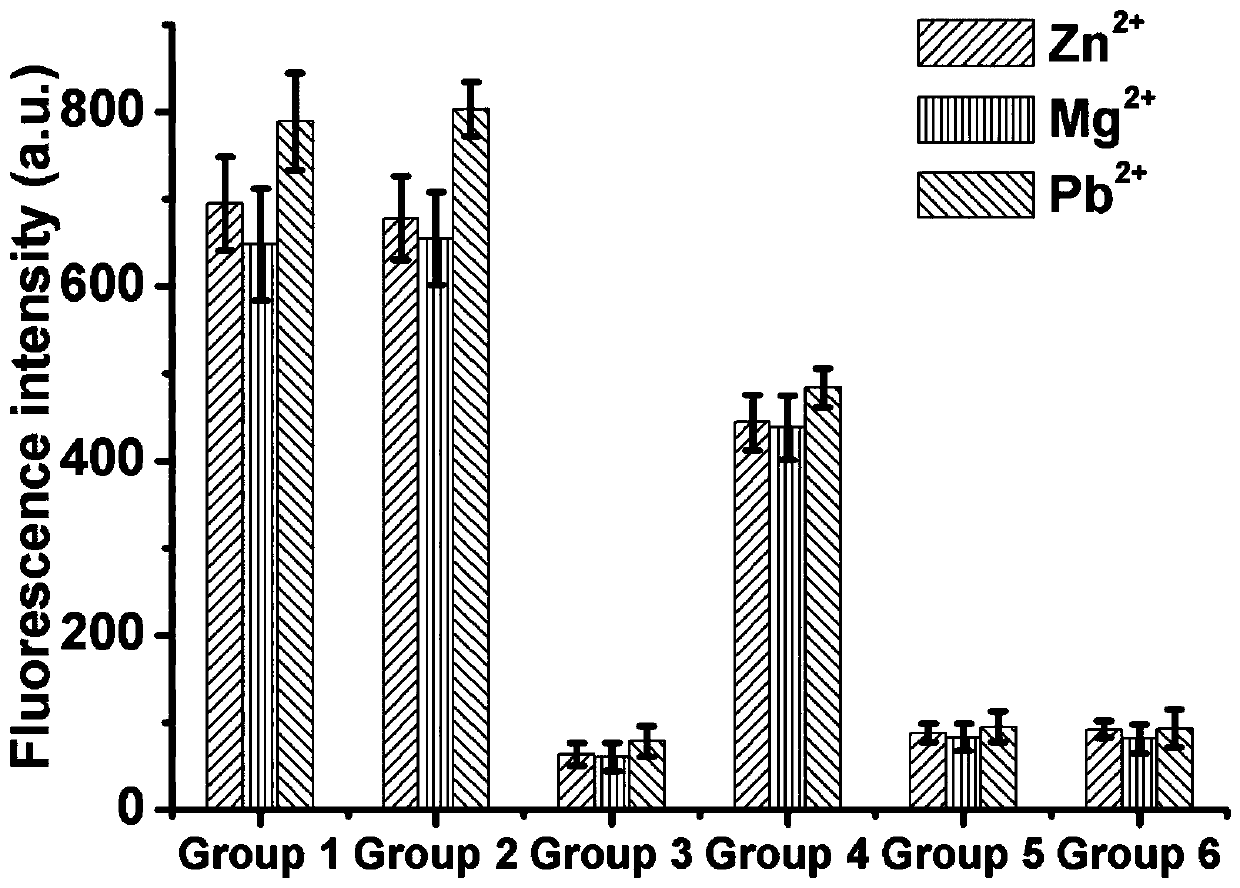
[0061] See image 3 , group 1 is to measure the fluorescence intensity value that only contains single nucleic acid fragment S1, S2 or S3 of the present invention respectively; mixture, heated to 95°C for 5min, and then gradually cooled to room temperature); group 3 is the fluorescence intensity value measured by adding 100ug / mL graphene oxide to group 1; group 4 is the value measured by adding 100ug / mL graphene oxide to group 2 The fluorescence intensity value obtained; group 5 is the fluorescence intensity value measured by adding 100ug / mL graphene oxide after only adding a certain metal in group 2; group 6 is adding 100ug / mL graphene oxide after adding three metals mL of graphene oxide measured fluorescence intensity values.
[0062] As can be seen from the comparison between group 1 and group 2, the fluorescence intensity of the fluorescent bioprobe formin...
Embodiment 3
[0063] Embodiment 3 Selectivity Analysis of the Fluorescent Biodetection System of the Present Invention
[0064] Target ions were added to 100 μM Cu 2+ Concentration, 2000μM mg 2+ concentration and 500nM Pb 2+ , interfering ion 100 μM Mn 2+ , Ca 2+ ,Hg 2+ ,Zn 2+ ,Co 2+ ,Sn 2+ Tris-HCl buffer solution (50mmol / L, pH 7.5, containing 50mmol / L MgCl 2 ) and mix well, incubate at room temperature for 5 min, then add 100 μg / mL GO in Tris-HCl buffer solution (pH 7.5, containing 50 mmol / L MgCl2), mix well, and incubate for 25 min. Fluorescence emission spectra were detected with a fluorophotometer.
[0065] See the experimental results Figure 4 , the system for the target ion Cu 2+ ,Mg 2+ , Pb 2+ Has a good fluorescence signal response, interfering ions (Mn 2+ , Ca 2+ ,Hg 2+ ,Zn 2+ ,Co 2+ ,Sn 2+ ) of the fluorescent signal response is not obvious, therefore, the fluorescent biodetection system provided by the invention has high sensitivity and selectivity, and can d...
PUM
 Login to View More
 Abstract
Description
Claims
Application Information
 Login to View More
 - R&D
- Intellectual Property
- Life Sciences
- Materials
- Tech Scout
- Unparalleled Data Quality
- Higher Quality Content
- 60% Fewer Hallucinations
Browse by: Latest US Patents, China's latest patents, Technical Efficacy Thesaurus, Application Domain, Technology Topic, Popular Technical Reports.
© 2025 PatSnap. All rights reserved.Legal|Privacy policy|Modern Slavery Act Transparency Statement|Sitemap|About US| Contact US: help@patsnap.com