A method for safe handling of charged lithium-ion batteries
A technology for safe disposal of lithium-ion batteries, applied in battery recycling, secondary batteries, circuits, etc., can solve problems such as increased cost of recycling waste batteries, achieve centralized collection and treatment, enhance anti-corrosion performance, and reduce pollution.
- Summary
- Abstract
- Description
- Claims
- Application Information
AI Technical Summary
Problems solved by technology
Method used
Image

Examples
Embodiment 1
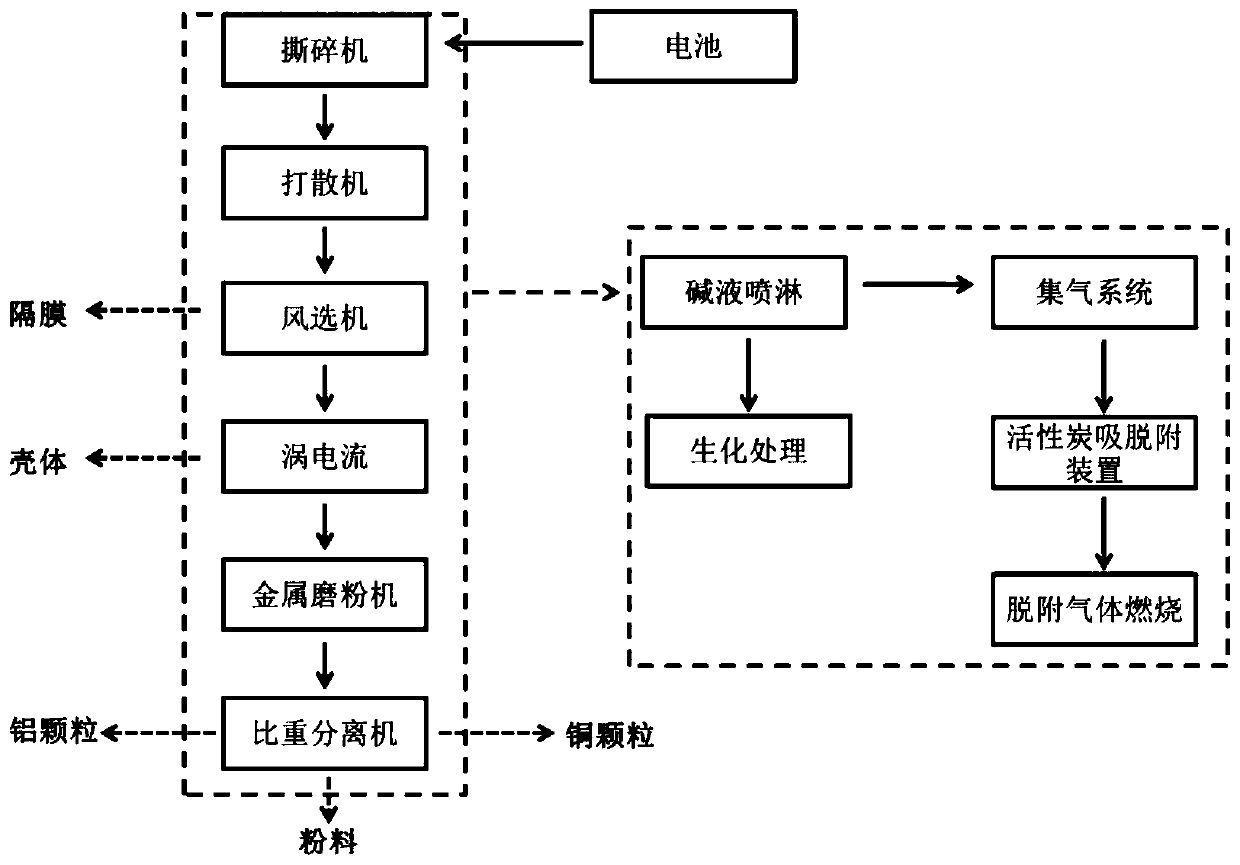
[0027] A safe treatment method for charged lithium-ion batteries, including six processes of rapid crushing, rapid dispersal, negative pressure sorting plastic diaphragm, eddy current sorting shell, grinding powder, and specific gravity separation to separate the shell of the charged lithium-ion battery Body fragments, plastic diaphragm fragments, copper particles, aluminum particles and battery powder are separated individually, and the waste gas generated in the process is collected and processed in a centralized manner, and zero waste water discharge is realized.
[0028] Among them, the single crushing process of the charged lithium-ion battery shall not exceed 0.5s, and directly fall into the dispersing machine after being broken up, the dispersing time shall not exceed 0.5s, and the total crushing and dispersing process shall not exceed 1s. Negative pressure sorting requires air humidity to be kept below 20%. To reduce the generation of hydrofluoric acid and slow down the c...
Embodiment 2
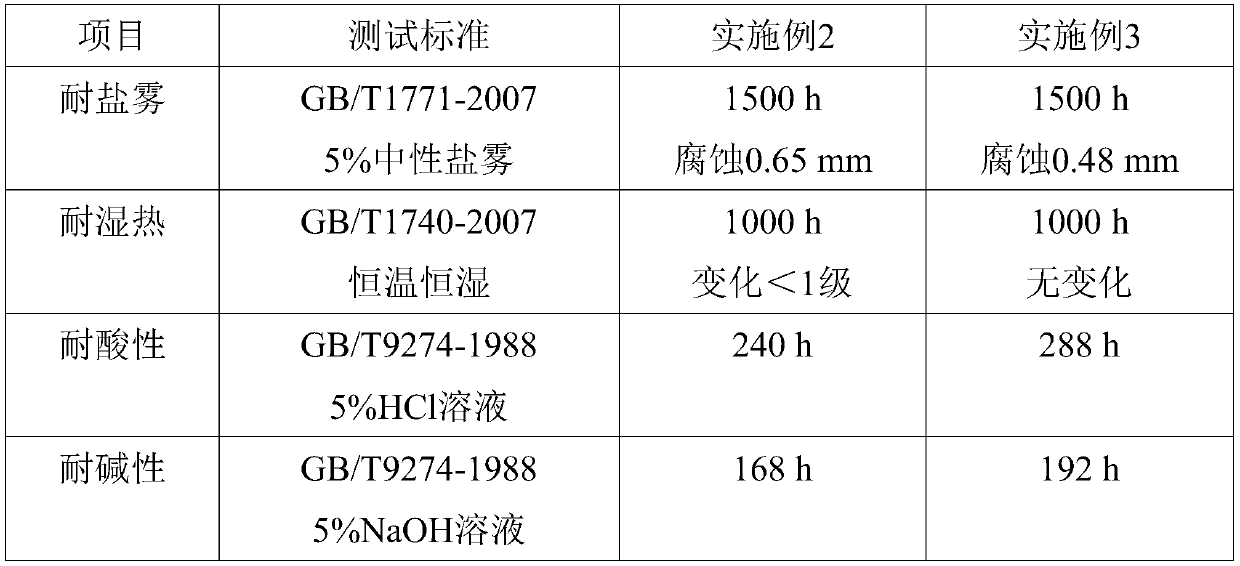
[0030] A safe treatment method for charged lithium-ion batteries, including six processes of rapid crushing, rapid dispersal, negative pressure sorting plastic diaphragm, eddy current sorting shell, grinding powder, and specific gravity separation to separate the shell of the charged lithium-ion battery Body fragments, plastic diaphragm fragments, copper particles, aluminum particles and battery powder are separated individually, and the waste gas generated in the process is collected and processed in a centralized manner, and zero waste water discharge is realized.
[0031] Among them, the single crushing process of the charged lithium-ion battery shall not exceed 0.5s, and directly fall into the dispersing machine after being broken up, the dispersing time shall not exceed 0.5s, and the total crushing and dispersing process shall not exceed 1s. Negative pressure sorting requires air humidity to be kept below 20%. To reduce the generation of hydrofluoric acid and slow down the c...
Embodiment 3
[0034] A safe treatment method for charged lithium-ion batteries, including six processes of rapid crushing, rapid dispersal, negative pressure sorting plastic diaphragm, eddy current sorting shell, grinding powder, and specific gravity separation to separate the shell of the charged lithium-ion battery Body fragments, plastic diaphragm fragments, copper particles, aluminum particles and battery powder are separated individually, and the waste gas generated in the process is collected and processed in a centralized manner, and zero waste water discharge is realized.
[0035] Among them, the single crushing process of the charged lithium-ion battery shall not exceed 0.5s, and directly fall into the dispersing machine after being broken up, the dispersing time shall not exceed 0.5s, and the total crushing and dispersing process shall not exceed 1s. Negative pressure sorting requires air humidity to be kept below 20%. To reduce the generation of hydrofluoric acid and slow down the c...
PUM
 Login to View More
 Abstract
Description
Claims
Application Information
 Login to View More