
Method for simultaneously screening multiples categories of drug residues in fish by using ultra performance liquid chromatography-quadrupole rod time-of-flight mass spectrometry
A technology of time-of-flight mass spectrometry and ultra-high performance liquid phase, applied in the direction of measuring devices, instruments, scientific instruments, etc., can solve the problems of affecting the natural environment such as soil, water and air, the decline of product output, and the decline of body immunity, so as to improve The degree of ionization and detection sensitivity, good stability, and the effect of improving accuracy
- Summary
- Abstract
- Description
- Claims
- Application Information
AI Technical Summary
Problems solved by technology
Method used
Image

Examples
Embodiment 1
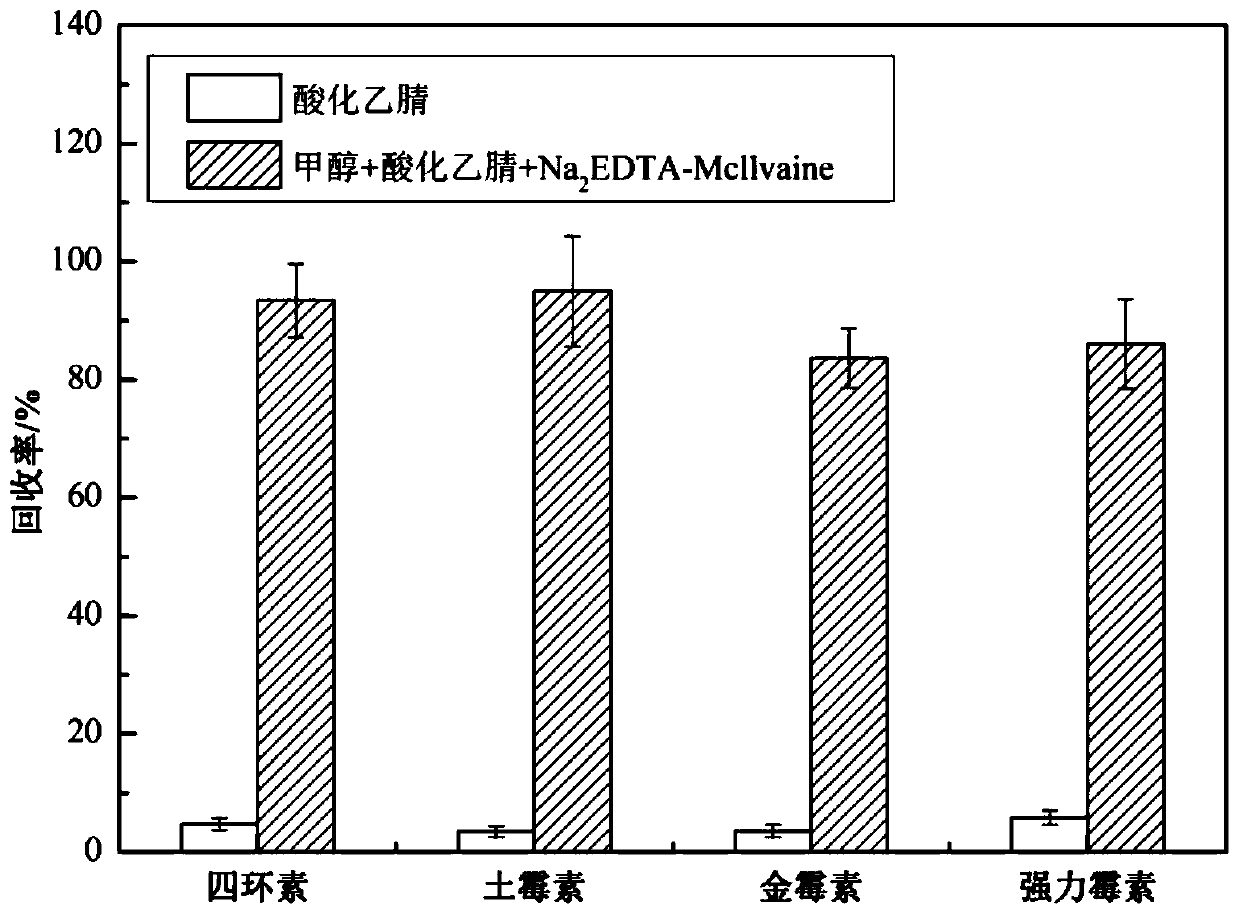
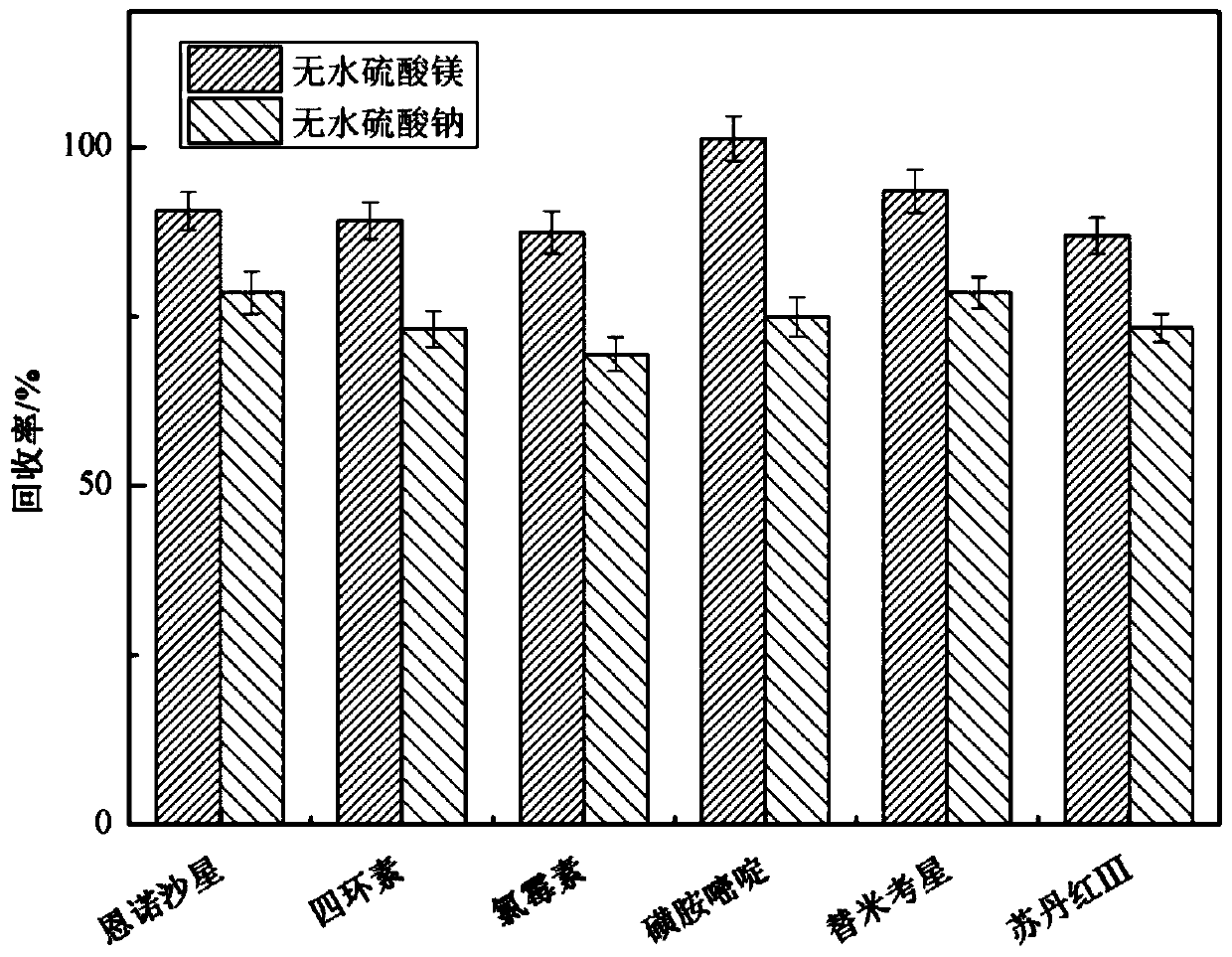
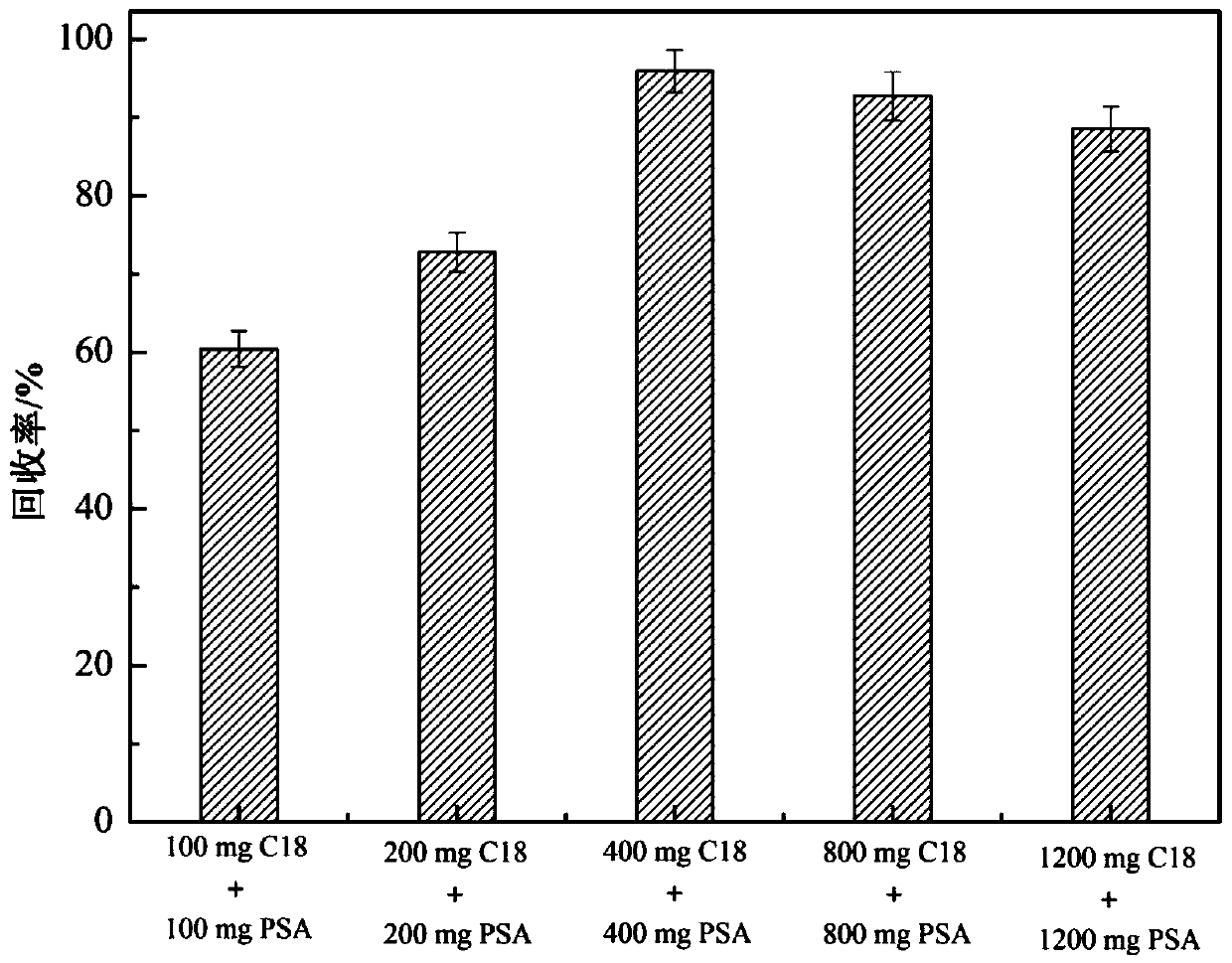
[0103] Weigh 2.0g of homogenized cod muscle sample A into a 50mL centrifuge tube, add 2.0mL of methanol, and adjust the volume to 12.5mL with acetonitrile aqueous solution acidified with acetic acid, wherein the acetonitrile aqueous solution contains 0.1% acetic acid and 16% water, and then add 2.5 mL0.1mol / L and pH=4.0±0.1 Na 2 EDTA-Mcllvaine buffer solution, shake and vortex; add anhydrous magnesium sulfate 3.0g, sodium acetate 1.9g and sodium chloride 1.5g, shake and vortex, centrifuge at 6000r / min for 8min; take the supernatant into a test tube, add C18 0.4g, PSA 0.4g and 0.1g anhydrous magnesium sulfate, vortex, centrifuge at 6000r / min for 8min, take the supernatant, filter through a 0.22μm filter membrane to obtain blank matrix sample solution A. The full-scan analysis of the target drugs was carried out in the first-order mass spectrometry acquisition mode, and the qualitative analysis of 29 target drugs was carried out by comparing the retention time with the standard ...
Embodiment 2
[0105] Weigh 5.0g of homogenized cod muscle sample B into a 50mL centrifuge tube, add 3.0mL of methanol, and adjust the volume to 12.5mL with an aqueous solution of acetonitrile acidified with acetic acid, wherein the aqueous solution of acetonitrile contains 0.1% acetic acid and 16% of water, and then add 2.5 mL0.1mol / L and pH=4.0±0.1 Na 2 EDTA-Mcllvaine buffer solution, shake and vortex; add 6.0g of anhydrous magnesium sulfate, 1.9g of sodium acetate and 1.5g of sodium chloride, shake and vortex, centrifuge at 8000r / min for 10min; take the supernatant into a test tube, add C18 0.4g, PSA 0.4g and 0.5g anhydrous magnesium sulfate, vortex, centrifuge at 8000r / min for 10min, take the supernatant, filter it through a 0.22μm filter membrane to obtain the blank matrix sample solution B. The full-scan analysis of the target drugs was carried out in the first-order mass spectrometry acquisition mode, and the qualitative analysis of 29 target drugs was carried out by comparing the ret...
Embodiment 3
[0107] Weigh 3.0g of homogenized cod muscle sample C into a 50mL centrifuge tube, add 2.5mL of methanol, use acetic acid acidified acetonitrile aqueous solution to make up to 12.5mL, wherein the acetonitrile aqueous solution contains 0.1% acetic acid and 16% water, then add 2.5 mL0.1mol / L and pH=4.0±0.1 Na 2 EDTA-Mcllvaine buffer solution, shake and vortex; add 6.0g of anhydrous magnesium sulfate, 1.9g of sodium acetate and 1.5g of sodium chloride, shake and vortex, centrifuge at 8000r / min for 6min; take the supernatant into a test tube, add C18 0.4g, PSA 0.4g and 0.3g anhydrous magnesium sulfate, vortex, centrifuge at 7000r / min for 6min, take the supernatant, and filter through a 0.22μm filter membrane to obtain the blank matrix sample solution C. The full-scan analysis of the target drugs was carried out in the first-order mass spectrometry acquisition mode, and the qualitative analysis of 29 target drugs was carried out by comparing the retention time with the standard subs...
PUM
| Property | Measurement | Unit |
|---|---|---|
| particle diameter | aaaaa | aaaaa |
| length | aaaaa | aaaaa |
| recovery rate | aaaaa | aaaaa |
Abstract
Description
Claims
Application Information
 Login to View More