Check patentability & draft patents in minutes with Patsnap Eureka AI!

Preparation and application of low by-product pyridine formamide transformation microorganism

A picolinamide and microorganism technology is applied in the field of preparation and application of low-by-product picolinamide-converted microorganisms, and can solve the problems of high carboxypyridine content, affecting the use of picolinamide, increasing water, electricity, equipment, manpower, etc. The effect of the formation of carboxypyridine

Inactive Publication Date: 2019-11-01
ANHUI RUIBANG BIOLOGICAL SCI & TECH CO LTD
View PDF0 Cites 5 Cited by
  • Summary
  • Abstract
  • Description
  • Claims
  • Application Information

AI Technical Summary

Problems solved by technology

[0002] The microbial conversion method of cyanopyridine to pyridinecarboxamide catalyzed by nitrile hydratase has been widely used in industrial production. The gene that catalyzes the conversion of picolinamide to carboxypyridine exists, which leads to the formation of by-product carboxypyridine in the biocatalysis process, and finally leads to the high content of carboxypyridine in the finished product, which affects the use of picolinamide in food, medicine, and cosmetics
Although the formation of carboxypyridine by-products can be partially alleviated by strictly controlling the process temperature, such as timely heating or cooling, centrifugation, ceramic membrane and other membrane technologies, but the change of process greatly increases the cost of water, electricity, equipment, manpower, etc. in the production process. Investment, unable to fundamentally change and break through existing technical bottlenecks

Method used

the structure of the environmentally friendly knitted fabric provided by the present invention; figure 2 Flow chart of the yarn wrapping machine for environmentally friendly knitted fabrics and storage devices; image 3 Is the parameter map of the yarn covering machine
View more

Image

Smart Image Click on the blue labels to locate them in the text.
Viewing Examples
Smart Image
  • Preparation and application of low by-product pyridine formamide transformation microorganism
  • Preparation and application of low by-product pyridine formamide transformation microorganism
  • Preparation and application of low by-product pyridine formamide transformation microorganism

Examples

Experimental program
Comparison scheme
Effect test

Embodiment 1

[0045] Embodiment 1: Prepare low by-product pyridinecarboxamide transformed microorganisms as follows:

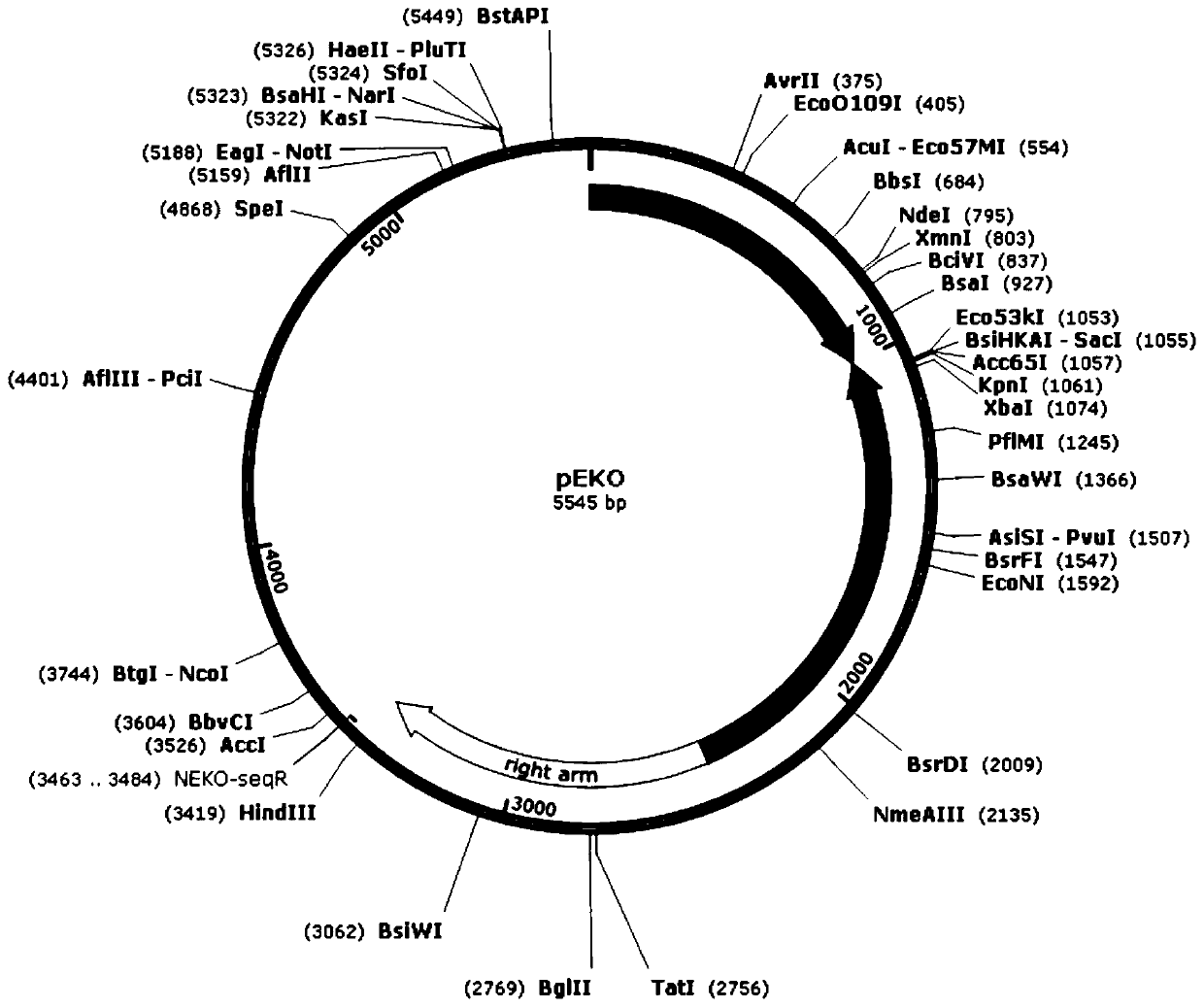
[0046] 1. Construction of gene knockout plasmid pEKO-Bsi

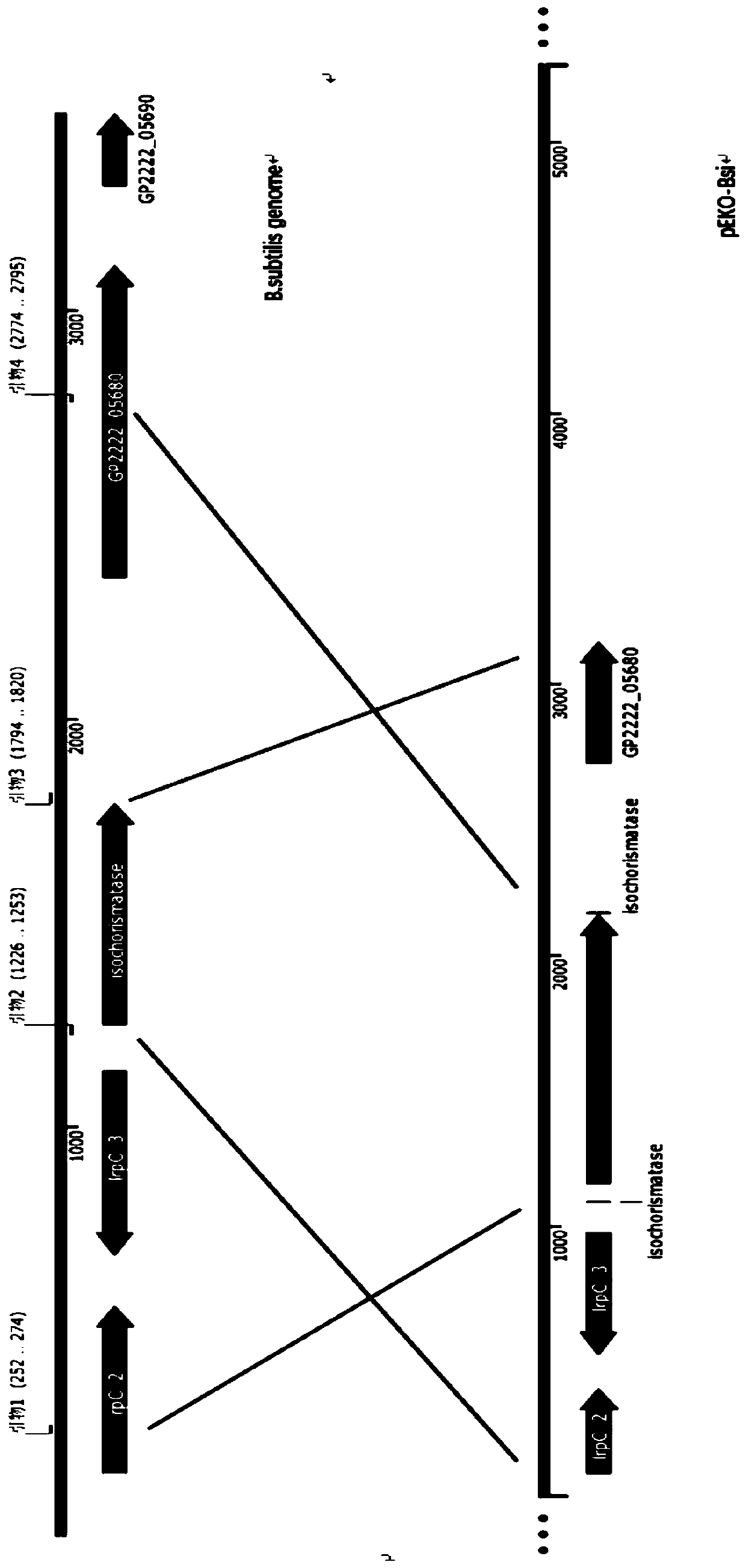
[0047] Mutation primers were designed with the isochorismatase (isochorismatase) sequence SEQ NO.1 of Bacillus subtilis as the target gene:

[0048] Primer 1: TAAAAAGGATCATCGGATCCCAGCAACCGCATCAAGAGTAGT

[0049] Primer 2: CGCGCAGGAAATTCTTTTTTTCACCTCTTAAAATTTTTATACT

[0050] Primer 3: GGTGAAAAAAAGAATTTCCTGCGCGAACATAACG

[0051] Primer 4: GACCATGATTACGCCAAGCTTTTGGGTGCTTGAATACTAATCC

[0052] SEQ NO.11 is the primary sequence of the protein corresponding to SEQ NO.1. The primer design must consider whether the change of amino acid residues in the primary sequence of the protein caused by gene mutation can lead to the loss or reduction of enzyme activity, and avoid the occurrence of amino acid residues. Equivalent substitutions or changes in non-enzyme-related amino acid residues.

[0053] Primer 1 and primer 2, prim...

Embodiment 2

[0088] Embodiment 2: prepare low by-product pyridinecarboxamide transformed microorganisms as follows:

[0089] 1. Construction of gene knockout plasmid pEKO-Bci

[0090] Mutation primers were designed with the isochorismatase (isochorismatase) sequence SEQ NO.2 of Bacillus cereus ATCC 14579 as the target gene:

[0091] Primer 1: CATGCCATATTCAAAACGATAAGATGG

[0092] Primer 2: TACATATTCACGAAAGCGTACGTCCACTCCTTAGA

[0093] Primer 3: ACGCATAATCATTCACAATAGTTTAAATGGC

[0094] Primer 4: ATAAGCACGCAAGAATTTTTAGCTCTCAAACAT

[0095] SEQ NO.12 is the primary protein sequence corresponding to SEQ NO.2.

[0096] Primer 1 and primer 2, primer 3 and primer 4 respectively take Bacillus cereus ATCC14579 genome sequence as template, carry out PCR amplification reaction, PCR reaction conditions are as follows:

[0097] Pre-denaturation at 95°C for 5min; denaturation at 94°C for 60s, annealing at 58.5°C for 42s, extension at 72°C for 90s, 35 cycles, and finally extension at 72°C for 10min. S...

Embodiment 3

[0125] Embodiment 3: Prepare low by-product pyridinecarboxamide transformed microorganisms as follows:

[0126] 1. Construction of gene knockout plasmid pEKO-Epn

[0127] Mutation primers were designed with the sequence SEQ NO.3 of purine-nucleotide phosphorylase (purine-nucleotide phosphorylase) of Escherichia coli (Escherichia coli K-12 MG1655) as the target gene:

[0128] Primer 1: AGAATTCCAGACTACACATTAATGCAGAAATGGGCGATTTCGCTG

[0129] Primer 2: GCTGACTTCGACATGGTGCGTATCGCAGATCGACGATACAATA

[0130] Primer 3: ATATCCGGCTACGTCGCTGCAGAATTTGGCGCGAA

[0131] Primer 4: TGGAATCCGTTCTGCTGGGCGATAAAGAGAAACTAGACGT

[0132] SEQ NO.13 is the primary protein sequence corresponding to SEQ NO.3.

[0133] Primer 1 and primer 2, primer 3 and primer 4 respectively take Escherichia coli (Escherichia coli K-12 MG1655) genome sequence as template, carry out PCR amplification reaction, PCR reaction condition is as follows:

[0134] Pre-denaturation at 95°C for 5min; denaturation at 94°C for 40...

the structure of the environmentally friendly knitted fabric provided by the present invention; figure 2 Flow chart of the yarn wrapping machine for environmentally friendly knitted fabrics and storage devices; image 3 Is the parameter map of the yarn covering machine
Login to View More

PUM

No PUM Login to View More

Abstract

The invention discloses preparation and application of a low by-product pyridine formamide transformation microorganism. The steps such as construction of a gene knockout plasmid, transformation of ahost microorganisms by the gene knockout plasmid and transformation of a nitrile hydrase gene are included, nicotinic acid phosphoribose transferase, pyridine amide deaminase, isochorismatase, cysteine hydrolase and purine nucleic acid phosphatase of various microbial hosts can be effectively knocked out or inhibited, activity of zymoprotein is reduced or directly inactivated, generation of by-product carboxyl pyridine generated during biocatalysis is reduced, so that the content of 3-pyridine carboxamide, deamination by-product 3-carboxyl pyridine of 4-pyridine carboxamide and 4-carboxyl pyridine in a synthetic product is low or a by-product does not exist, and recombinant microorganisms can be used for catalyzing and preparing 3-pyridine formamide and 4-pyridine formamide products with low by-product content in a high yield mode.

Description

technical field [0001] The invention relates to the technical field of microbial gene recombination, in particular to the preparation and application of a low-by-product pyridinecarboxamide transformation microorganism. Background technique [0002] The microbial conversion method of cyanopyridine to pyridinecarboxamide catalyzed by nitrile hydratase has been widely used in industrial production. The existence of the gene that catalyzes the conversion of picolinamide to carboxypyridine leads to the generation of by-product carboxypyridine in the biocatalysis process, and eventually leads to the high content of carboxypyridine in the finished product, which affects the use of picolinamide in food, medicine, and cosmetics. Although the formation of carboxypyridine by-products can be partially alleviated by strictly controlling the process temperature, such as timely heating or cooling, centrifugation, ceramic membrane and other membrane technologies, but the change of process ...

Claims

the structure of the environmentally friendly knitted fabric provided by the present invention; figure 2 Flow chart of the yarn wrapping machine for environmentally friendly knitted fabrics and storage devices; image 3 Is the parameter map of the yarn covering machine
Login to View More

Application Information

Patent Timeline
no application Login to View More
IPC IPC(8): C12N1/21C12N1/19C12N15/90C12P17/12C12R1/125C12R1/19C12R1/15C12R1/01C12R1/865C12R1/645
CPCC12N9/88C12N15/902C12P17/12C12Y402/01084
Inventor 董亢韦永飞方红新居虎军吴李瑞温兰兰
Owner ANHUI RUIBANG BIOLOGICAL SCI & TECH CO LTD
Features
  • R&D
  • Intellectual Property
  • Life Sciences
  • Materials
  • Tech Scout
Why Patsnap Eureka
  • Unparalleled Data Quality
  • Higher Quality Content
  • 60% Fewer Hallucinations
Social media
Patsnap Eureka Blog
Learn More