
A kind of synthetic method of hydroxybenzylamine
A synthesis method and technology of hydroxybenzylamine, applied in the field of synthesis of hydroxybenzylamine, can solve problems such as unsatisfactory reaction speed and conversion rate, difficult separation and purification of products, increase in the amount of sodium hydroxide, etc., and achieve environmental protection , The effect of short reaction time and low consumption of raw materials
Patent Information
- Authority / Receiving Office
- CN · China
- Patent Type
- Patents(China)
- Current Assignee / Owner
- Publication Date
- 2022-01-11
Smart Images
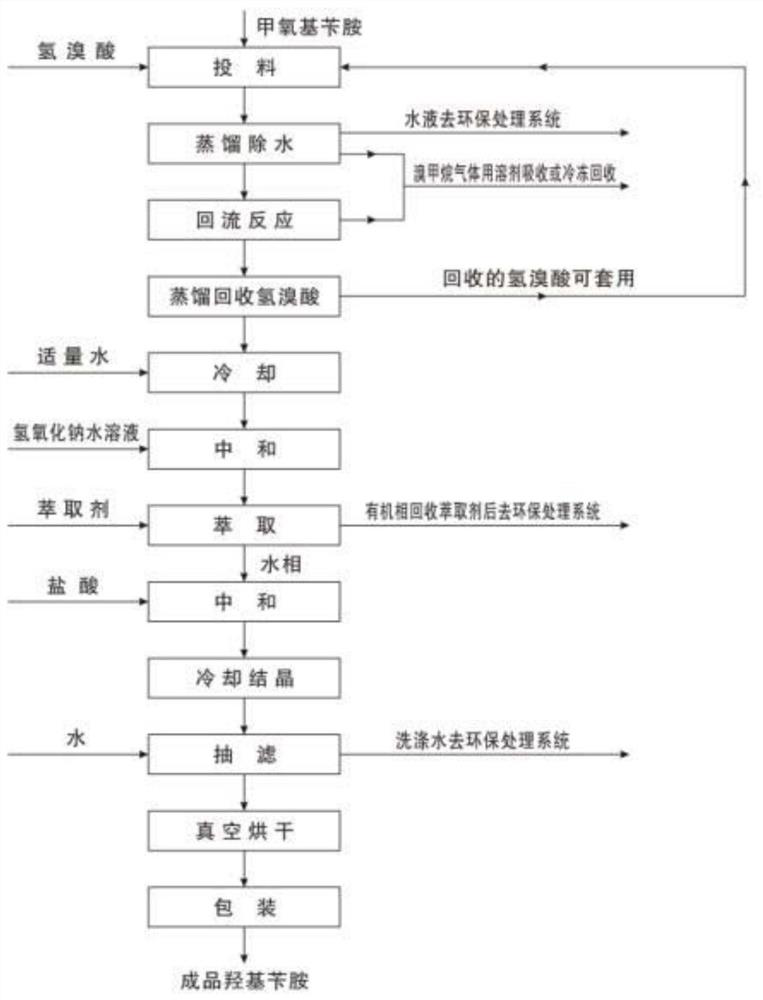
Figure 1 
Figure 2 
Figure 3
Abstract
Description
technical field
[0001] The invention belongs to the technical field of organic synthesis, and in particular relates to a synthesis method of hydroxybenzylamine. Background technique
[0002] Hydroxybenzylamine: also known as aminomethylphenol, is an important organic intermediate used in many fields, such as: 2-hydroxybenzylamine has been used in silk dyeing in recent years to treat atherosclerosis and hypertension, etc. Drug research; 3-hydroxybenzylamine is used in the research of hair dyes, antibacterial agents and anti-tumor drugs; 4-hydroxybenzylamine is an important intermediate of the digestive system drug itopride.
[0003] The existing synthetic method of hydroxybenzylamine roughly has the hydroxybenzaldehyde method from raw material; Disadvantages, such as: need high pressure; expensive catalyst; product is not easy to separate and purify, etc. In the methoxybenzylamine method, some people use boron tribromide demethylation method to synthesize hydroxybenzylamine,...
Examples
Embodiment 1
[0040] Embodiment 1: the synthesis of 2-hydroxybenzylamine
[0041] Drop into 252.8 grams (1.5 mole) 48% hydrobromic acid in 0.5L reactor with thermometer, dropping funnel, adjustable power heating mantle, stirrer and distillation unit, utilize dropping funnel under the stirring of stirrer to slowly Add 68.6 grams (0.5 moles) of 2-methoxybenzylamine dropwise, after the dropwise addition, heat up and distill to remove excess water until the top temperature of the distillation reaches more than 120°C (at this time, the temperature in the reactor reaches more than 126°C), and then Reduce the heating rate, make it into a reflux state or distill it out at a very slow rate, keep the temperature in the reactor above 126°C, absorb the generated gas with a solvent or recover it by freezing to protect the environment, until no further gas is observed When the gas is generated, increase the heating rate again, continue distillation, recover excess hydrobromic acid, until the temperature ...
Embodiment 2
[0043] Embodiment 2: the synthesis of 3-hydroxybenzylamine
[0044] Put 708.0 grams (3.5 moles) of 40% hydrobromic acid into a 1L reactor with a thermometer, dropping funnel, adjustable power heating mantle, stirrer and distillation device, and slowly drop it using the dropping funnel under the stirring of the stirrer. Add 137.2 grams (1.0 moles) of 3-methoxybenzylamine, after the dropwise addition, heat up and distill to remove excess water until the distillation temperature reaches above 120°C (at this time, the temperature in the reactor reaches above 126°C), and the heating rate is reduced , make it into a reflux state or distill it off at a very slow rate, keep the temperature in the reactor above 126°C, absorb the generated gas with a solvent or recover it by freezing to protect the environment, until no more gas is observed , increase the heating rate again, continue distillation, reclaim excess hydrobromic acid, stop when the temperature in the reactor reaches more tha...
Embodiment 3
[0046] Embodiment 3: the synthesis of 4-hydroxybenzylamine
[0047] Put 970.9 grams (3.0 moles) of 25% hydrobromic acid into a 1L reactor with a thermometer, dropping funnel, adjustable power heating mantle, stirrer and distillation device, and slowly drop it using the dropping funnel under the stirring of the stirrer. Add 103.7 grams (0.7558 moles) of 4-methoxybenzylamine, after the dropwise addition, heat up and distill to remove excess water until the distillation temperature reaches more than 120°C (at this time, the temperature in the reactor reaches more than 126°C), reduce the heating rate , make it into a reflux state or distill it off at a very slow rate, keep the temperature in the reactor above 126°C, absorb the generated gas with a solvent or recover it by freezing to protect the environment, until no more gas is observed , increase the heating rate again, continue distillation, reclaim excess hydrobromic acid, stop when the temperature in the reactor reaches above...