

Preparation method for compound prebiotics solid beverage capable of improving gastroenteric function
A solid beverage and prebiotic technology, which is applied to the functions of food ingredients, yeast-containing food ingredients, oligosaccharide-containing food ingredients, etc., can solve the problems of high price, insignificant effect, single ingredients, etc. Diarrhea, low calorie effect
- Summary
- Abstract
- Description
- Claims
- Application Information
AI Technical Summary
Problems solved by technology
Method used
Image

Examples
Embodiment 1
[0046] Example 1: Preparation of composite solid beverage
[0047] Specific steps are as follows:
[0048] (1) Weigh the raw materials of the composite solid beverage according to Table 1, and mix them thoroughly with a blender;
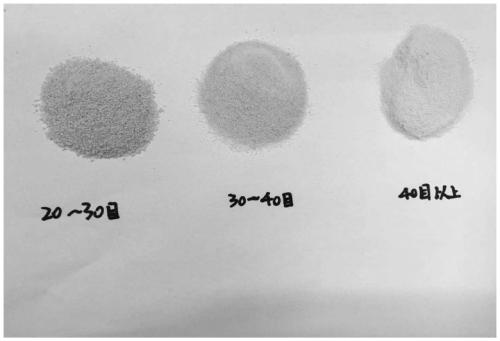
[0049] (2) Granulation: The granulation temperature is 50° C., and the sample is obtained by passing through a 40-mesh sieve; a part of the obtained composite solid beverage samples are taken for sensory evaluation. The evaluation results are shown in Table 2.
[0050] Table 1 The formula of each group of composite solid beverages (g / 100g)
[0051]
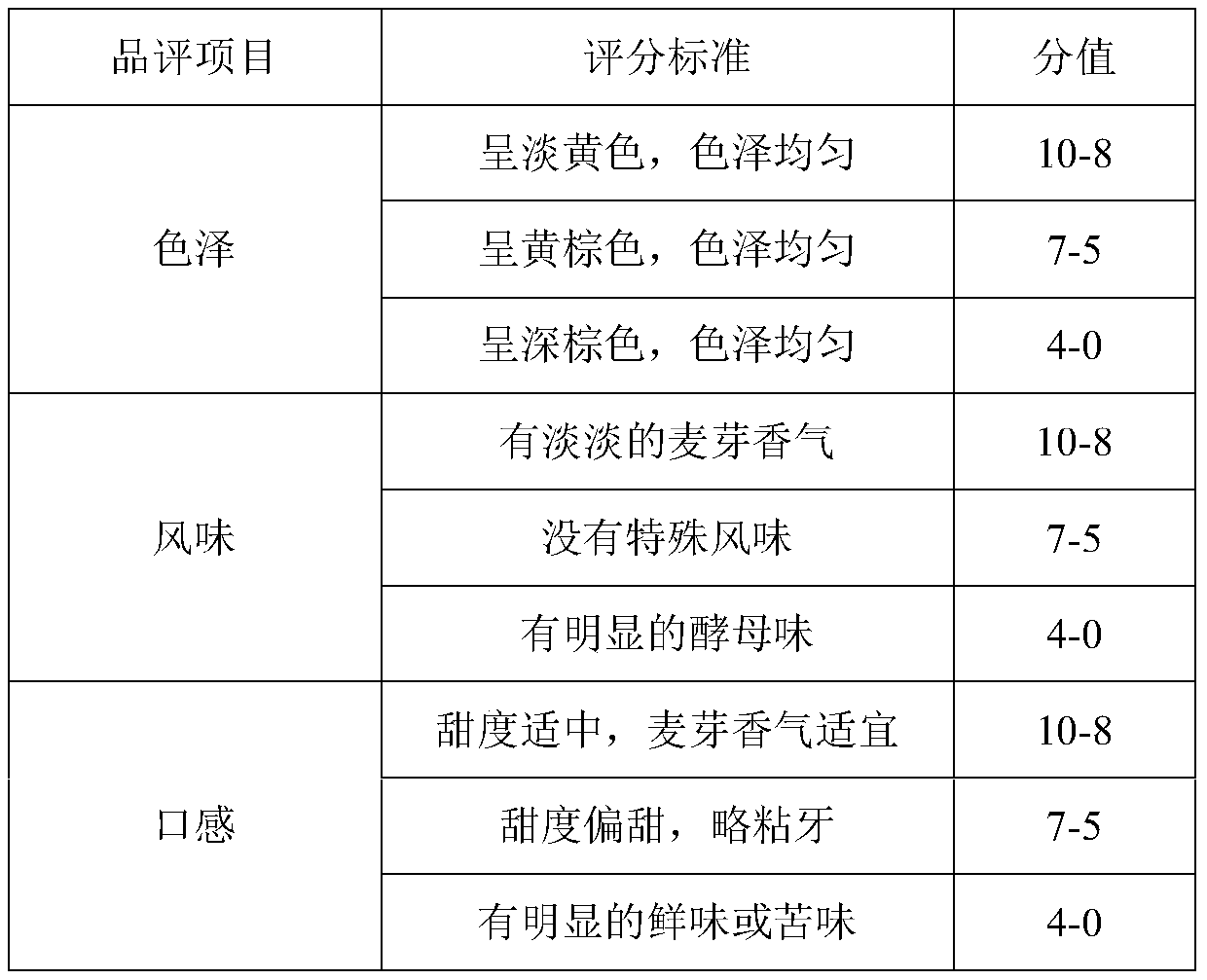
[0052] Table 2 Sensory evaluation of each group of composite solid beverages
[0053] Group score Group 127.8 Group 224 Group 320.6 Group 420 Group 521.6 Group 614 Group 718 Group 819
[0054] Note: The sensory scores in the table are the average of 100 scores.
[0055] It can be seen from Table 2 that the composite solid beverage samples of group 1 melt in the mouth and have better flavor and mouthfeel....
Embodiment 2
[0056] Example 2: Effect of yeast powder on composite solid beverage
[0057] The yeast powder models involved in this embodiment are YP106, YP101, YF100, and YF300. Among them, the models YP106 and YP101 are yeast powders, which are rich in polysaccharides, glucans, and fibers; the models YF100 and YF300 are yeast extracts, which have undergone enzyme The content of amino acids and peptides is relatively high.
[0058] According to the formula of group 1 in Table 1, weigh the composite solid beverage raw materials, and use YP106, YF100 and YF300 models instead of YP101 model yeast powder, and mix them thoroughly to obtain composite solid beverage samples for sensory evaluation. The sensory evaluation results are shown in Table 3.
[0059] Table 3 The influence of different preparation process yeast powder on composite solid beverage
[0060] Yeast powder model score YP10627.5 YP10127.5 YF10020 YF30020
[0061] Among them, YP106 and YP101 have similar mouthfeel and taste, wit...
Embodiment 3
[0062] Example 3: Effect of polypeptide content on composite solid beverage
[0063] According to Table 4, the composite solid beverage materials were weighed, mixed well, and granulated. The obtained composite solid beverage samples were subjected to sensory evaluation. The sensory evaluation results are shown in Table 5.
[0064] Table 4 Formulas of each group of composite solid beverages (g / 100g)
[0065]
[0066] Table 5 The influence of peptide content on composite solid beverage
[0067] Group score Group 127.8 Group 220 Group 321.6 Group 414
[0068] The bovine collagen peptides and rice protein peptides in the present invention belong to polypeptides, wherein the molecular weight of bovine collagen peptides is 800-1200 daltons; the content of rice protein peptides is higher than 60% and the molecular weight is lower than 1000 daltons, higher than 80% The content is less than 2000 Daltons. Because the molecular weight of its peptides is generally small, it has obvious ...
PUM
| Property | Measurement | Unit |
|---|---|---|
| Molecular weight | aaaaa | aaaaa |
Abstract
Description
Claims
Application Information
 Login to View More