Oxadiazolopyrazines and oxadiazolopyridines useful as mitochondrial uncouplers
What is AI technical title?
AI technical title is built by Patsnap AI team. It summarizes the technical point description of the patent document.
An alkyl, C2-C8 technology, applied in the field of oxadiazolopyrazine and oxadiazolopyridine that can be used as mitochondrial uncoupling agent, can solve the problem of drugs without uncoupling agent
Pending Publication Date: 2021-01-22
弗吉尼亚理工大学知识产权有限公司
View PDF16 Cites 0 Cited by
Summary
Abstract
Description
Claims
Application Information
AI Technical Summary
This helps you quickly interpret patents by identifying the three key elements:
Problems solved by technology
Method used
Benefits of technology
Problems solved by technology
Currently, there are no uncoupler drugs that are safe enough for use in humans
Method used
the structure of the environmentally friendly knitted fabric provided by the present invention; figure 2 Flow chart of the yarn wrapping machine for environmentally friendly knitted fabrics and storage devices; image 3 Is the parameter map of the yarn covering machine
View more
Image
Smart Image Click on the blue labels to locate them in the text.
Viewing Examples
Smart Image
Click on the blue label to locate the original text in one second.
Reading with bidirectional positioning of images and text.
[0212] The following starting materials and general procedures were used in the following synthetic examples.
[0213] In all synthetic examples, room temperature (rt) was about 21 °C.
[0214] NMR solvent reference: i (CD 3 ) 2 CO (2.05 / 29.84ppm); (CD 3 ) 2 SO (2.50 / 39.52ppm).
[0215] NMR Abbreviations: aq. = aqueous, app = apparent, br = broad, s = singlet, d = doublet, t = triplet, q = quartet, p = quintet. * refers to rotamers.
[0216] Synthesis of starting materials
example 1
[0217] Example 1. Synthesis of [1,2,5]oxadiazolo[3,4-B]pyrazine-5,6-diol (1-1)
[0218]
[0219] In a 500 mL round bottom flask equipped with a condenser, 1,2,5-oxadiazole-3,4-diamine (50.0 g, 500 mmol) and oxalic acid (49.6 g, 551 mmol) were dissolved in aqueous HCl (250 mL, 10 The mixture in % v / v) was heated to reflux in a sand bath for 4 hours. The resulting mixture was cooled in an ice bath, and the precipitate was filtered, rinsed with water (20 mL) followed by diethyl ether (2 x 150 mL), and collected to give 1-1 (55.2 g, 72%) as a colorless solid : 1 H NMR ((CD 3 ) 2 CO,400MHz)δ11.65(brs,2H); 13 C NMR ((CD 3 ) 2 CO, 100MHz) δ153.9, 144.8.
example 2
[0220] Synthesis of Example 2.5,6-dichloro-[1,2,5]oxadiazolo[3,4-B]pyrazine (1-2)
[0221]
[0222] With a glass stopper and with aqueous Na 2 CO 3 Diol 1-1 (37.0 g, 240 mmol) and PCl 5 (120g, 576mmol) in POCl 3 (45 mL) was heated to 95 °C for 2 hours. The mixture was allowed to cool to room temperature, and then to 5-10 °C in an ice bath. The reaction mixture was slowly poured into ice-cold water (3 × 250 mL beakers, each with 100 mL H 2 O) so that the temperature of the water does not rise above 25°C (monitored by a thermometer in the water bath). The colorless precipitate was filtered, rinsed with water, and dissolved in acetone (about 200 mL). Water (3 times the volume of acetone) was added to the organic solution to facilitate precipitation, and the colorless solid was collected by filtration under vacuum with P 2 o 5 Drying as a desiccant afforded 1-2 (35.1 g, 77%) as a colorless solid: 13 C NMR ((CD 3 ) 2 CO, 100MHz) δ155.9, 151.9.
[0223] The large-scal...
the structure of the environmentally friendly knitted fabric provided by the present invention; figure 2 Flow chart of the yarn wrapping machine for environmentally friendly knitted fabrics and storage devices; image 3 Is the parameter map of the yarn covering machine
Login to View More
PUM
Login to View More
Abstract
The disclosure provide compounds of Formula I and the pharmaceutically acceptable salts thereof. The variables, R1, R2, R3, X1, X2, and Z are defined herein. Certain compounds of Formula I act as selective mitochondrial protonophore uncouplers that do not affect the plasmamembrane potential. Compounds and salts of Formula I are useful for treating or decreasing the risk of conditions responsive to mitochondrial uncoupling, such as cancer, obesity, type II diabetes, fatty liverdisease, insulin resistance, Parkinson's disease, ischemiareperfusion injury, heart failure, non-alcoholic fatty liverdisease (NALFD), and non-alcoholic steatohepatitis (NASH). Because mitochondrial uncouplers decrease the production of reactive oxygen species (ROS), which are known to contribute to age-related cell damage, compounds of Formula I are useful for increasing lifespan. Compounds and salts of Formula I are also useful for regulating glucose homeostasis or insulin action in a patient.
Description
[0001] Cross References to Related Applications [0002] This application claims priority to US Provisional Application No. 62 / 660,880, filed April 20, 2018, which is hereby incorporated by reference in its entirety. Background technique [0003] Cellular respiration is a physiological process whose primary goal is to generate energy in the form of ATP. During cellular respiration, chemical energy derived from nutrients is converted into ATP. Specifically, the oxidation of nutrients in the mitochondrial matrix generates the energetic electron carriers nicotinamide adenine dinucleotide (NADH) and flavin adenine dinucleotide (FADH 2 ), which are oxidized by the mitochondrial electron transport chain (ETC) located in the mitochondrial inner membrane (MIM). Electron flow through the ETC is an energy-releasing process that drives a series of proton pumps to efflux protons from the matrix to the intermembrane space (IMS) against their concentration gradient. The resulting proton ...
Claims
the structure of the environmentally friendly knitted fabric provided by the present invention; figure 2 Flow chart of the yarn wrapping machine for environmentally friendly knitted fabrics and storage devices; image 3 Is the parameter map of the yarn covering machine
Login to View More
Application Information
Patent Timeline
Application Date:The date an application was filed.
Publication Date:The date a patent or application was officially published.
First Publication Date:The earliest publication date of a patent with the same application number.
Issue Date:Publication date of the patent grant document.
PCT Entry Date:The Entry date of PCT National Phase.
Estimated Expiry Date:The statutory expiry date of a patent right according to the Patent Law, and it is the longest term of protection that the patent right can achieve without the termination of the patent right due to other reasons(Term extension factor has been taken into account ).
Invalid Date:Actual expiry date is based on effective date or publication date of legal transaction data of invalid patent.



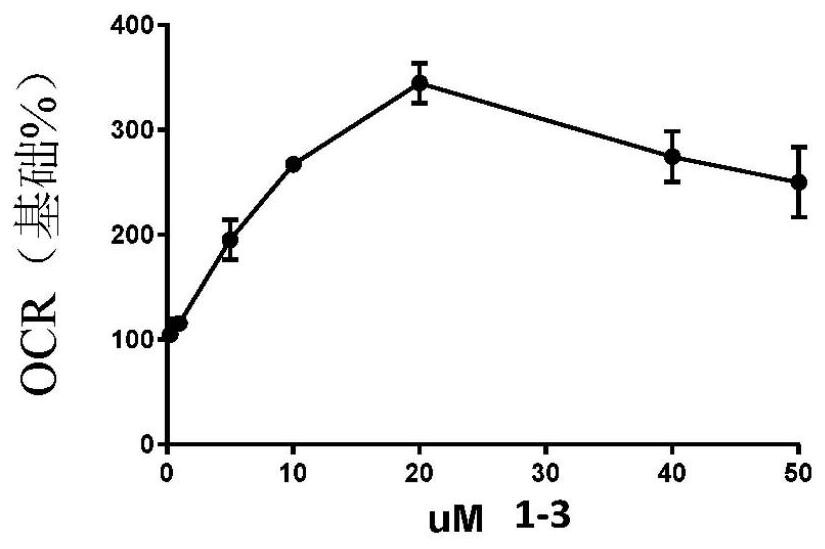
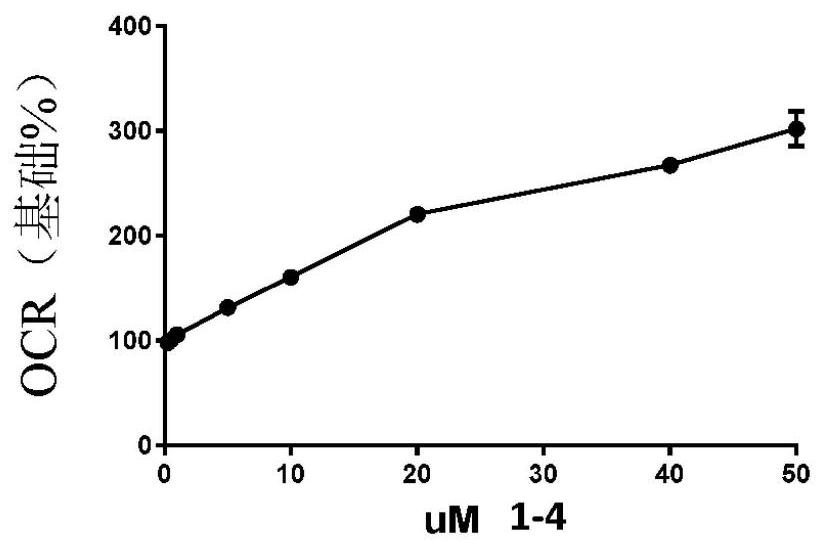
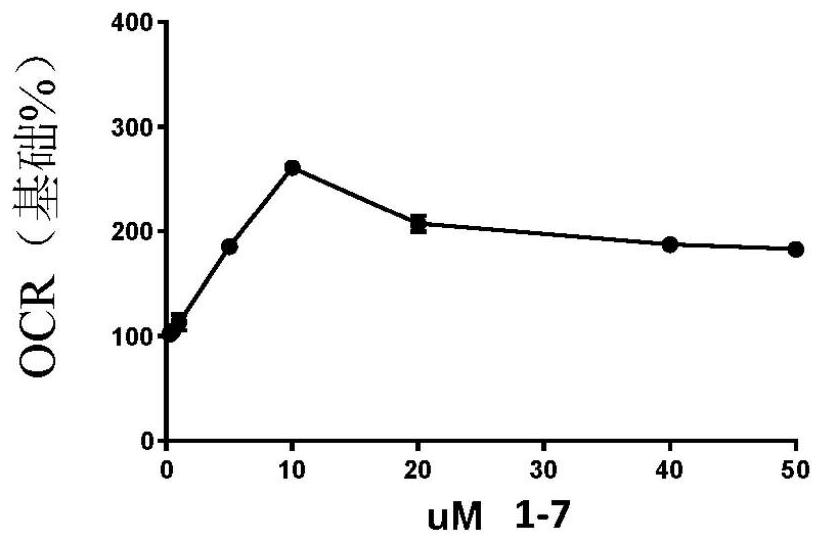
 Login to View More
  Login to View More