
Halogenated perovskite quantum dot composite material for neutron detection and preparation method thereof
A composite material and calcium halide technology, applied in the field of radiation detection, can solve the problems of large-volume preparation and harsh use conditions, low light yield and energy resolution, complex preparation process, etc., and achieve excellent scintillation performance, low cost, and preparation The effect of simple process
- Summary
- Abstract
- Description
- Claims
- Application Information
AI Technical Summary
Problems solved by technology
Method used
Image

Examples
Embodiment 1
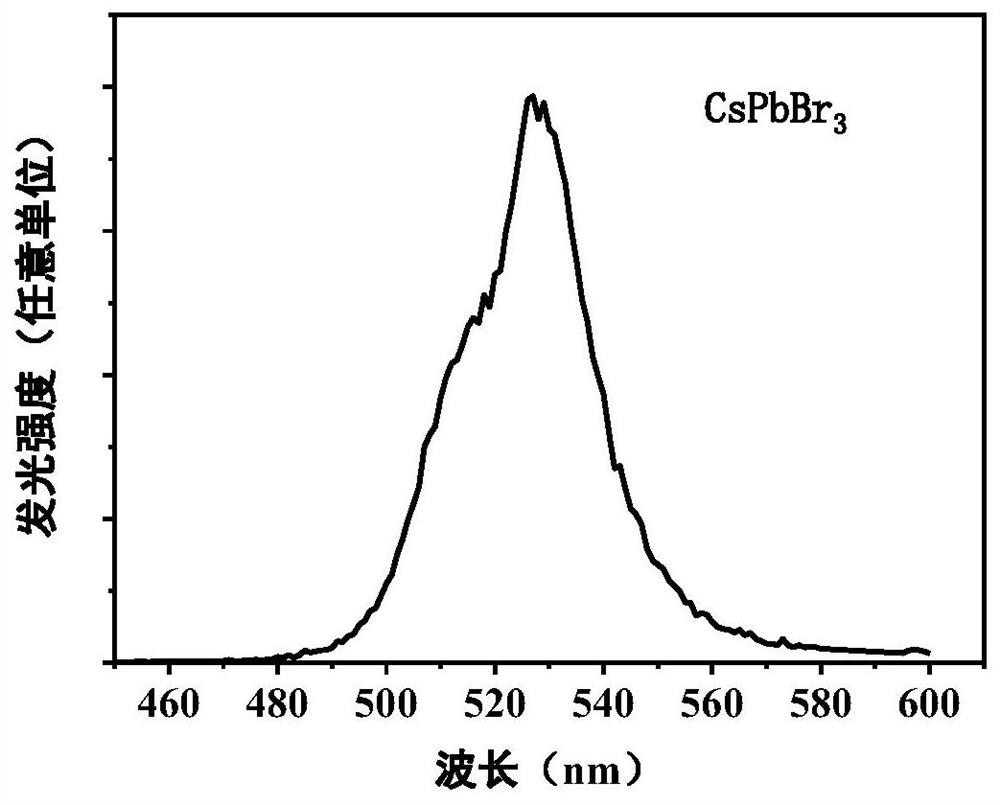
[0051] Example 1 Rich 10 B-CsPbBr 3 Halide Perovskite Composite Inorganic Glass Material Bulk
[0052] The first step: the stoichiometric ratio (molar ratio) design of the composite material, its specific component is B 2 o 3 : SiO 2 : ZnO: SrO: CsO: PbO: NaBr (mol%) = 52: 21: 6: 5: 7: 3: 6, with SiO 2 、H 10 BO 3 , ZnO, SrCO 3 、CsCO 3 , PbO: NaBr is used as the raw material, weighed and ground evenly according to the components, then melted at a high temperature of 1050 ° C for 20 minutes, and quenched in a mold to prepare a glass block precursor.
[0053] Step 2: The prepared glass is subjected to secondary heat treatment in a box-type muffle furnace. The holding temperature is 450°C, the holding time is 8h, and the heating rate is 5°C / min. Then the glass sample is cooled to room temperature and taken out to obtain the required CsPbBr 3 Halide perovskite composite inorganic glass material bulk.
[0054] The CsPbBr that embodiment 1 prepares 3 The block sample of h...
Embodiment 2
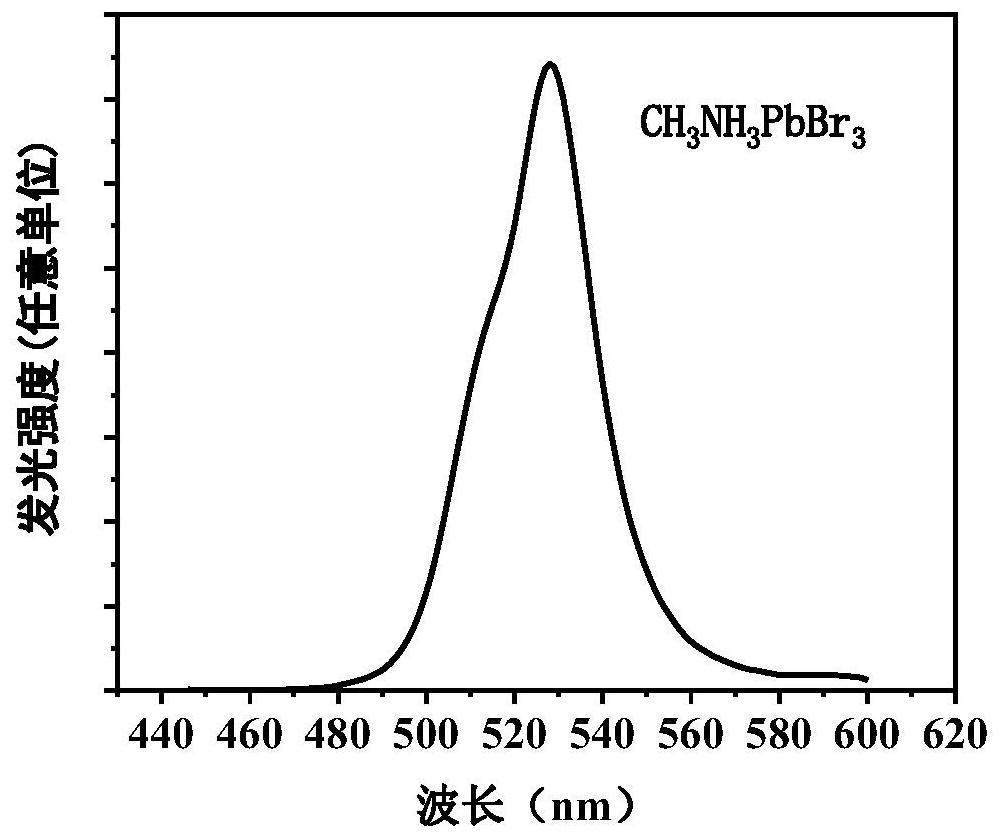
[0056] Example 2 Rich 6 CH of Li 3 NH 3 PbBr 3 Halide perovskite composite organic polymer material bulk
[0057] Step 1: CH 3 NH 3 PbBr 3 Synthesis of Perovskite Quantum Dot Precursor Solution, CH 3 NH 2 Stir with 0.5mol / L HBr solution at a molar ratio of 1:1 at 0°C until the solution is clear, then place the solution in an oil bath and heat it to 70°C, and let it stand for 12 hours, then filter to obtain a light yellow color Precipitate. After the precipitate was repeatedly washed with absolute ethanol, it was recrystallized with anhydrous ether, and the obtained white crystal was vacuum-dried at a temperature of 50 degrees Celsius for 12 hours to obtain the desired CH 3 NH 3 Br. Then 11.2 g of CH 3 NH 3 Br with 29.4g of PbBr 2 The molar ratio is 5:4, mixed and dissolved in N,N-dimethylformamide ethanol solvent with a volume of 200ml, stirred and heated to 70°C, the stirring time is 120min, and the prepared target CH 3 NH3 PbBr 3 Perovskite quantum dot precur...
Embodiment 3
[0061] Example 3 Rich 10 B-CsPbI 3 Halide perovskite composite inorganic glass material optical fiber
[0062] The first step: the stoichiometric ratio (molar ratio) design of the composite material, its specific component is B 2 o 3 : SiO 2 : ZnO: SrO: CsO: PbO: NaI (mol%) = 52: 21: 6: 5: 7: 3: 6, with SiO 2 、H 10 BO 3 , ZnO, SrCO 3 、CsCO 3 , PbO:NaI was used as the raw material, weighed and ground evenly according to the components, and then melted at a high temperature of 1050°C for 20 minutes, quenched in a mold to prepare a glass block precursor, and then annealed in a muffle furnace for 5 hours, and the temperature was set at 350°C.
[0063] The second step: the prepared glass is turned and processed, combined with the quartz glass sleeve and placed in the drawing tower. The temperature of the drawing tower is 900°C, the drawing speed is 40m / °C, the inner diameter of the optical fiber sleeve is 3cm, the outer diameter is 30cm, and the core layer- The cladding ra...
PUM
| Property | Measurement | Unit |
|---|---|---|
| Outer diameter | aaaaa | aaaaa |
| Core diameter | aaaaa | aaaaa |
Abstract
Description
Claims
Application Information
 Login to View More