
Sb2Te3 phase change material based on oxygen doping, phase change memory and preparation method
A phase-change material and phase-change storage technology, applied in heat exchange materials, chemical instruments and methods, sustainable manufacturing/processing, etc., can solve the problem of harsh selection conditions, unfavorable large-scale commercial production, structural characteristics and processes Parameter sensitivity and other issues
- Summary
- Abstract
- Description
- Claims
- Application Information
AI Technical Summary
Problems solved by technology
Method used
Image

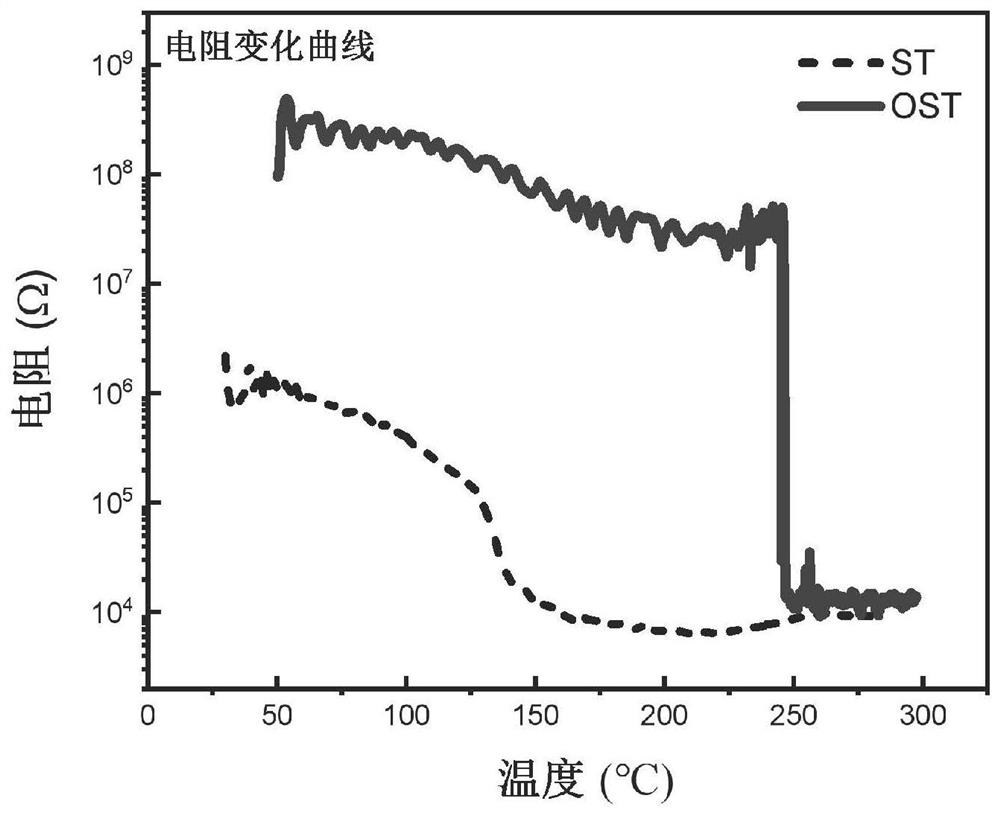
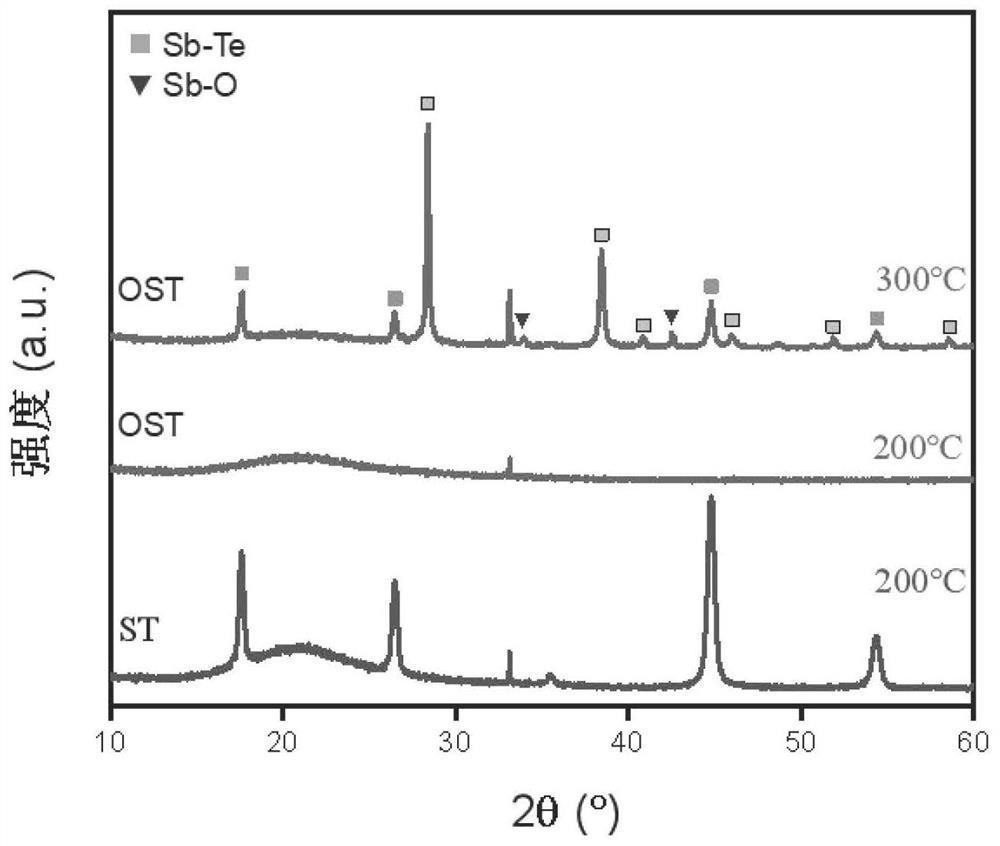
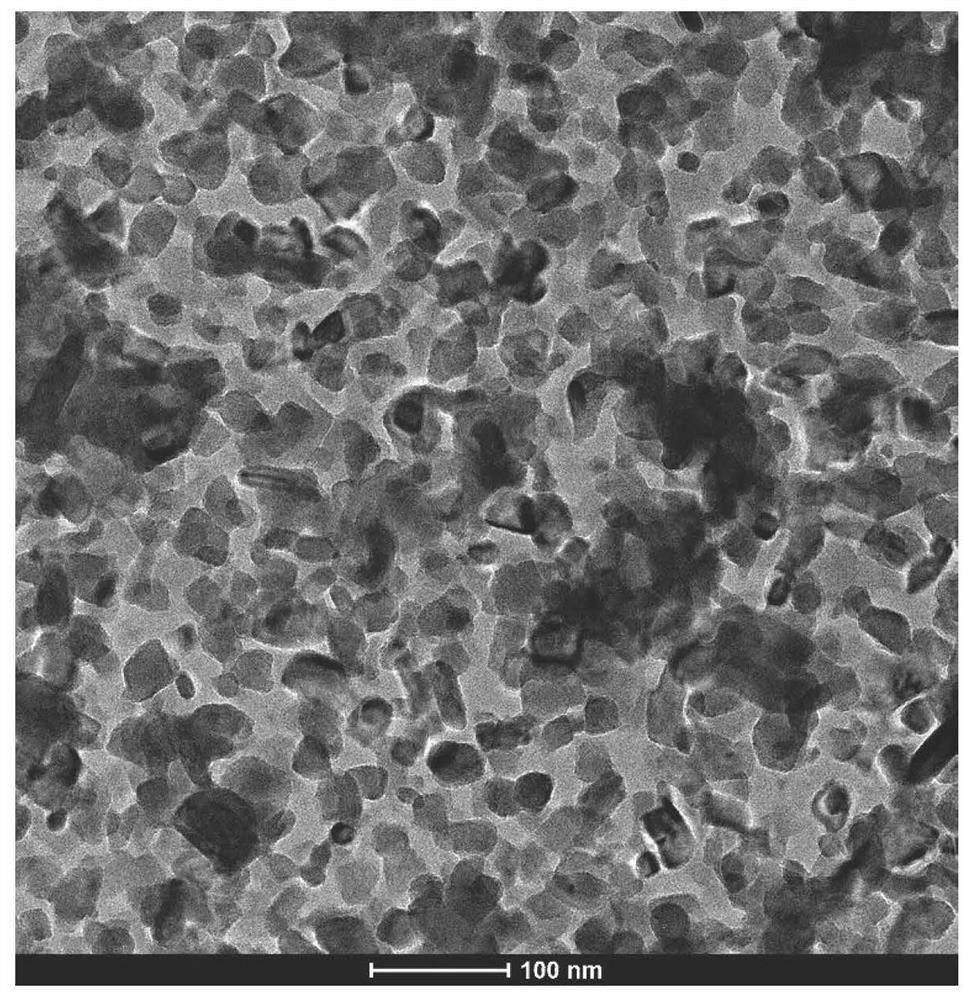
Examples
Embodiment 1
[0046] The O-Sb used for phase-change memory devices prepared in this example 2 Te 3 The general chemical formula of phase change memory thin film material is (ST) 1-x o x , where ST stands for Sb 2 Te 3 , x=0.1 in this embodiment.
[0047] O-Sb 2 Te 3 The phase-change memory thin film material is prepared by magnetron sputtering; during preparation, high-purity argon is introduced as the sputtering gas, and a small amount of oxygen is introduced to provide an aerobic atmosphere. The sputtering pressure is 0.5Pa, Sb 2 Te 3 The target adopts AC power supply, and the power supply power is 60W. Concrete preparation process comprises the following steps:
[0048] 1. Select SiO with a size of 1cm×1cm 2 / Si(100) substrate, clean the surface and back, remove dust particles, organic and inorganic impurities.
[0049] a) SiO 2 The / Si(100) substrate was placed in an acetone solution for 10 minutes with ultrasonic vibration of 40W power, and rinsed with deionized water.
[...
Embodiment 2
[0073] The O-Sb used for phase-change memory devices prepared in this example 2 Te 3 The general chemical formula of phase change memory thin film material is (ST) 1-x o x , where ST stands for Sb 2 Te 3 , x=0.1 in this embodiment.
[0074] O-Sb 2 Te 3 The phase change memory thin film material is prepared by magnetron sputtering. During the preparation, high-purity argon gas was introduced as the sputtering gas, and a small amount of oxygen was introduced to provide an aerobic atmosphere. The sputtering pressure was 0.5Pa, and Sb 2 Te 3 The target adopts AC power supply, and the power supply power is 60W. Concrete preparation process comprises the following steps:
[0075] 1. Select SiO with a size of 1cm×1cm 2 / Si(100) substrate, clean the surface and back, remove dust particles, organic and inorganic impurities.
[0076] a) SiO 2 The / Si(100) substrate was placed in an acetone solution for 10 minutes with ultrasonic vibration of 40W power, and rinsed with deion...
Embodiment 3
[0090] This example uses the Materials Studio software to add Sb with a concentration of 5%, 10% and 20% to the O element respectively. 2 Te 3 Modeling of phase change memory thin film materials, randomization of three models by first principles, simulation of melting and quenching process to obtain OST phase change memory with O element doping concentrations of 5%, 10% and 20% respectively Amorphous model for thin film materials, the results are as Figure 7 shown. Simplified "shell-core" structure O-Sb using Materials Studio software 2 Te 3 and pure Sb 2 Te 3 Modeling, using first-principles to simulate the "shell-core" structure O-Sb at different temperatures 2 Te 3 model and pure Sb 2 Te 3 Atomic motion and the "shell-core" structure O-Sb at the same temperature 2 Te 3 In the model, the movement of atoms in the middle area and the atoms in the area close to the shell is formed into an intuitive image through data processing. Figure 8 is the influence of the si...
PUM
| Property | Measurement | Unit |
|---|---|---|
| thickness | aaaaa | aaaaa |
| thickness | aaaaa | aaaaa |
Abstract
Description
Claims
Application Information
 Login to View More