
Laminate, printed wiring board, semiconductor package, and method for manufacturing laminate
A laminated board and composite layer technology, which is applied in the direction of printed circuits, printed circuits, printed circuit parts, etc., can solve the problems of insulation reliability, adhesion, and reduction of pressing processability.
Patent Information
- Authority / Receiving Office
- CN · China
- Patent Type
- Applications(China)
- Current Assignee / Owner
- Publication Date
- 2021-07-30
Smart Images
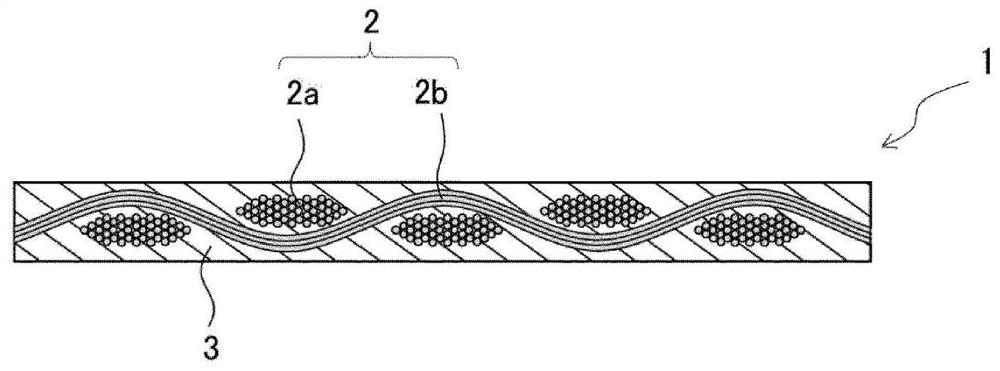
Figure 1 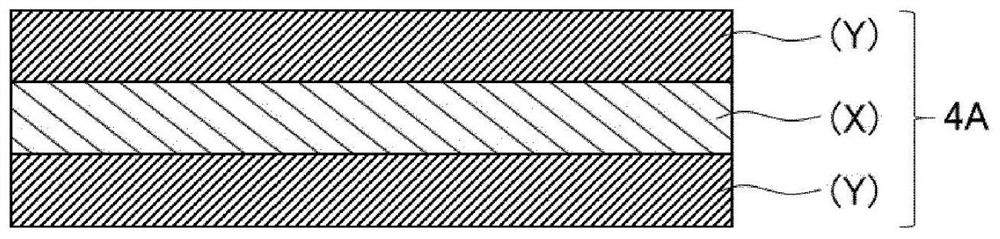
Figure 2 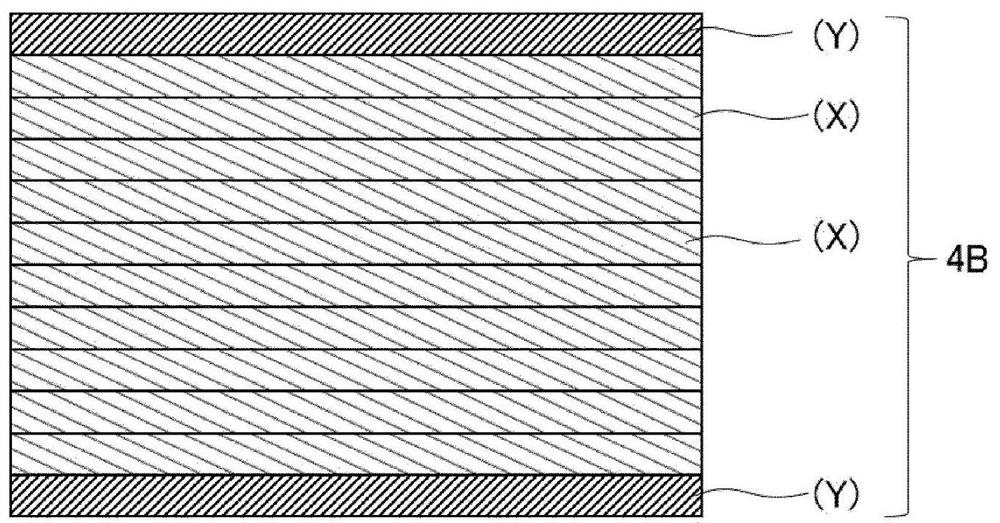
Figure 3
Abstract
Description
technical field
[0001] The present invention relates to a laminate, a printed wiring board, a semiconductor package, and a method for manufacturing the laminate. Background technique
[0002] In recent years, due to miniaturization and high performance of electronic equipment, higher wiring density and higher integration of printed wiring boards have been developed. Along with this, the demand for improved reliability of printed wiring boards has been increasing. In particular, with respect to semiconductor packages, along with miniaturization and thinning, occurrence of warpage during component packaging and package assembly has become a major problem.
[0003] One of the main causes of semiconductor package warpage is the difference in coefficient of thermal expansion between a semiconductor element and a printed wiring board on which the semiconductor element is mounted. Generally, since the thermal expansion coefficient of a printed wiring board is larger than that of a...
Examples
Embodiment 1
[0253] (Copper Clad Laminate 1: In Figure 6 Copper-clad laminates with copper foil disposed on both sides of the laminate shown)
[0254] (1) Production of varnish
[0255] In a reaction vessel with a capacity of 1 liter capable of heating and cooling equipped with a thermometer, a stirring device, and a reflux condenser, siloxane diamine (manufactured by Dow Corning Toray Co., Ltd., trade name: X-22-161A, an amino functional group Equivalent: 800g / mol) 19.4g, 3,3'-diethyl-4,4'-diaminodiphenylmethane 13.0g, N,N'-(4,4'-diphenylmethane) dimaline 122.9 g of imide, 4.7 g of p-aminophenol, and 240.0 g of propylene glycol monomethyl ether were reacted at 115° C., then concentrated under normal pressure so that the resin concentration became 60% by mass, and cyclohexyl was further added at 90° C. 53.3 g of the ketone was stirred for 30 minutes to obtain an intermediate varnish.
[0256] 303.5 g of this intermediate varnish, a methyl isobutyl ketone solution of silica (700 g of sp...
Embodiment 2
[0262] (Copper Clad Laminate 2: in Figure 4 Copper-clad laminates with copper foil disposed on both sides of the laminate shown)
[0263] In Example 1, prepregs were laminated so that the outermost layers of the two layers on both sides were prepregs containing S glass cloth, and the inner 10 layers were prepregs containing E glass cloth. , except that, it carried out similarly to Example 1, and obtained the copper-clad laminated board 2.
Embodiment 3
[0265] (Copper Clad Laminate 3: in Figure 7 Copper-clad laminates with copper foil disposed on both sides of the laminate shown)
[0266] In Example 1, the prepregs were laminated in the order of six prepregs containing E glass cloth, two prepregs containing S glass cloth, and six prepregs containing E glass cloth. Except having changed the structure, it carried out similarly to Example 1, and obtained the copper-clad laminated board 3.