Multiple cutter blade and cutting tool

A tool and blade technology, applied in the field of cutting tools with multi-blade inserts, which can solve the problems of poor surface quality and poor chip evacuation performance
CN1443619AInactive Publication Date: 2003-09-24MITSUBISHI MATERIALS CORP

Patent Information

Authority / Receiving Office
CN · China
Patent Type
Applications(China)
Current Assignee / Owner
MITSUBISHI MATERIALS CORP
Publication Date
2003-09-24
Estimated Expiration
Not applicable · inactive patent

Smart Images

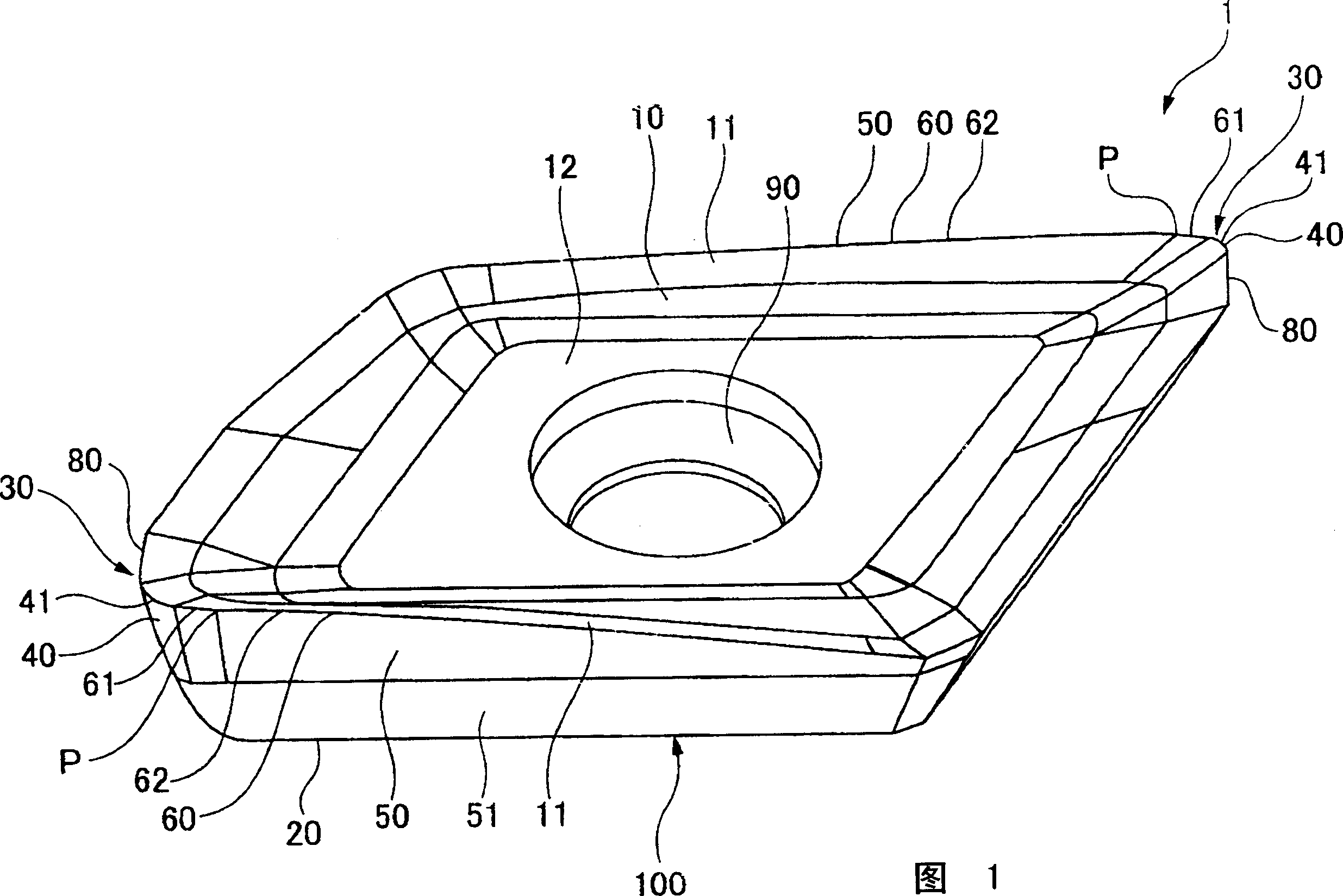
  • Figure 1
    Figure 1
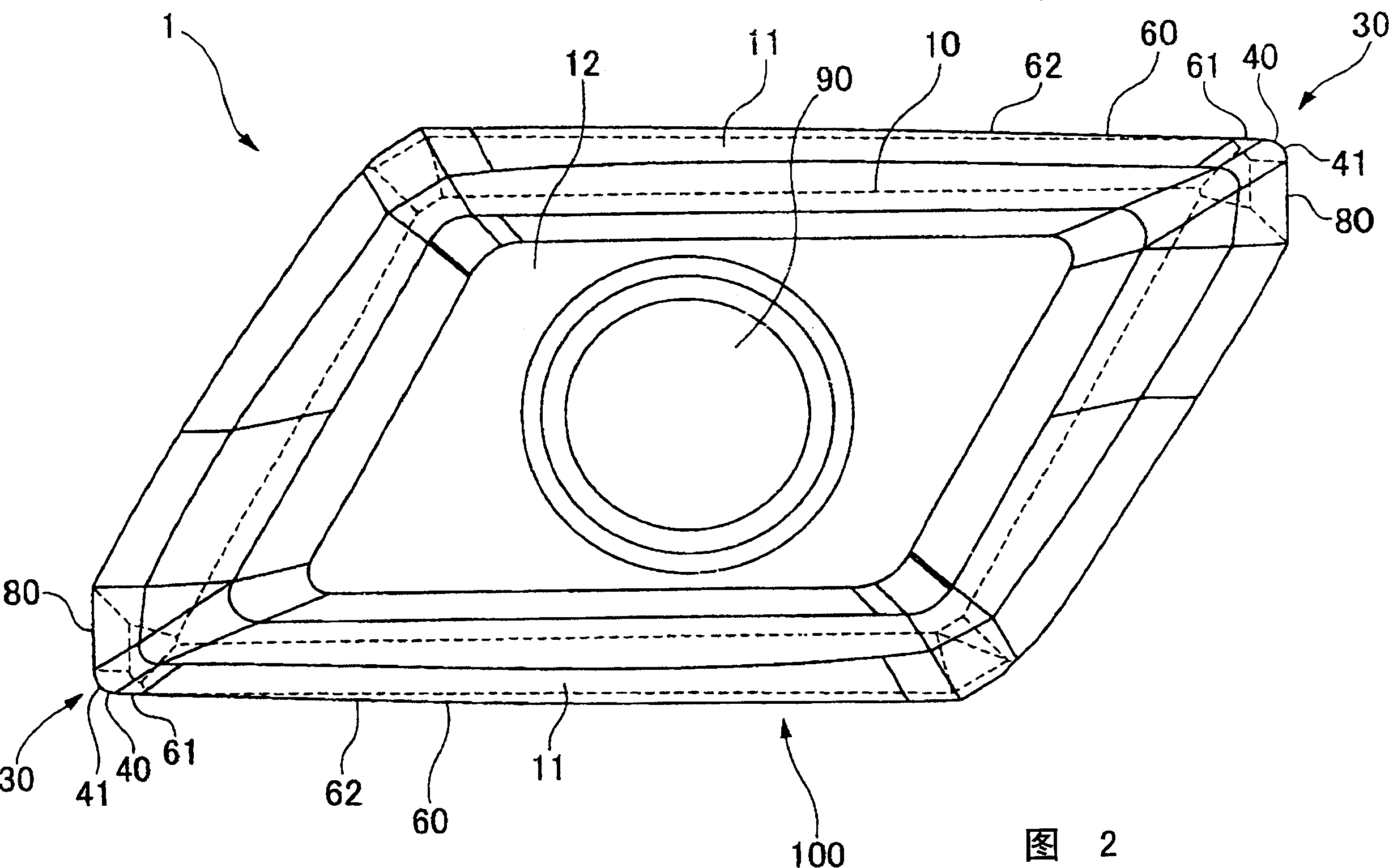
  • Figure 2
    Figure 2
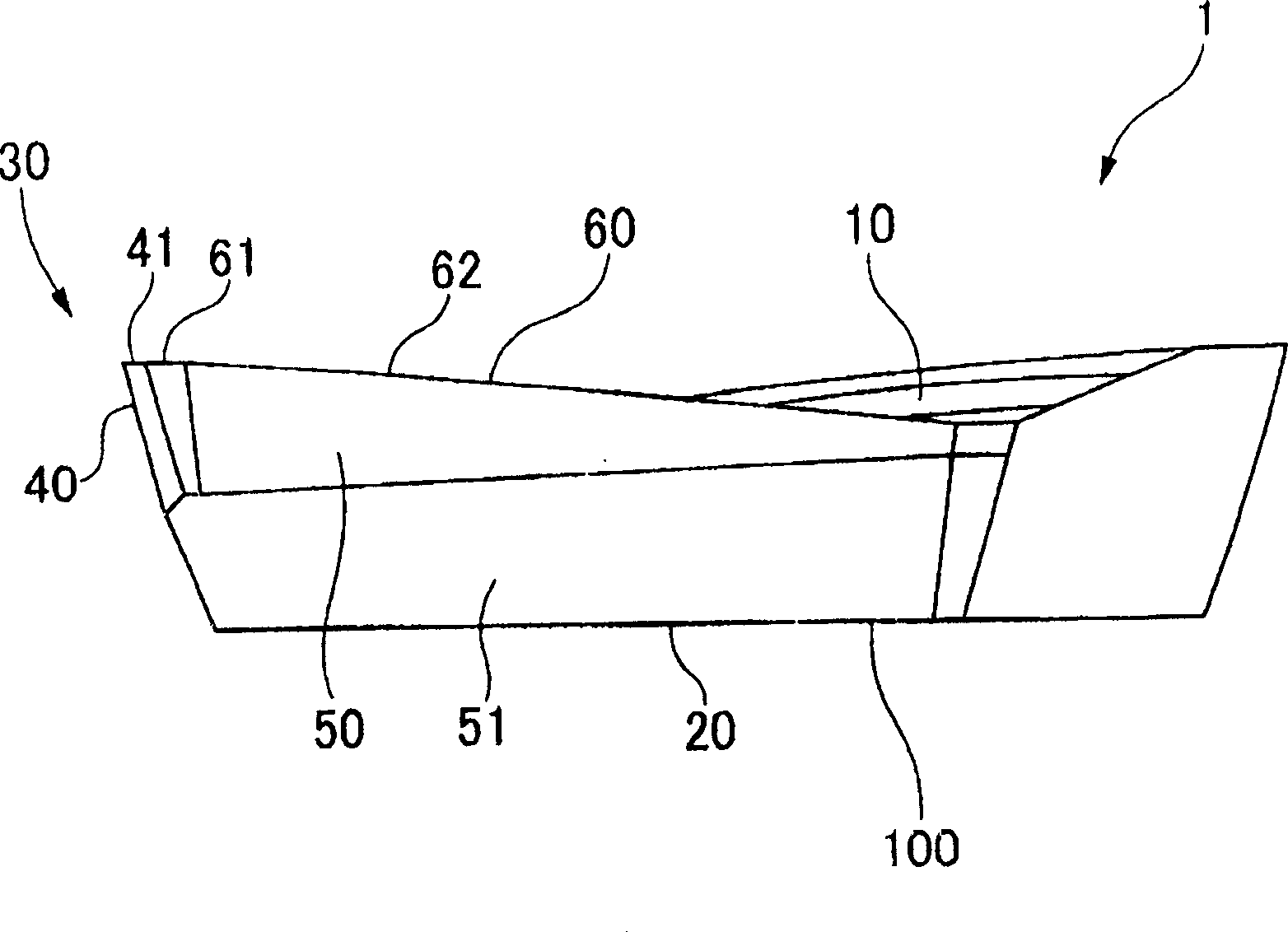
  • Figure 3
    Figure 3
Patent Text Reader

Abstract

A throwaway insert and a cutting tool enable a high speed cutting operation for a metallic material having great ductility such as aluminum and obtaining a vertical wall with a high quality machined surface while improving chip control. The throwaway insert (1) comprises a major cutting edge (60) including a tapered cutting edge (61) connected to a cutting edge (41) of a nose portion (40), and a curved cutting edge (62) connected to an end of the tapered cutting edge (61) at a connection point (P). The curved cutting edge (62) is formed so as to extend along an imaginary cylindrical surface (S) whose center axis coincides with the axis of rotation of a tool main body (200), and tapered cutting edge (61) is formed so as to gradually curve from the imaginary cylindrical surface (S) toward the inside of the imaginary cylindrical surface (S) as the distance from the curved cutting edge (62) increases, and the distance from the nose portion (40) decreases. The throwaway insert (1) is attached to the tool main body (200) in which the surface of the distal end thereof is machined so that surface roughness thereof is less than 3.2 mu m when indicated by the Ry roughness. <IMAGE>A throwaway insert and a cutting tool enable a high speed cutting operation for a metallic material having great ductility such as aluminum and obtaining a vertical wall with a high quality machined surface while improving chip control. The throwaway insert (1) comprises a major cutting edge (60) including a tapered cutting edge (61) connected to a cutting edge (41) of a nose portion (40), and a curved cutting edge (62) connected to an end of the tapered cutting edge (61) at a connection point (P). The curved cutting edge (62) is formed so as to extend along an imaginary cylindrical surface (S) whose center axis coincides with the axis of rotation of a tool main body (200), and tapered cutting edge (61) is formed so as to gradually curve from the imaginary cylindrical surface (S) toward the inside of the imaginary cylindrical surface (S) as the distance from the curved cutting edge (62) increases, and the distance from the nose portion (40) decreases. The throwaway insert (1) is attached to the tool main body (200) in which the surface of the distal end thereof is machined so that surface roughness thereof is less than 3.2 mu m when indicated by the Ry roughness. <IMAGE>
Need to check novelty before this filing date? Find Prior Art

Description

technical field

[0001] The present invention relates to multi-edged inserts attached to various throw-away cutting tools such as end mills, and cutting tools provided with multi-edged inserts. Background technique

[0002] In recent years, with the development of the spacecraft industry, the need to cut light metal materials such as aluminum and aircraft alloys has increased. For aircraft components, in order to prevent them from being affected by residual stress, it is necessary to cut them from metal square bars. Therefore, the multi-edged blade used for this kind of cutting process should be made with a large feed rate, and its maximum cutting depth is not less than 16mm, generally around 20mm. In addition, especially in the case of cutting a vertical wall surface, a multi-edged insert in which the main cutting edge on the outer peripheral side is positioned exactly on the cylindrical surface is often used in a state attached to a tool.

[0003] However, since aluminum ...

Claims

the structure of the environmentally friendly knitted fabric provided by the present invention; figure 2 Flow chart of the yarn wrapping machine for environmentally friendly knitted fabrics and storage devices; image 3 Is the parameter map of the yarn covering machine
Login to View More