
Composite electrode material
- Summary
- Abstract
- Description
- Claims
- Application Information
AI Technical Summary
Benefits of technology
Problems solved by technology
Method used
Image

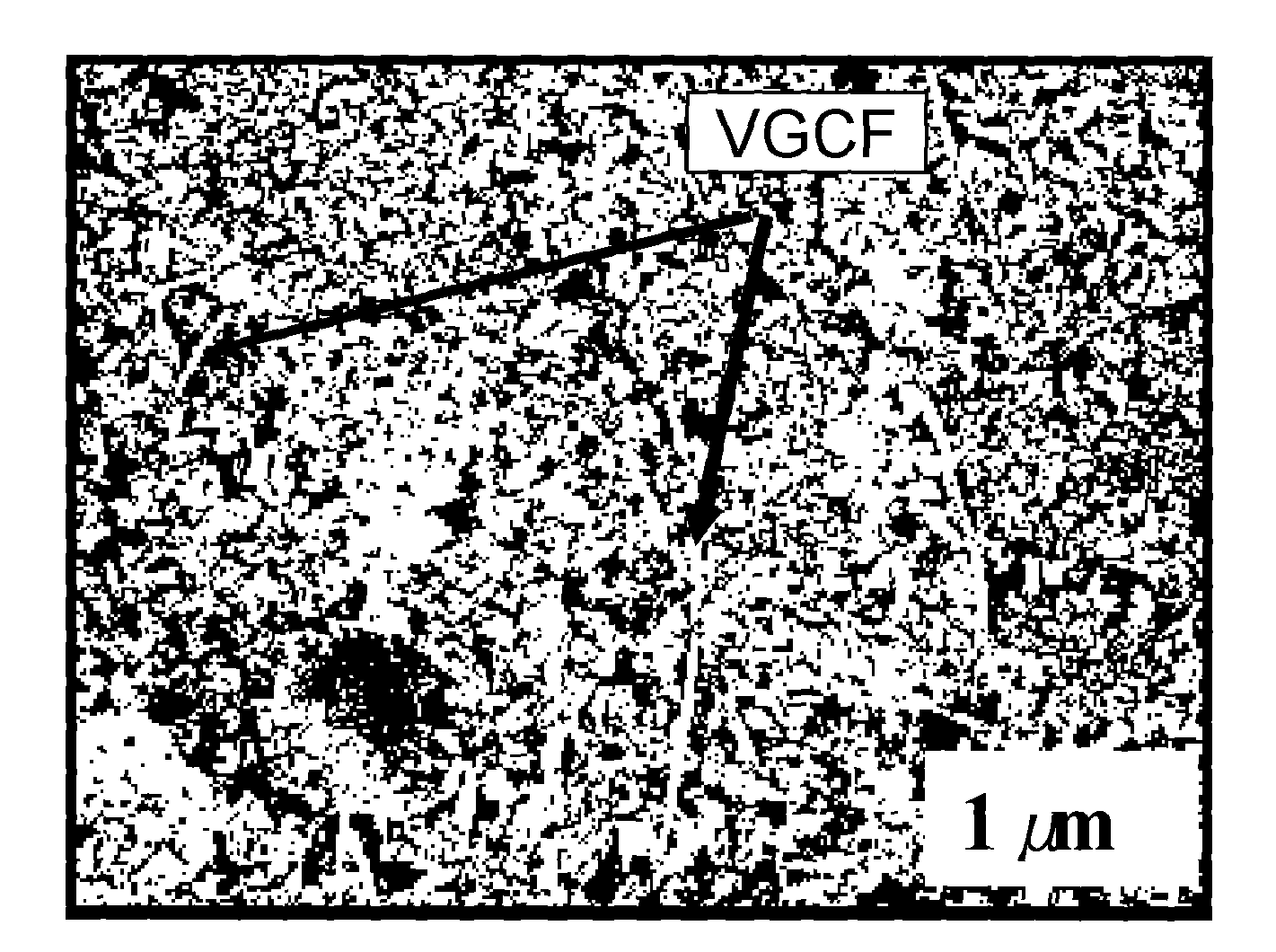
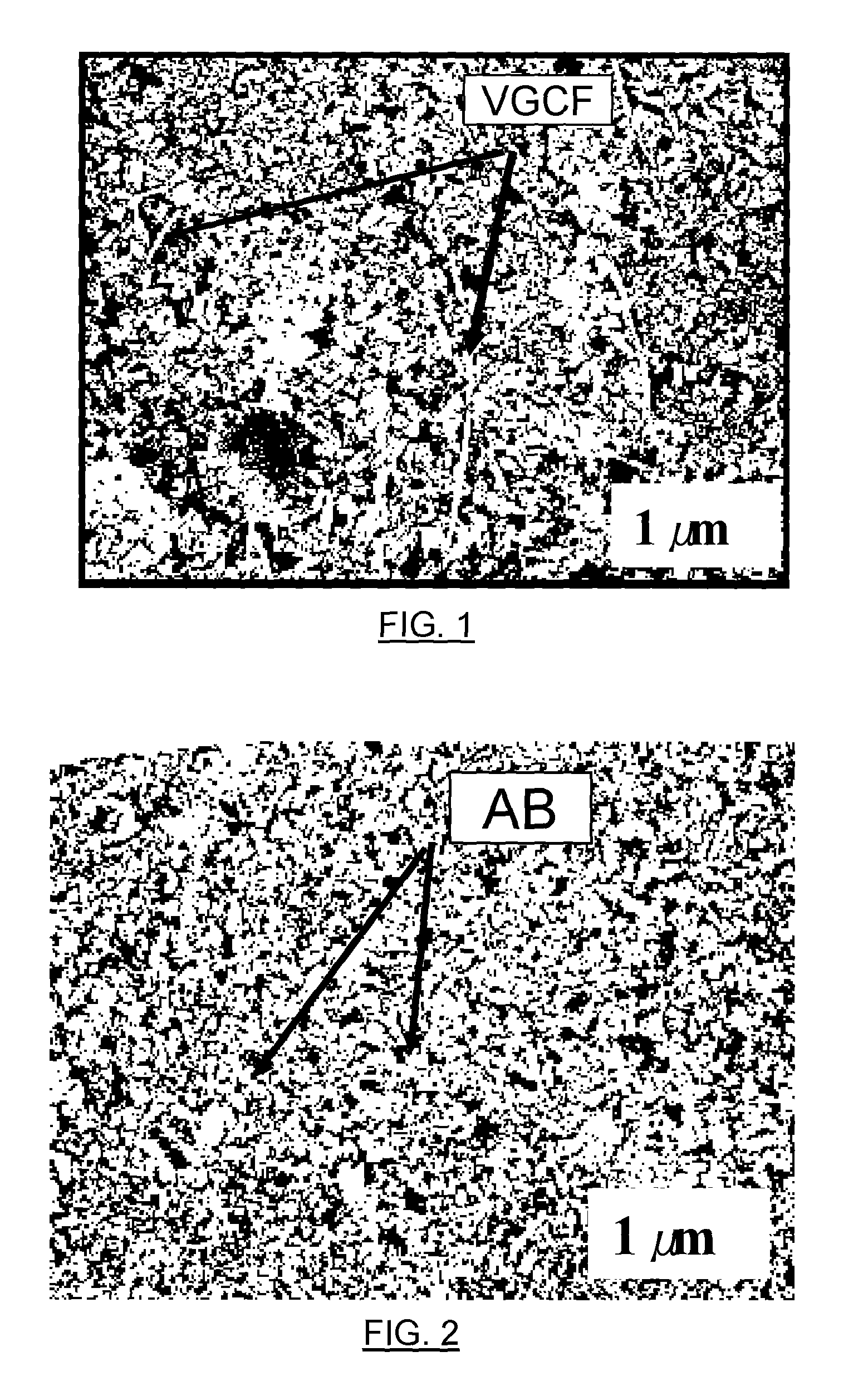
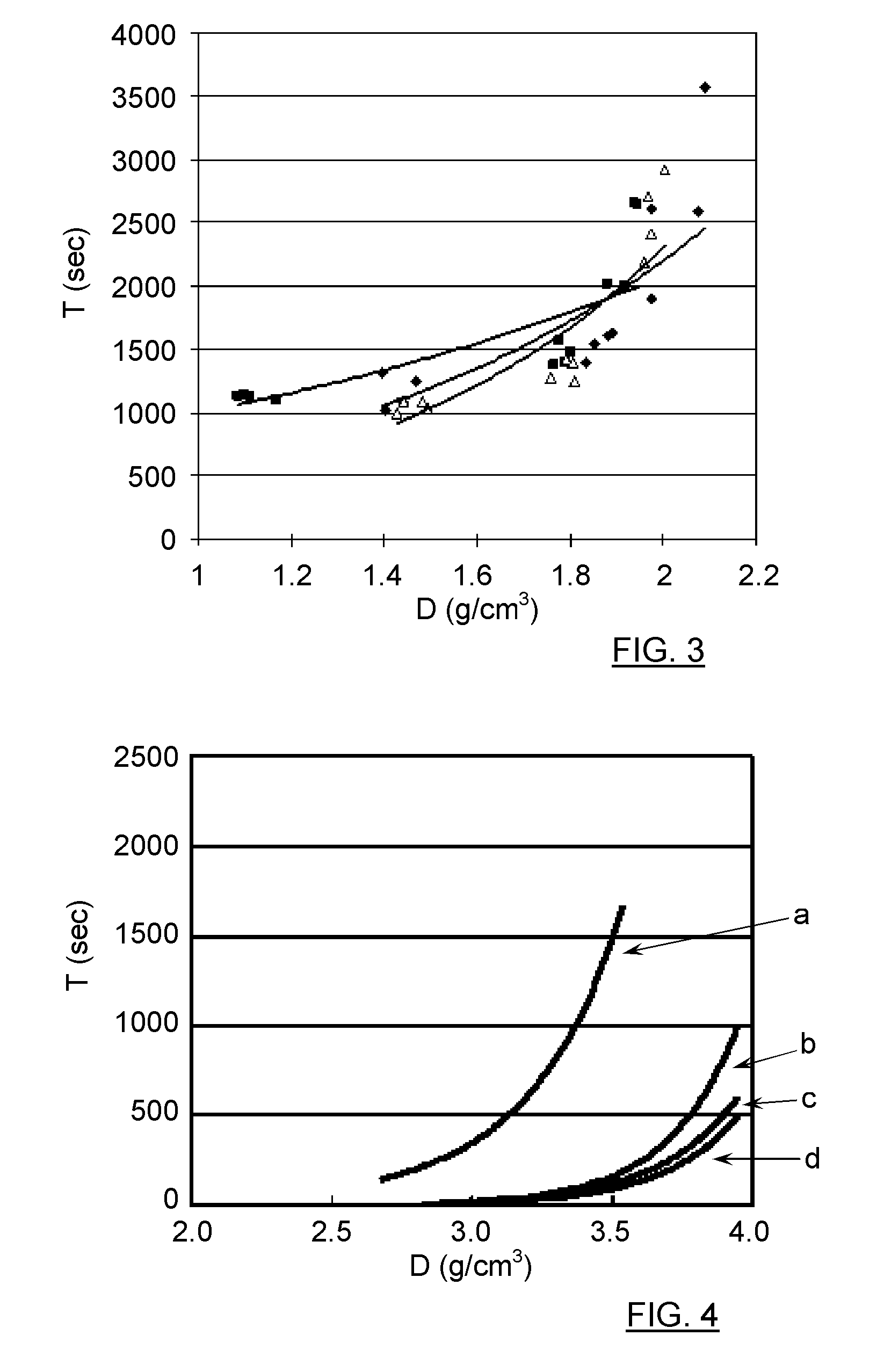
Examples
example 1
[0049]300 g of C—LiFePO4 and 9 g of VGCF™ were mixed in a Nobilta® grinder for 5 minutes. Then 16.25 g of PVDF (representing 5% of the total weight of LiFePO4, VGCF™ and PVDF) dissolved in NMP were added and the slurry obtained was coated on a polypropylene sheet. After elimination of NMP by evaporation, the resistance measured on the coating is 7 Ω·cm.
example 2
[0052]300 g of C—LiFePO4 and 9 g of VGCF™ were mixed in a Mechanofusion® grinder for 30 minutes. Then 16.25 g of PVDF (representing 5% of the total weight of LiFePO4, VGCF™ and PVDF) dissolved in NMP were added and the slurry obtained was coated on a polypropylene sheet. After elimination of NMP, the resistance measured on the coating is 8 Ω·cm.
example 3
[0054]300 g of C—LiFePO4 and 9 g of VGCF™ were mixed in a Mechanofusion® grinder for 30 minutes. Then 16.25 g of PVDF (representing 5% of the total weight of LiFePO4, VGCF™ and PVDF) dissolved in NMP, were added and the slurry obtained was coated on an aluminum collector. After elimination of NMP, the electrode thus obtained was immersed in propylene carbonate (PC). The electrode was completely impregnated with PC within 5 seconds.
PUM
 Login to View More
 Abstract
Description
Claims
Application Information
 Login to View More