[0009]The Supersonic Magnetic Advanced Generation Jet Electric
Turbine (S-MAGJET) described herein, and a subsonic derivative, MAGJET, integrate a gas
power turbine, superconducting
electric power and propulsion generation, and magnetic
power flux field systems along with an
ion plasma annular injection
combustor which utilizes alternative
petroleum-based fuel and
combustion cycles to create a
hybrid turbine turbomachine for
aerospace propulsion. The propulsion unit is able to achieve a dramatic increase in
horsepower, combustion and propulsion efficiency, and weight reduction. In addition, the
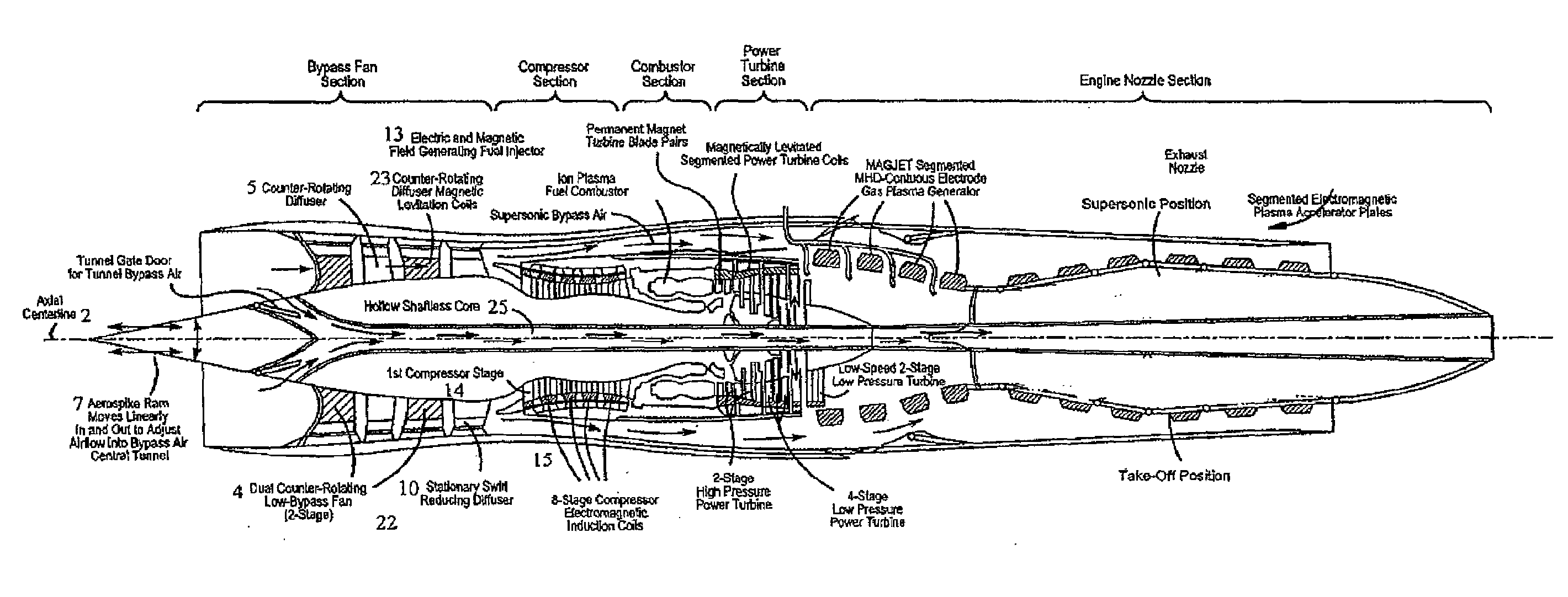
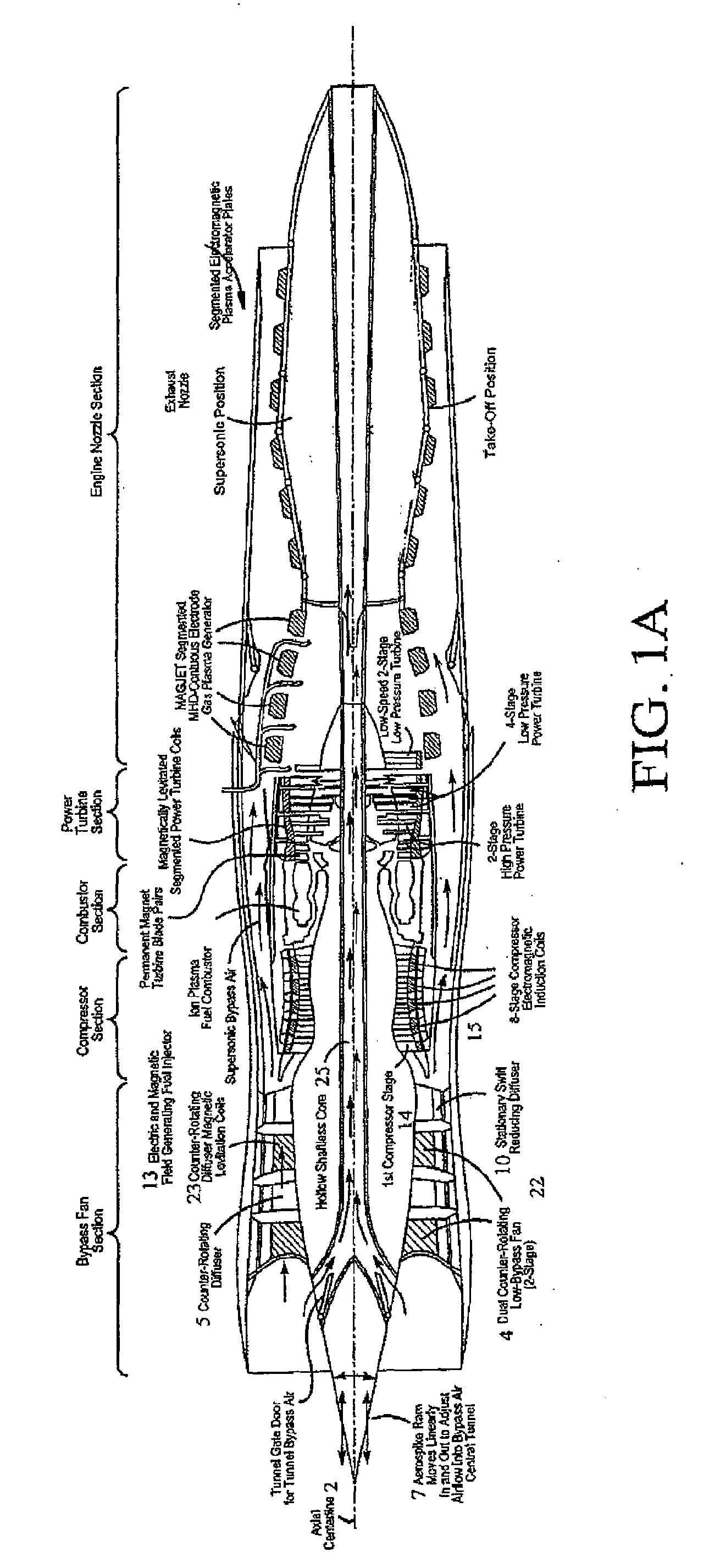
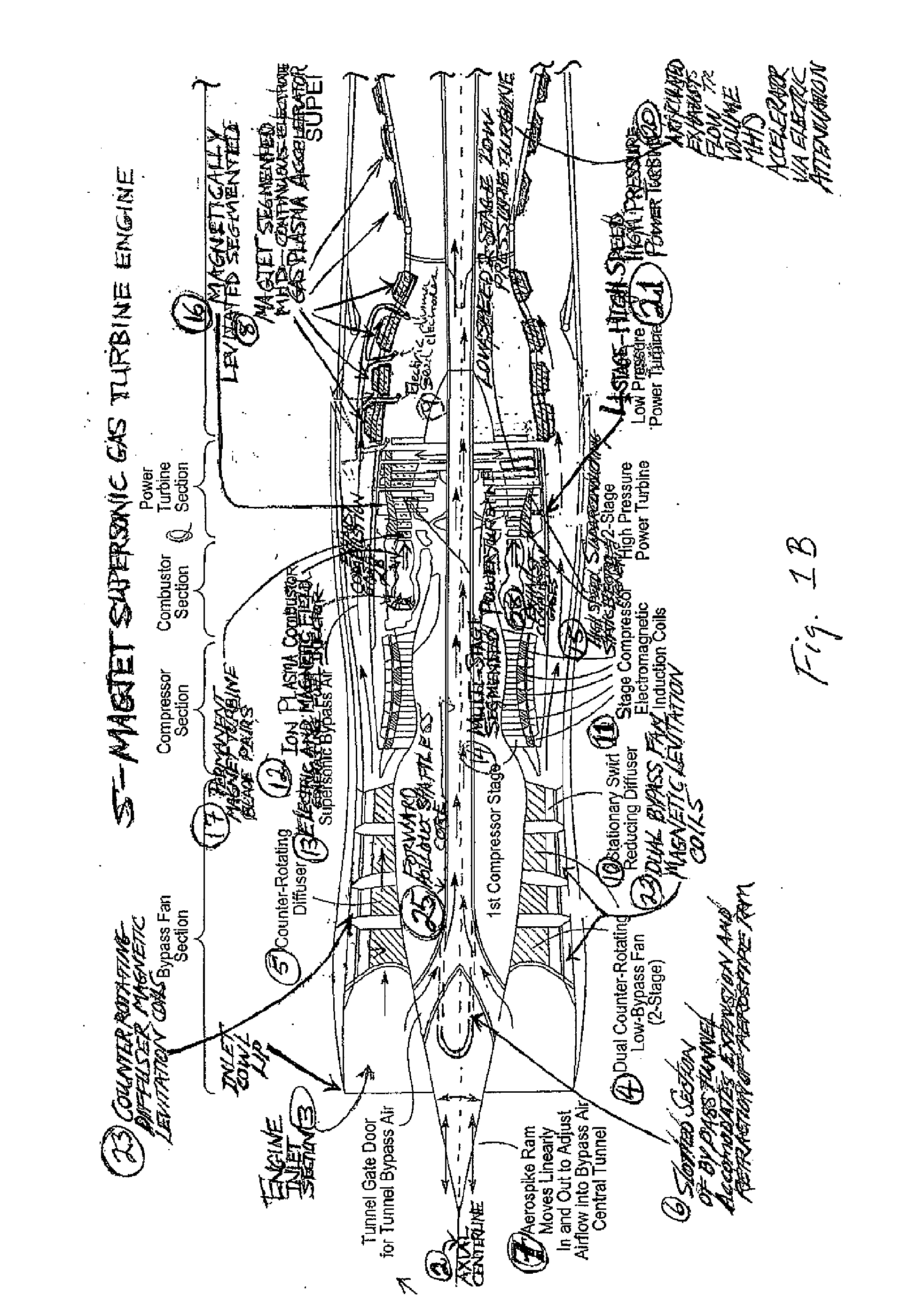
turbomachinery structures may be disposed within an exo-skeleton architecture that achieves an increase in thrust to weight ratio with a concomitant increase in
fuel efficiency and power generation over traditional gas turbine technology today. The S-MAGJET can provide a flight operation envelope with little or no off-design flight condition. The engine continuously adjusts the temperature, pressure and
mass airflow requirements using an
electromagnetic power management system architecture. With this
system architecture, the engine performance may be controlled across the entire desired
flight envelope, whether subsonic,
transonic or supersonic flight conditions. With bypass fan(s), compressor stages and turbine segments controlled electrically in a shaftless turbine design, the S-MAGJET maximizes the propulsion efficiencies over a broader range of operating conditions compared to current art of turbine technology and at much higher thermodynamic and aerodynamic efficiencies.
[0012]In the engine described herein, the electrical generation is provided by superconducting ring generators that are powered by the
high velocity exhaust thrust from the
combustor section of the engine. The bypass fan is a twin fan
system in which one fan counter rotates with the other fan, which reduces aerodynamic swirl and drag. The bypass fan configuration is not constrained by a
drive shaft, heavy gears and complex gear boxes, nor complex
lubrication systems and it can be run at an optimal rotational speed so as to maximize its efficiency at any aircraft velocity, or altitude. The bypass fans running independently from the compressor can be run at much slower speeds than the compressor, this means a more efficient RPM for the larger
diameter fan blade designs whether a low bypass fan design as in a supersonic engine or a high bypass fan design in a subsonic engine. Raising its efficiency dramatically is now possible in pushing air past the compressor core and power turbines, for thrust and the
overall efficiency of the engine. Additionally, the lower operating speeds afford the use of wider blades, raising aerodynamic efficiency and thrust per
horsepower, making the engine architecture greatly more efficient than the current art of engine designs. The electric compressor is designed with fewer stages than that of current turbine technology. The compressor is an axial, multi-stage design of 8 stages in a supersonic derivative, and 9 stages in a subsonic derivative of the engine technology. Three (3) low pressure stages and six (6)
high pressure stages are present in the subsonic design, current art of turbines would take at least thirteen (13) compressor stages to compress a similar amount of incoming air. This is possible as each stage operates independently from one another, and can, as they are driven electrically, and each stage is more efficient. As the light weight superconducting ring motors for the compressor do not require a
drive shaft, nor the bypass fans or the superconducting ring generators of the
power turbine, a “hollow-core shaftless” tunnel is left in the center of the hybrid electric turbine which now carries additional bypass air. Bypass air as the major component of thrust, rather than the hot exhaust from the power turbine being utilized as thrust is a more efficient method of producing thrust for propulsion in turbines. Therefore, in S-MAGJET, the majority of
electric power produced off the power turbine via the superconducting ring generators is directed forward through a proprietary electric
power management system to run the electric bypass fans and the electric compressor. This electrical independence of the bypass fan from the multi-stage
axial compressor raises
overall efficiency of the engine . This


 Login to View More
  Login to View More